Tumor: is an abnormal mass of tissue that may be solid or fluid-filled. A tumor is not the same as cancer. Although, some tumors can develop into cancers. A tumor is a kind of lump or swelling and does not necessarily pose a health threat.
Liquid Biopsy: Understand the significance of liquid biopsy in cancer research and the role of magnetic beads in sample preparation: After listening to the podcast, learners will be able to...
Spatial transcriptomics offers a revolutionary approach to understanding the tumor microenvironment (TME) in solid tumors by preserving the spatial context of gene expression, which is cruci...
Variant detection of multiple genes from a single tumor sample requires high-throughput molecular testing. To meet this demand, targeted next-generation sequencing (NGS) panels are useful in...
High-resolution spatial transcriptomics stands at the forefront of technological advancements, offering transformative capabilities in the domain of tumor biology research. In this presentat...
Mycosis fungoides (MF), the most common type of cutaneous T-cell lymphoma, is characterized by malignant T-cell skin infiltration leading to inflammation and skin barrier defects. To effecti...
Over 95% of potential anti-cancer drugs failed in clinical trials despite vast investment to bring the drug to market. The last decade of cancer research has also seen numerous advances aime...
The difficulties in making an accurate diagnosis, the workload in terms of time and the small number of pathologists represent significant problems in laboratory routine. From this perspecti...
Measurable or minimal residual disease (MRD) is the presence of very small numbers of tumor cells which may remain in the body following treatment. MRD testing currently has multiple clinica...
Comprehensive Genomic profiling (CGP) is becoming standard of care in oncology. It allows clinicians to maximize clinical information from limited biopsy samples so that patients are matched...
Cancer immunotherapy approaches such as adoptive transfer of chimeric antigen receptor (CAR) T cells or tumor-infiltrating lymphocytes have yielded promising results in hematological maligna...
Precision medicine aims to match the right therapy to the right patient at the right time, improving efficacy and reducing side effects. In this webinar, Dr. Hsu discusses his work to develo...
Circulating tumor cells (CTCs) and circulating tumor DNA (ctDNA) have each gained attention as promising liquid biopsy markers, offering molecular insights into cancer progression, overall s...
Immunotherapies, including immune checkpoint inhibitors, have emerged as promising treatments for advanced cancers. However, a subset of patients exhibits resistance to such therapies, and t...
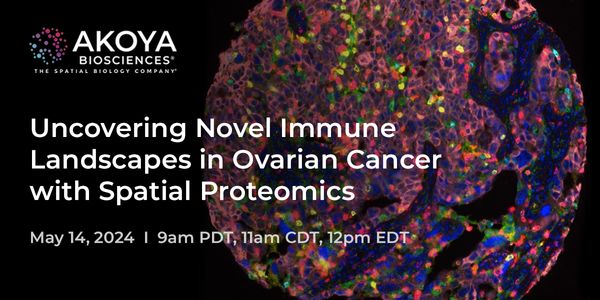
Survival rates for patients with high grade serous carcinoma of the ovary (HGSC) have stagnated for the past fifty years. Despite the presence of tumor mutations and infiltration of immune c...
In light of the numerous US FDA-approved humanized monoclonal antibodies (mAbs) for cancer immunotherapy, it is surprising that the advancement of B-cell epitope vaccines designed to elicit...
Chimeric antigen receptor (CAR) T-cell therapy shows significant potential in treating various human cancers. Unfortunately, researchers have faced difficulty in adapting this therapy to tar...
Chimeric antigen receptor (CAR) T cell therapy has emerged as a novel therapeutic option for cancer patients in recent years. Despite its success, this approach faces acknowledged limitation...
Despite the remarkable clinical efficacy of chimeric antigen receptor (CAR) T cells in hematological malignancies, only a subset of patients achieve a durable complete response. Furthermore,...
Chimeric antigen receptor (CAR) T-cell therapy has been extremely successful in treating relapsed/refractory B-cell malignancies, with six CAR T-cell products now FDA approved. Unfortunately...
In the field of tumor immunotherapy, cancer vaccines are designed to help the immune system recognize and attack cancer cells. More efforts are needed to identify neoantigens, develop combin...
Throughout history, various approaches including surgery, radiation therapy, chemotherapy, and targeted therapy have been employed in the fight against cancer. In the 2010s, the emergence of...
Brain cancer research stands to benefit from the perspectives, tools, and methodologies of non-traditional fields, such as mechanical engineering. Here, I will discuss our engineering-based...
Understanding the spatial organization of the immune response within tumors is crucial for developing effective cancer immunotherapies. In this seminar, we delve into the interactions betwee...
Adoptive cell therapy (ACT) is an immunotherapy that employs living immune cells to target and destroy cancer cells. However, the inhibitory tumor microenvironment features several obstacles...
Liquid Biopsy: Understand the significance of liquid biopsy in cancer research and the role of magnetic beads in sample preparation: After listening to the podcast, learners will be able to...
Spatial transcriptomics offers a revolutionary approach to understanding the tumor microenvironment (TME) in solid tumors by preserving the spatial context of gene expression, which is cruci...
Variant detection of multiple genes from a single tumor sample requires high-throughput molecular testing. To meet this demand, targeted next-generation sequencing (NGS) panels are useful in...
High-resolution spatial transcriptomics stands at the forefront of technological advancements, offering transformative capabilities in the domain of tumor biology research. In this presentat...
Mycosis fungoides (MF), the most common type of cutaneous T-cell lymphoma, is characterized by malignant T-cell skin infiltration leading to inflammation and skin barrier defects. To effecti...
Over 95% of potential anti-cancer drugs failed in clinical trials despite vast investment to bring the drug to market. The last decade of cancer research has also seen numerous advances aime...
The difficulties in making an accurate diagnosis, the workload in terms of time and the small number of pathologists represent significant problems in laboratory routine. From this perspecti...
Measurable or minimal residual disease (MRD) is the presence of very small numbers of tumor cells which may remain in the body following treatment. MRD testing currently has multiple clinica...
Comprehensive Genomic profiling (CGP) is becoming standard of care in oncology. It allows clinicians to maximize clinical information from limited biopsy samples so that patients are matched...
Cancer immunotherapy approaches such as adoptive transfer of chimeric antigen receptor (CAR) T cells or tumor-infiltrating lymphocytes have yielded promising results in hematological maligna...
Precision medicine aims to match the right therapy to the right patient at the right time, improving efficacy and reducing side effects. In this webinar, Dr. Hsu discusses his work to develo...
Circulating tumor cells (CTCs) and circulating tumor DNA (ctDNA) have each gained attention as promising liquid biopsy markers, offering molecular insights into cancer progression, overall s...
Immunotherapies, including immune checkpoint inhibitors, have emerged as promising treatments for advanced cancers. However, a subset of patients exhibits resistance to such therapies, and t...
Survival rates for patients with high grade serous carcinoma of the ovary (HGSC) have stagnated for the past fifty years. Despite the presence of tumor mutations and infiltration of immune c...
In light of the numerous US FDA-approved humanized monoclonal antibodies (mAbs) for cancer immunotherapy, it is surprising that the advancement of B-cell epitope vaccines designed to elicit...
Chimeric antigen receptor (CAR) T-cell therapy shows significant potential in treating various human cancers. Unfortunately, researchers have faced difficulty in adapting this therapy to tar...
Chimeric antigen receptor (CAR) T cell therapy has emerged as a novel therapeutic option for cancer patients in recent years. Despite its success, this approach faces acknowledged limitation...
Despite the remarkable clinical efficacy of chimeric antigen receptor (CAR) T cells in hematological malignancies, only a subset of patients achieve a durable complete response. Furthermore,...
Chimeric antigen receptor (CAR) T-cell therapy has been extremely successful in treating relapsed/refractory B-cell malignancies, with six CAR T-cell products now FDA approved. Unfortunately...
In the field of tumor immunotherapy, cancer vaccines are designed to help the immune system recognize and attack cancer cells. More efforts are needed to identify neoantigens, develop combin...
Throughout history, various approaches including surgery, radiation therapy, chemotherapy, and targeted therapy have been employed in the fight against cancer. In the 2010s, the emergence of...
Brain cancer research stands to benefit from the perspectives, tools, and methodologies of non-traditional fields, such as mechanical engineering. Here, I will discuss our engineering-based...
Understanding the spatial organization of the immune response within tumors is crucial for developing effective cancer immunotherapies. In this seminar, we delve into the interactions betwee...
Adoptive cell therapy (ACT) is an immunotherapy that employs living immune cells to target and destroy cancer cells. However, the inhibitory tumor microenvironment features several obstacles...

 Follow