 Follow
3D Cell Culture
3D Cell Culture: is an artificially created environment in which biological cells are permitted to grow or interact with their surroundings in all three dimensions. Unlike 2D environments, a 3D cell culture allows cells in vitro to grow in all directions, similar to how they would in vivo.

JAN 01, 2020 | 6:00 AM

Microphysiological systems (MPS), also known as organ-on-chips, are small scale in vitro cell cultures which mimic facets of tissue or organ level function. MPS frequently utilise primary hu...
JAN 01, 2020 | 6:00 AM

The OrganoPlate is a microtiterplate based Organ-on-a-Chip platform for high throughput drug safety and efficacy screening. It contains up to 96 cell culture chambers that allow co-culture o...
JAN 01, 2020 | 6:00 AM

The aim of the lecture is to give an insight into the use of 3D liver micro tissues (3D liMTs) in drug discovery and translational safety. In translational toxicology, 3D LiMTs have a high i...
OCT 31, 2019 | 9:00 AM
DATE: October 31, 2019TIME: 9:00am PDT, 12:00pm EDT INTRODUCTION: A major limitation for the development of 3D engineered tissues is the absence of viable and perfusable...
OCT 29, 2019 | 7:00 AM
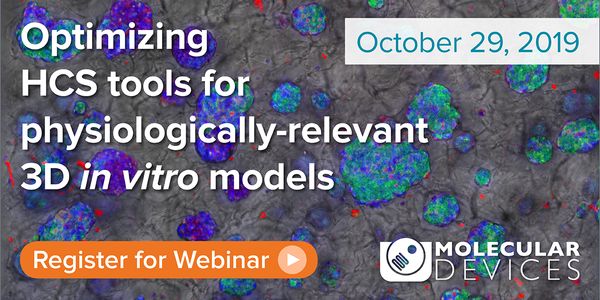
DATE: October 29, 2019TIME: 7:00am PDT3D cell culture systems have recently emerged as tools for reproducing the cellular environment and the organization of tissues/organs, where cel...
SEP 27, 2019 | 9:00 AM
DATE: September 27, 2019TIME: 9:00am PT, 12:00pm ET Thienopyrazole derivatives have recently emerged as effective antitumoral agents with kinase inhibitory activity. In this s...
AUG 22, 2019 | 6:00 AM

Prediction of human response to chemical exposures is the primary challenge of pharmaceutical and environmental toxicology research. The complexity of human responses to xenobiotic exposures...
AUG 15, 2019 | 9:00 AM

DATE: August 15, 2019TIME: 9:00am PDT, 12:00pm EDT Radiation therapy is a critical tool for the treatment of brain tumors, however, exposure to high doses of ionizing radiation...
JUL 31, 2019 | 9:00 AM
DATE: July 31, 2019TIME: 9:00am PT, 12:00pm ET The choroid plexus, which makes up the blood-cerebrospinal fluid barrier in the central nervous system (CNS), lines the ventricle...
JUN 27, 2019 | 9:00 AM
DATE: June 27, 2019TIME: 9:00am PDT, 12:00pm EDT At present cancer research focuses on three major areas viz. cancer diagnostics, drugs development, and next-generation therapi...
JUN 19, 2019 | 10:00 AM
DATE: June 19, 2019TIME: 10:00am PDT, 1:00pm EDT As we develop new methods to create more biologically relevant models for research in understanding disease etiology and in...
MAY 23, 2019 | 9:00 AM

DATE: May 23, 2019TIME: 9:00am PDT, 12:00pm EDT Although mesenchymal stem/stromal cells (MSCs) chondrogenic differentiation has been thoroughly investigated...
APR 17, 2019 | 9:00 AM
DATE: April 17, 2019TIME: 9:00am PDT...
APR 03, 2019 | 9:00 AM
DATE: April 3, 2019TIME: 9:00am PDT...
MAR 20, 2019 | 9:00 AM
DATE: March 20, 2019TIME: 9:00am PDT...
FEB 27, 2019 | 1:30 PM

Cellular research is optimal when using physiologically-relevant cell phenotypes and genotypes of human origin. This assertion has accelerated the adoption of primary cells, stem cells, and i...
FEB 20, 2019 | 9:00 AM
DATE: February 20, 2019TIME: 9:00am PST ...
FEB 14, 2019 | 9:00 AM

Experimental models that promise to replace animal tests that are currently required for drugs and chemicals are rapidly proliferating. This includes a number of novel solutions offered by bi...
NOV 15, 2018 | 10:00 AM
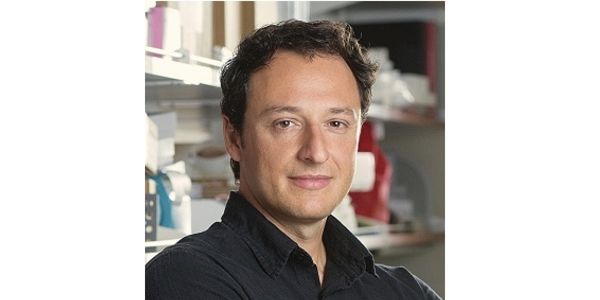
The complexity of the human brain, with thousands of neuronal types, permits the development of sophisticated behavioral repertoires, such as language, tool use, self-awareness, symbolic thou...
NOV 15, 2018 | 4:00 AM
Development of physiologically relevant cellular models, with strong translatability to human pathophysiology, is critical for identification and validation of novel therapeutic targets. Cell...
NOV 15, 2018 | 2:00 AM
In contrast to autologous cell therapies, allogeneic therapies do not require collection of starting material from patients and could; be manufactured in larger batches, be made available &ld...
NOV 05, 2018 | 12:00 AM
Biomedical researchers are increasingly using advanced human cell models for translational biology and therapeutic discovery studies. These include patient-specific samples, cultured micro-ti...
NOV 01, 2018 | 12:00 AM

Integrated protocols and live-cell analysis solutions for different 3D tumor modelsIn the search for greater clinical translation, cancer researchers are increasingly turning to more comp...