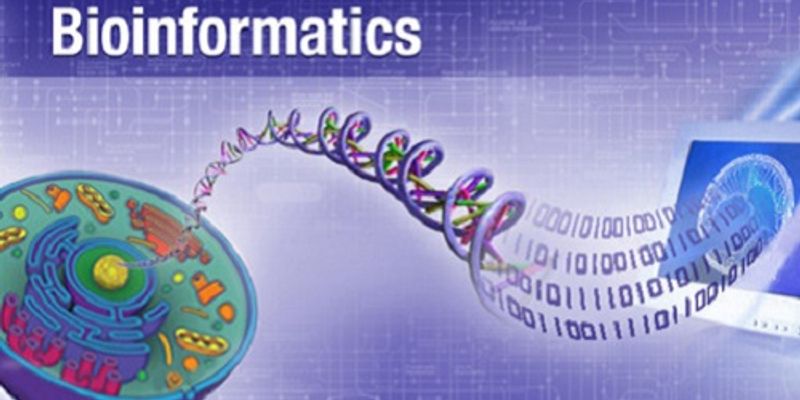
Bioinformatics: an interdisciplinary field that develops methods and software tools for understanding biological data. As an interdisciplinary field of science, bioinformatics combines computer science, statistics, mathematics, and engineering to analyze and interpret biological data.
Identification of the many complex genetic aberrations associated with cancers, and deciphering their role in disease progression and response to treatment is one of the major challenges face...
Launched in early 2015, the Precision Medicine Initiative (PMI) takes advantage of the progress made in genomic testing – progress largely driven by rapid advances in DNA sequencing tec...
DATE: February 7, 2017TIME: 10:00am PT, 1:00pm ETIn this webinar, Jeffrey G. Reid, PhD, Executive Director and Head of Genome Informatics at Regeneron Pharmaceuticals, will sh...
DATE: January 31, 2017TIME: 9:00AM PT, 12:00PM ET Gautam Dantas - While the most acute effects of increasing antibiotic resistance in pathogens are observed in clinical se...
DATE: December 7, 2016
TIME: 9:00 AM PT, 12:00 PM ET
Kinases play important roles in many biological signaling pathways. Kinase inhibitors are therefore potentially found as actives in ty...
The mission of the California Institute for Regenerative Medicine (CIRM) is to accelerate stem cell treatments to patients with unmet medical needs. With $3 billion in funding and 300 a...
The Alliance for Regenerative Medicine (ARM) is the preeminent global advocate for regenerative and advanced therapies. ARM fosters research, development, investment and commercialization of ...
The generation of induced pluripotent stem cells (iPSCs) from adult easily accessible somatic tissues was introduced ten years ago. This technology has revolutionized our opportunities to stu...
Bulk analysis often leads to conclusions that assume averages reflect the dominant biological mechanism operating within an entire population. To fully understand how cellular heterogeneity c...
Antibodies are used in a broad range of research and diagnostic applications for the enrichment, detection, and quantitation of proteins and their modifications. Hundreds of thousands o...
Breast cancer is a complex heterogeneous disease, with each subtype characterized by distinct clinical features and molecular alterations. The heterogeneity of breast cancer has presented mas...
Whole genome and exome sequencing is being widely used to identify disease-causing variants in patients with hereditary and rare diseases. Discovering the true disease-causing variants often...
Hepatocellular Carcinoma (HCC) and Endometrioid Endometrial Carcinoma (EEC) are two lethal diseases of public health importance worldwide. Understanding the mechanisms of tumor progression in...
DATE: September 29, 2016
TIME: 10:00am PT, 1:00pm ET
One of the challenges with personalized medicine lies in the identification of robust, clinically relevant biomarkers. Tra...
DATE: September 23, 2016
TIME: 9:00 AM PST, 12:00 PM ET
As genetic testing becomes more pervasive, many clinical and pathology laboratories see next generation sequencing (NG...
Multi-Drug Resistant Organisms (MDROs) are becoming a bigger and bigger concern throughout the world. Antibiotic resistance forms and spreads faster than pharmaceutical companies have been ab...
This presentation will be demonstrating several different approaches to explore the diversity, function, and ecology of microbial communities. In Metagenomics, the sequencing of DNA dir...
Virus Ecology is a field that is gaining momentum, fueled in part by metagenomic studies from many environments previously ignored. Biodiversity studies of plant viruses show that they...
The global trend towards industrialization and urbanization has led to ever more people living and working indoors. Some studies estimate that humans in industrialized countries spend as much...
ME/CFS is a debilitating disease with a controversial history and multiple names. The Institute of Medicine recently recommended renaming the disease “Systemic Exertion Intoleranc...
Our speaker, Wenjie Xu, Ph.D., will present his publication data demonstrating how nCounter® technology can advance your infectious disease research faster and more accurately with unprec...
The Infectious Diseases Pathology Branch of the Centers for Disease Control and Prevention (CDC) routinely receives autopsy and biopsy tissues for diagnostic evaluation. These tissues are typ...
The research community has begun correlating the makeup of individual microbiomes with disorders and diseases such as obesity, atherosclerosis and cancer. To accomplish this, researchers must...
It is well accepted that microorganisms can exist as self-organized communities attached to surfaces and one another (i.e., biofilm), often surrounded by extracellular polymeric substances (E...
Identification of the many complex genetic aberrations associated with cancers, and deciphering their role in disease progression and response to treatment is one of the major challenges face...
Launched in early 2015, the Precision Medicine Initiative (PMI) takes advantage of the progress made in genomic testing – progress largely driven by rapid advances in DNA sequencing tec...
DATE: February 7, 2017TIME: 10:00am PT, 1:00pm ETIn this webinar, Jeffrey G. Reid, PhD, Executive Director and Head of Genome Informatics at Regeneron Pharmaceuticals, will sh...
DATE: January 31, 2017TIME: 9:00AM PT, 12:00PM ET Gautam Dantas - While the most acute effects of increasing antibiotic resistance in pathogens are observed in clinical se...
DATE: December 7, 2016
TIME: 9:00 AM PT, 12:00 PM ET
Kinases play important roles in many biological signaling pathways. Kinase inhibitors are therefore potentially found as actives in ty...
The mission of the California Institute for Regenerative Medicine (CIRM) is to accelerate stem cell treatments to patients with unmet medical needs. With $3 billion in funding and 300 a...
The Alliance for Regenerative Medicine (ARM) is the preeminent global advocate for regenerative and advanced therapies. ARM fosters research, development, investment and commercialization of ...
The generation of induced pluripotent stem cells (iPSCs) from adult easily accessible somatic tissues was introduced ten years ago. This technology has revolutionized our opportunities to stu...
Bulk analysis often leads to conclusions that assume averages reflect the dominant biological mechanism operating within an entire population. To fully understand how cellular heterogeneity c...
Antibodies are used in a broad range of research and diagnostic applications for the enrichment, detection, and quantitation of proteins and their modifications. Hundreds of thousands o...
Breast cancer is a complex heterogeneous disease, with each subtype characterized by distinct clinical features and molecular alterations. The heterogeneity of breast cancer has presented mas...
Whole genome and exome sequencing is being widely used to identify disease-causing variants in patients with hereditary and rare diseases. Discovering the true disease-causing variants often...
Hepatocellular Carcinoma (HCC) and Endometrioid Endometrial Carcinoma (EEC) are two lethal diseases of public health importance worldwide. Understanding the mechanisms of tumor progression in...
DATE: September 29, 2016
TIME: 10:00am PT, 1:00pm ET
One of the challenges with personalized medicine lies in the identification of robust, clinically relevant biomarkers. Tra...
DATE: September 23, 2016
TIME: 9:00 AM PST, 12:00 PM ET
As genetic testing becomes more pervasive, many clinical and pathology laboratories see next generation sequencing (NG...
Multi-Drug Resistant Organisms (MDROs) are becoming a bigger and bigger concern throughout the world. Antibiotic resistance forms and spreads faster than pharmaceutical companies have been ab...
This presentation will be demonstrating several different approaches to explore the diversity, function, and ecology of microbial communities. In Metagenomics, the sequencing of DNA dir...
Virus Ecology is a field that is gaining momentum, fueled in part by metagenomic studies from many environments previously ignored. Biodiversity studies of plant viruses show that they...
The global trend towards industrialization and urbanization has led to ever more people living and working indoors. Some studies estimate that humans in industrialized countries spend as much...
ME/CFS is a debilitating disease with a controversial history and multiple names. The Institute of Medicine recently recommended renaming the disease “Systemic Exertion Intoleranc...
Our speaker, Wenjie Xu, Ph.D., will present his publication data demonstrating how nCounter® technology can advance your infectious disease research faster and more accurately with unprec...
The Infectious Diseases Pathology Branch of the Centers for Disease Control and Prevention (CDC) routinely receives autopsy and biopsy tissues for diagnostic evaluation. These tissues are typ...
The research community has begun correlating the makeup of individual microbiomes with disorders and diseases such as obesity, atherosclerosis and cancer. To accomplish this, researchers must...
It is well accepted that microorganisms can exist as self-organized communities attached to surfaces and one another (i.e., biofilm), often surrounded by extracellular polymeric substances (E...
 Follow