 Follow
Disease
Disease: is a disorder of structure or function in a human, animal, or plant, especially one that produces specific signs or symptoms that is not simply a direct result of physical injury.

OCT 05, 2023 | 7:30 AM

Cancer is the #1 cause of death by disease in children. Over the last few decades, the survival rates for children with cancer have improved. These gains have been made by brilliant dedicate...
On Demand

One of the central tenets of biology is that our genetics—our genotype—influences the physical characteristics we manifest—our phenotype. But with more than 25,000 human ge...
OCT 05, 2023 | 1:00 AM
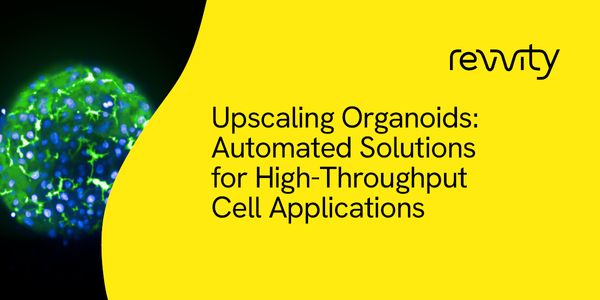
Organoids continue to gain traction in drug discovery efforts as they offer a more biologically relevant disease model than traditional approaches. But they aren't without challenges. Jo...
OCT 03, 2023 | 12:00 PM

Over the past 10 years, we have come to a greater understanding of the pathogenesis of men who succumb to prostate cancer. One critical aspect is the role of molecular drivers in patients wi...
OCT 03, 2023 | 10:30 AM

Preliminary data indicate the presence of inflammatory derangements in AML, necessitating a comprehensive examination of inflammatory effector cytokines involved in AML pathogenesis and ther...
On Demand

Effective cellular therapies for solid tumors remain elusive. Advances in gene editing and synthetic biology offer great potential for improving the safety and functionality of engineered ce...
SEP 28, 2023 | 7:00 AM
Webinars will be available for unlimited on-demand viewing after live event. Labroots is approved as a provider of continuing education programs in the clinical laboratory sciences by the AS...
SEP 27, 2023 | 8:00 AM
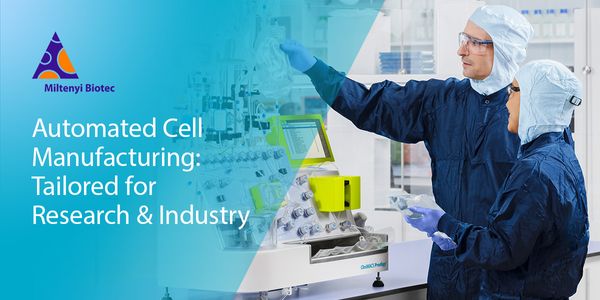
Cell therapy holds promise in improving outcomes for many difficult-to-treat diseases. However, this therapeutic strategy also comes with challenges that limit rollouts on a more impactful s...
SEP 26, 2023 | 11:00 AM

Multicolor flow cytometry is beneficial because it allows us to gain deeper insights from a given biological sample, with fewer repeat markers in each tube and quicker results. In this three...
SEP 26, 2023 | 9:00 AM
Alamar NULISAseq is a novel commercial platform for highly multiplexed analysis of soluble proteins using a modified proximity ligation assay. We compared Luminex, Olink, and NULISAseq platf...
SEP 26, 2023 | 8:00 AM
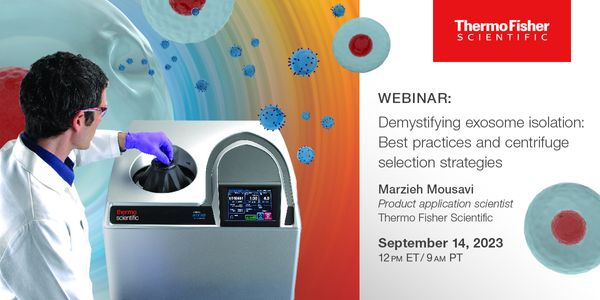
Join us for an educational webinar that delves into the fascinating world of Extracellular Vesicles (EVs) and their impact on biomedical research and medicine. In collaboration with ExoVecto...
SEP 21, 2023 | 8:00 AM

As the opioid epidemic continues to claim lives and devastate families across the nation and world, we recognize September 21, 2023 as opioid awareness day. Opioids are analgesics with high...
SEP 20, 2023 | 9:00 AM

Extracellular vesicles (EVs) are lipid-bilayer enclosed nano-sized vesicles that are released by all cell types and found in all bodily fluids. EVs are emerging as important regulators of bo...
SEP 20, 2023 | 7:30 AM

Current methods used to predict safety and efficacy of candidate drugs accounts for as much as 90% failure rate. Approximately 30% of drugs have failed......