 Follow
Patient Safety
Patient Safety: is the prevention of harm to patients. Emphasis is often placed on the system of care delivery that prevents errors, learns from the errors that occur and is built on a culture of safety that involves health care professionals, organizations and patients. Patient safety practices have been defined as those that reduce the risk of adverse events related to exposure to medical care across a range of diagnoses or conditions.

NOV 12, 2020 | 12:00 AM

Patient laboratory test results are significantly over-represented in electronic medical records, but significantly under-utilized in research. An important application of laboratory data is...
NOV 12, 2020 | 12:00 AM

The opioid crisis has put significant strain on the healthcare system and resources, including the clinical laboratory which has seen significant increases in requests for urine drug screeni...
NOV 04, 2020 | 11:00 AM

DATE: November 4th, 2020 TIME: 11:00am PST As cell therapies become more complex, the need for robust analytical tools to characterize such products as they enter the clinic has increased in...
OCT 14, 2020 | 10:00 AM
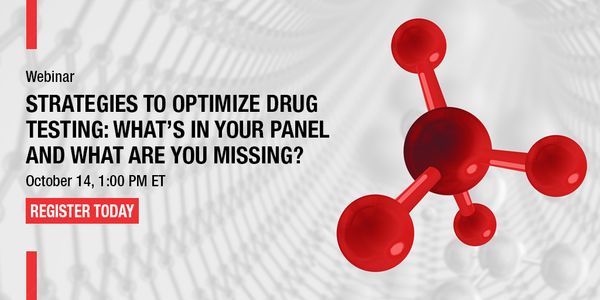
DATE: October 14, 2020 TIME: 10:00am PT Do you need help in planning your drug testing protocols? Did you know that a “one size fits all” approach to drug testing does not apply...
OCT 13, 2020 | 8:00 AM
C.E. CREDITS

Learn how D-dimer testing aids VTE diagnosis, risk stratification, and PE prevention, with insights on medically ill and COVID-19 patients....
OCT 08, 2020 | 12:00 AM

Background: Healthcare access (HCA) encompasses five important dimensions: Affordability, Availability, Accessibility, Accommodation and Acceptability. Published studies of cancer typically...
OCT 07, 2020 | 12:00 PM

Cancer is a multifactorial disease, and its genesis and progression are extremely complex. The scope of precision oncology is rapidly expanding to address previously undruggable targets. The...
SEP 29, 2020 | 8:00 AM
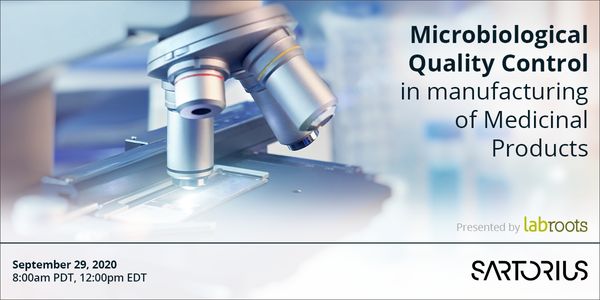
DATE: September 29, 2020 TIME: 8:00 am PDT There is a steady increase in FDA 483s related to microbiology. Though most are for sterile products, non-sterile and terminally sterilized product...
SEP 23, 2020 | 3:00 PM

Laws enforcing the prohibition of cannabis have unjustly harmed people of color for nearly a century. As a result, the regulated cannabis industry has a duty to advocate for legalization tha...
SEP 23, 2020 | 10:30 AM

On measuring photons and ions: Impact on panel design, signal detection and data quality 10:30–11:00 am PDT Presented By: Tim Bushnell, PhD, MBA Monitoring immunotherapy with a mass cy...