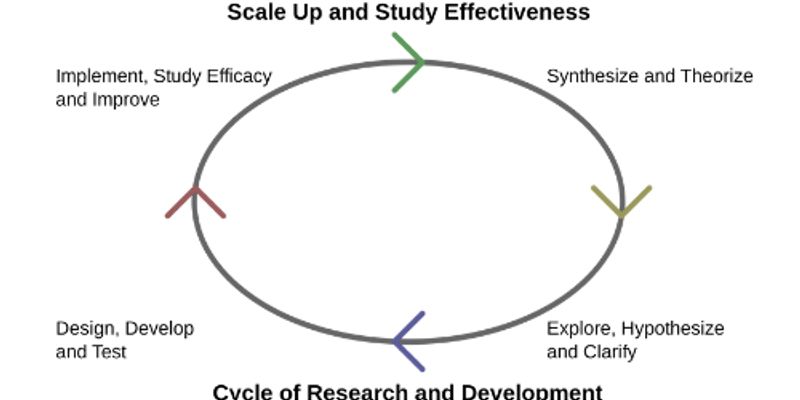
Research and Development: innovative activities performed by corporations or governments for the creation, discovery and advancement of services and products.
Dramatic responses observed with targeted agents in the ‘right’ genomic context have fueled large scale sequencing efforts to identify ‘effective’ treatments for a giv...
In today's presentation I will give an overview to developing NextGen ADCs. We will discuss everything from the beginning stages of development to the varying ADC combination therapies av...
Whether you are performing killing assays, immunophenotyping of TILs, characterizing the tumor microenvironment, or investigating immunogenicity, primary cells are essential for the discovery...
Small size, highly selective nature, flexible chemistry and ease of manufacturing make nucleic acid aptamers attractive for multiple applications in human diagnostics and drug discovery. &nbs...
Cellular research is optimal when using physiologically-relevant cell phenotypes and genotypes of human origin. This assertion has accelerated the adoption of primary cells, stem cells, and i...
Isolated hepatocytes or their enzymes comprise the basis of most in vitro DMPK and toxicity assays used to predict human hepatic outcomes. Because hepato-specific functions are typically lost...
Surgery is the first line of treatment for Stage III melanoma. Often adjuvant therapy is administered post-surgery, which can include weeks of radiation, chemotherapy, targeted drug therapy,...
Studies in drug development and on hematological and solid Tumors with a Thymidine Kinase 1 immunoassayThere are many tumor biomarkers but, they mostly reflect tumor mass or past growth,...
NanoMIPs, often called “plastic antibodies”, are made using a proprietary self-assembly process where the template molecule is incubated with monomers, each of which is free in so...
Advanced Cell Diagnostics’ RNAscope products and assay services are utilized widely for tissue-based gene expression analysis in early target validation, preclinical animal efficacy and...
Recent clinical successes in cancer genome-inspired personalized medicine have been a major breakthrough in drug discovery. However, 98% of the patients have an incomplete therapeutic respons...
Multiplexing IHC is a technique that is increasing in demand as more and more researchers and physicians are being tasked with doing more with less. With multiplexing, you have the advantage...
DATE: February 27, 2019TIME: 8:00am PST Pluripotent stem cells (PSCs) can form any tissue or cell in the body, and are the ideal starting material to manufacture...
Second harmonic generation (SHG) is a biophysical method that sensitively measures real-time conformational change of biomolecules attached to membranes. SHG has recently been applied to dete...
Ageing is a complex process that has been observed in all biological systems at every level of organisation. Some anti-ageing interventions have demonstrated life-extending effects in model o...
The Chain of Custody in our labs is the unbroken link between the objects used in your research: your people, the animal models, the cell lines, reagents, compounds; the lab instruments and d...
DATE: February 26, 2019TIME: 9:00am PST, 12:00pm EST In an era of increasingly high-throughput, large-scale biology, with companies, government and non-prof...
Pharmaceutical research and development efforts are often both inefficient and suffer from a high attrition rate of drug candidates within the clinical phase of development. Most drug t...
The lung is a highly complex organ, comprised of more than 40 cell types that are responsible for various important functions, the lung’s complexity contributes to the subsequent challe...
This presentation will discuss and review the promise and potential of 3D Microtissues, and the challenges of using these Microtissues as Hazard ID tools. Lastly, we will discuss the potentia...
Experimental models that promise to replace animal tests that are currently required for drugs and chemicals are rapidly proliferating. This includes a number of novel solutions offered by bi...
Comparative oncology is the study of naturally-occurring cancers in pet animals (mainly dogs) to broaden and deepen our collective understanding of cancers in both companion species and human...
Approximately 30% of drugs have failed in human clinical trials due to adverse reactions despite promising pre-clinical studies, and another 60% fail due to lack of efficacy. The NIH Tissue C...
Dramatic responses observed with targeted agents in the ‘right’ genomic context have fueled large scale sequencing efforts to identify ‘effective’ treatments for a giv...
In today's presentation I will give an overview to developing NextGen ADCs. We will discuss everything from the beginning stages of development to the varying ADC combination therapies av...
Whether you are performing killing assays, immunophenotyping of TILs, characterizing the tumor microenvironment, or investigating immunogenicity, primary cells are essential for the discovery...
Small size, highly selective nature, flexible chemistry and ease of manufacturing make nucleic acid aptamers attractive for multiple applications in human diagnostics and drug discovery. &nbs...
Cellular research is optimal when using physiologically-relevant cell phenotypes and genotypes of human origin. This assertion has accelerated the adoption of primary cells, stem cells, and i...
Isolated hepatocytes or their enzymes comprise the basis of most in vitro DMPK and toxicity assays used to predict human hepatic outcomes. Because hepato-specific functions are typically lost...
Surgery is the first line of treatment for Stage III melanoma. Often adjuvant therapy is administered post-surgery, which can include weeks of radiation, chemotherapy, targeted drug therapy,...
Studies in drug development and on hematological and solid Tumors with a Thymidine Kinase 1 immunoassayThere are many tumor biomarkers but, they mostly reflect tumor mass or past growth,...
NanoMIPs, often called “plastic antibodies”, are made using a proprietary self-assembly process where the template molecule is incubated with monomers, each of which is free in so...
Advanced Cell Diagnostics’ RNAscope products and assay services are utilized widely for tissue-based gene expression analysis in early target validation, preclinical animal efficacy and...
Recent clinical successes in cancer genome-inspired personalized medicine have been a major breakthrough in drug discovery. However, 98% of the patients have an incomplete therapeutic respons...
Multiplexing IHC is a technique that is increasing in demand as more and more researchers and physicians are being tasked with doing more with less. With multiplexing, you have the advantage...
DATE: February 27, 2019TIME: 8:00am PST Pluripotent stem cells (PSCs) can form any tissue or cell in the body, and are the ideal starting material to manufacture...
Second harmonic generation (SHG) is a biophysical method that sensitively measures real-time conformational change of biomolecules attached to membranes. SHG has recently been applied to dete...
Ageing is a complex process that has been observed in all biological systems at every level of organisation. Some anti-ageing interventions have demonstrated life-extending effects in model o...
The Chain of Custody in our labs is the unbroken link between the objects used in your research: your people, the animal models, the cell lines, reagents, compounds; the lab instruments and d...
DATE: February 26, 2019TIME: 9:00am PST, 12:00pm EST In an era of increasingly high-throughput, large-scale biology, with companies, government and non-prof...
Pharmaceutical research and development efforts are often both inefficient and suffer from a high attrition rate of drug candidates within the clinical phase of development. Most drug t...
The lung is a highly complex organ, comprised of more than 40 cell types that are responsible for various important functions, the lung’s complexity contributes to the subsequent challe...
This presentation will discuss and review the promise and potential of 3D Microtissues, and the challenges of using these Microtissues as Hazard ID tools. Lastly, we will discuss the potentia...
Experimental models that promise to replace animal tests that are currently required for drugs and chemicals are rapidly proliferating. This includes a number of novel solutions offered by bi...
Comparative oncology is the study of naturally-occurring cancers in pet animals (mainly dogs) to broaden and deepen our collective understanding of cancers in both companion species and human...
Approximately 30% of drugs have failed in human clinical trials due to adverse reactions despite promising pre-clinical studies, and another 60% fail due to lack of efficacy. The NIH Tissue C...
 Follow