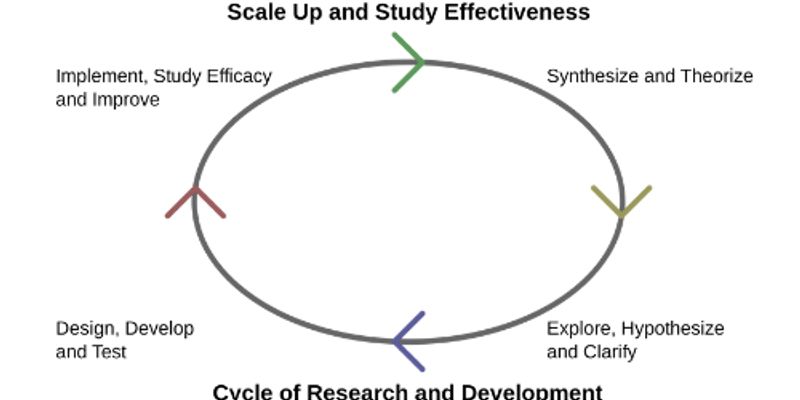
Research and Development: innovative activities performed by corporations or governments for the creation, discovery and advancement of services and products.
Medical genetics is a specialty of medicine that encompasses patients at all ages (prenatal, pediatric, adult), as well as all organ systems. As the genetic causes of more diseases have been ...
Maturing neural circuits are dramatically shaped by the environment, but this timing varies across brain regions and plasticity declines with age. Focusing on cellular/molecular mechanisms un...
Schizophrenia, depression, bipolar disorder are all uniquely human conditions. Psychiatric conditions include alterations in several different and overlapping domains (NIMH RDoC). Each...
The adolescent brain has been forged by evolution to have different features than those of a child or an adult, but it is not broken or defective. Phenomenal ability to adapt to environ...
Given the challenges of replicating Parkinson’s disease in animal models, returning to models that are human-based and highly clinically characterized may provide the most successful pa...
A key goal in psychiatry is to build new diagnostic, therapeutic and translational tools and capacity to reduce the impact of emerging mental disorders in young people on survival, distress,...
Drug addiction is a chronically relapsing disorder characterized by compulsive drug use despite catastrophic personal consequences (e.g., loss of family, job) and even when the substance is n...
There is a growing appreciation of the relationship between gut microbiota, and the host in maintaining homeostasis in health and predisposing to disease. Bacterial colonisation of the gut pl...
Schizophrenia (Sz) is a major mental disorder that affects ~1% of the population. Although traditional models of Sz focused on dopaminergic dysfunction, newer models increasingly implic...
This talk will provide an overview of Fourier Transform InfraRed (FTIR) chemical imaging as a powerful and versatile method for obtaining information about CNS tissues. By combining imaging a...
In the adult central nervous system (CNS) small populations of neurons are formed in the adult olfactory bulb and dentate gyrus of the hippocampus. In the adult hippocampus, newly born neuron...
Optogenetics or optophysiology is a rapidly growing technique used across an ever broadening array of research fields. Investigators now genetically modify many signalling pathway elements to...
DATE: March 10, 2016
TIME: 8:00am Pacific time, 11:00am Eastern time
SCIEX has recently introduced an easy-to-use magnetic bead based sample preparation workflow, enabling the prepa...
The greatest health epidemic of our time is cancer. Deaths from cancer worldwide outnumber the combined deaths from HIV/AIDS, tuberculosis and malaria by a wide margin. There are at least 100...
While next-generation sequencing has proven to be a very useful tool in basic research, two major hurdles remain for its broad adoption in the clinical research setting: lack of seamless work...
The advent of the microarray technology in 2000 has paved the way for advanced translational research methods that use molecular markers such as microRNA, proteins, metabolites and copy numbe...
Cell death is involved in diseases such as cancer and neurodegeneration, and also has a natural role in the development of multicellular organisms. Although apoptosis has been well defined, a...
Every day, vast amounts of healthcare data are collected from clinical trials as well as real world medical visits on patient treatment regimens and subsequent clinical outcomes. This big dat...
On January 20, 2015, President Obama announced the Precision Medicine Initiative® (PMI) (link is external) in his State of the Union address. Through advances in research, technology and...
One of the primary goals of precision medicine is the aggregation and interpretation of deep, longitudinal patient-specific data in the context of the digital universe of information, using a...
A number of recently publications have heralded the advent of Precision Medicine in Oncology, where next generation sequencing technology, other ’omics technologies, serial biopsies, so...
Precision medicine promises a more effective approach to disease treatment and management. It is based on analyzing mutations of disease samples to unlock mechanisms of disease development an...
In December 2012 the UK Prime Minister announced the 100,000 genomes project to introduce whole genome sequencing for treatment into the UK National Health Service (NHS) o...
Personalised Healthcare is essential to AstraZeneca’s approach to drug development and is adopted by more than 80% of drug products in clinical development. Selection of the right patie...
Medical genetics is a specialty of medicine that encompasses patients at all ages (prenatal, pediatric, adult), as well as all organ systems. As the genetic causes of more diseases have been ...
Maturing neural circuits are dramatically shaped by the environment, but this timing varies across brain regions and plasticity declines with age. Focusing on cellular/molecular mechanisms un...
Schizophrenia, depression, bipolar disorder are all uniquely human conditions. Psychiatric conditions include alterations in several different and overlapping domains (NIMH RDoC). Each...
The adolescent brain has been forged by evolution to have different features than those of a child or an adult, but it is not broken or defective. Phenomenal ability to adapt to environ...
Given the challenges of replicating Parkinson’s disease in animal models, returning to models that are human-based and highly clinically characterized may provide the most successful pa...
A key goal in psychiatry is to build new diagnostic, therapeutic and translational tools and capacity to reduce the impact of emerging mental disorders in young people on survival, distress,...
Drug addiction is a chronically relapsing disorder characterized by compulsive drug use despite catastrophic personal consequences (e.g., loss of family, job) and even when the substance is n...
There is a growing appreciation of the relationship between gut microbiota, and the host in maintaining homeostasis in health and predisposing to disease. Bacterial colonisation of the gut pl...
Schizophrenia (Sz) is a major mental disorder that affects ~1% of the population. Although traditional models of Sz focused on dopaminergic dysfunction, newer models increasingly implic...
This talk will provide an overview of Fourier Transform InfraRed (FTIR) chemical imaging as a powerful and versatile method for obtaining information about CNS tissues. By combining imaging a...
In the adult central nervous system (CNS) small populations of neurons are formed in the adult olfactory bulb and dentate gyrus of the hippocampus. In the adult hippocampus, newly born neuron...
Optogenetics or optophysiology is a rapidly growing technique used across an ever broadening array of research fields. Investigators now genetically modify many signalling pathway elements to...
DATE: March 10, 2016
TIME: 8:00am Pacific time, 11:00am Eastern time
SCIEX has recently introduced an easy-to-use magnetic bead based sample preparation workflow, enabling the prepa...
The greatest health epidemic of our time is cancer. Deaths from cancer worldwide outnumber the combined deaths from HIV/AIDS, tuberculosis and malaria by a wide margin. There are at least 100...
While next-generation sequencing has proven to be a very useful tool in basic research, two major hurdles remain for its broad adoption in the clinical research setting: lack of seamless work...
The advent of the microarray technology in 2000 has paved the way for advanced translational research methods that use molecular markers such as microRNA, proteins, metabolites and copy numbe...
Cell death is involved in diseases such as cancer and neurodegeneration, and also has a natural role in the development of multicellular organisms. Although apoptosis has been well defined, a...
Every day, vast amounts of healthcare data are collected from clinical trials as well as real world medical visits on patient treatment regimens and subsequent clinical outcomes. This big dat...
On January 20, 2015, President Obama announced the Precision Medicine Initiative® (PMI) (link is external) in his State of the Union address. Through advances in research, technology and...
One of the primary goals of precision medicine is the aggregation and interpretation of deep, longitudinal patient-specific data in the context of the digital universe of information, using a...
A number of recently publications have heralded the advent of Precision Medicine in Oncology, where next generation sequencing technology, other ’omics technologies, serial biopsies, so...
Precision medicine promises a more effective approach to disease treatment and management. It is based on analyzing mutations of disease samples to unlock mechanisms of disease development an...
In December 2012 the UK Prime Minister announced the 100,000 genomes project to introduce whole genome sequencing for treatment into the UK National Health Service (NHS) o...
Personalised Healthcare is essential to AstraZeneca’s approach to drug development and is adopted by more than 80% of drug products in clinical development. Selection of the right patie...
 Follow