Our webinars allow users to learn from experts and earn continuing education credits on industry topics, progress in research, services available, and more.
As NGS panels grow, test interpretation becomes more complex and time-consuming / With the explosion of NGS data, the need for consolidated databases with reliable and transparent curation a...
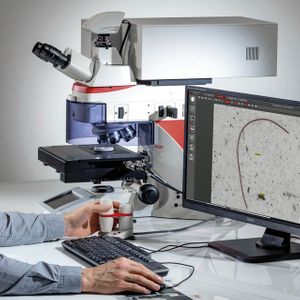
Three popular microplastic identification methods were practically compared with real complex environmental samples. The advantages and limitations of each method including analysis time, fa...
Whole food plant-based diets and medical cannabis have shared and continues to share similar levels of scrutiny, doubt, and stigma by the traditional medical community. One reason for the med...
It is well documented that social housing is fundamental to good welfare for non-human primates (NHPs). Despite this, many laboratory NHPs around the world continue to be singly housed, thoug...
Antibody tests are important tools to assess the efficacy of vaccine candidates and to derive suitable vaccination modalities. High specificity and sensitivity are of great importance for th...
Assessment of how changes in husbandry affect an animal can be challenging as most common methods of assessment, such as corticosterone levels, are more reliable for assessment of acute stres...
Some of the most significant hurdles faced by neuroscientists in the field of neurodegenerative disease research when seeking to acquire genetic information include sample accessibility, repr...
The mission of the California Institute for Regenerative Medicine (CIRM) is to accelerate stem cell treatments to patients with unmet medical needs. With $3 billion in funding and 300 a...
Part I: Introduction and history coronaviruses dating back to the 1980s and coronavirus biology. I will describe the coronavirus life cycle pointing steps that may serve as targets of antivi...
To ensure the immune system’s balance between the recognition of non-self and the prevention of autoimmunity, the activity of immune cells needs to be strictly controlled. During the pr...
The most recently developed genome editing system, CRISPR-Cas9 has greater inherent flexibility than prior programmable nuclease platforms. Because of its simplicity and efficacy, this techno...
Experimental models that promise to replace animal tests that are currently required for drugs and chemicals are rapidly proliferating. This includes a number of novel solutions offered by bi...
Does your PSC medium support cell therapy? In this webinar, learn about Cell Therapy Systems™ (CTS™) Essential 8™ Medium, a feeder-free pluripotent stem cell (PSC) medium th...
Specific biomarker assays are included in an increasing number of drug labels, with uses ranging from prediction of adverse events to providing insights on efficacy for patient populations....
During COVID-19, he has been one of the leaders of institutional and community education around the disease. He has been part of numerous University initiatives including outreach to the Asi...
Scientists worldwide are actively working to tame the COVID-19 pandemic by developing therapies for patients with severe disease and a vaccine to stem transmission. Accomplishing these two g...
Next-generation sequencing (NGS) has become increasingly popular with testing labs, as it allows them to obtain more data in less time and with minimal input. In this webinar, we will explor...
Triple-negative breast cancer (TNBC) is an aggressive disease that accounts for 10-20% of all breast cancer cases diagnosed annually in the U.S.1. Despite its prevalence, TNBC remains resist...
COVID 19 is caused by a new coronavirus , SARS-CoV-2, which is highly infectious and can cause a wide spectrum of symptoms and affect multiple human systems. What we have learned from other...
Prodrugs are harmless in their native state, as they are not targeted by human enzymes. But they can be converted into highly toxic compounds (the “drug”) by viral or bacterial en...
There are new generations of comprehensive multiplex molecular panels available for infectious diseases syndromic diagnostics. They are able to rapidly detect and identify the most common pat...
We all have to provide training; if our program is big or small, a germ-free mouse colony or field studies in Africa, centralized or not. Animal research programs, as varied as they are, have...
Facioscapulohumeral muscular dystrophy (FSHD), one of the most common forms of progressive muscular dystrophies and is often conventionally diagnosed by Southern blot analysis. The accurate d...
Nonterminal blood collection from mice is frequently performed in biomedical research. Multiple phlebotomy sites and restraint techniques are available to investigators. Methods that minimize...
As the costs of genomic analysis decline it becomes possible to offer widescale population genomic analysis to screen for genetic disorders. The Alabama Genomic Health Initiative was es...
The nCounter® Analysis System from NanoString® Technologies uses a novel molecular barcoding technology to measure multiplexed gene expression of up to 800 targets with simple, enzyme...
Circulating Tumor Cells (CTCs) have been extensively explored as circulating biomarkers in various cancers. Due to their rarity, heterogeneity and stem cell-like properties, detecting and pro...

 As NGS panels grow, test interpretation becomes more complex and time-consuming / With the explosion of NGS data, the need for consolidated databases with reliable and transparent curation a...