 Follow
Bioinformatics
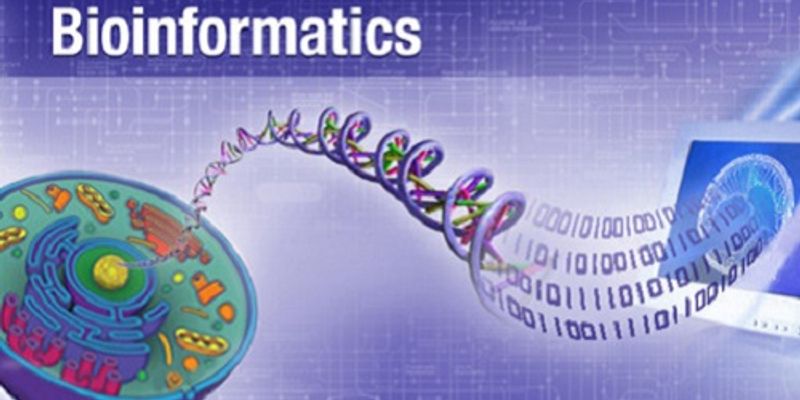
Bioinformatics: an interdisciplinary field that develops methods and software tools for understanding biological data. As an interdisciplinary field of science, bioinformatics combines computer science, statistics, mathematics, and engineering to analyze and interpret biological data.

AUG 20, 2014 | 7:30 AM

Next Generation Sequencing has revolutionized genomic variant discovery. The major bottle-neck for sequencing projects is the individual, biological sample, library preparation. This platfo...
AUG 20, 2014 | 7:00 AM

The ENCODE and modENCODE consortia have generated a resource containing large amounts of transcriptomic data, extensive mapping of chromatin states, as well as the binding locations of >30...
MAY 30, 2014 | 7:30 AM

As next-generation sequencing (NGS) platforms advance in their speed, ease-of-use, and cost-effectiveness, many translational researchers are transitioning from microarrays to RNA sequencing...
MAY 29, 2014 | 12:00 PM

The human genome encodes ~21,500 proteins that are subject to reversible phosphorylation at nearly 1 million phosphosites by about 538 protein kinases and 156 protein phosphatases. Amongst ot...
MAY 29, 2014 | 7:30 AM

One of the major challenges to oncology based drug discovery and development has been the limited or incremental impact that many targeted agents have exhibited in the clinic. Understanding a...
MAR 19, 2014 | 10:00 AM

We present a personalized medicine suite of software applications developed at UCSF for multiple sclerosis (MS): the MS Bioscreen. This new tool addresses the challenges of the dynamic manage...
OCT 17, 2013 | 8:00 AM
C.E. CREDITS

Developments in DNA sequencing technology have provided a unique opportunity for diagnosis and discovery of genetic alterations for rare diseases. Partnering with 20 academic centers in the U...
OCT 17, 2013 | 6:00 AM

The widespread adoption of precision medicine in oncology requires: a compendium of therapies targeting the genetic vulnerabilities of cancer; the diagnostic tools capable of generating a pr...
OCT 16, 2013 | 1:00 PM
C.E. CREDITS

The remarkable diversity we see between different cell types in the human body is governed by the specificity attained through transcriptional and epigenetic regulatory programs. Cancer is a...
OCT 16, 2013 | 10:00 AM
C.E. CREDITS

The current paradigm of detecting established cancer (often too late) and treating routinely with cytotoxic drugs is beginning to change. Advanced technologies such as whole genome sequencin...
OCT 16, 2013 | 9:00 AM
C.E. CREDITS

It is now appreciated that breast cancer is not a single disease, but instead is a spectrum of tumor subtypes with distinct cellular origins, somatic changes and somewhat predictable clinical...
AUG 22, 2013 | 3:00 PM
Developments in DNA sequencing technology have provided a unique opportunity for diagnosis and discovery of genetic alterations for rare diseases. Partnering with 20 academic centers in the U...
AUG 22, 2013 | 3:00 PM
C.E. CREDITS

The use of ultrahigh throughput diagnostic tests that determine genetic sequence variation to guide patient care is rapidly expanding, fueled by the enormous growth in sequencing platform dev...
AUG 22, 2013 | 2:00 PM

Since the introduction of second-generation DNS sequencing technologies in 2007, the cost of genome sequencing has been consistently by 33% per quarter, with the $1000 genome arriving in 2012...
AUG 22, 2013 | 12:00 PM
C.E. CREDITS

It is widely accepted that approximately 85% of known disease-causing DNA variants affect the exons and splice junctions, which is about 1% of the whole genome. As a result, Clinical Exome Se...
AUG 22, 2013 | 9:00 AM
C.E. CREDITS

During IVF procedures pre-implantation genetic diagnosis (PGD) allows for genetic profiling of embryos prior to replacement. Most PGD procedures during IVF are performed to select chromosomal...
AUG 21, 2013 | 4:00 PM
C.E. CREDITS

Approximately 98% of the human genome comprises noncoding DNA, the function of which is largely unknown. Intriguingly, more than 85% of single nucleotide polymorphisms identified to be associ...
AUG 21, 2013 | 3:00 PM
C.E. CREDITS

Long non-coding RNAs (lncRNA) are a novel class of RNA molecule that are emerging as important regulators of gene transcription and post-transcriptional events. lncRNAs have been shown to reg...
AUG 21, 2013 | 3:00 PM
C.E. CREDITS
The remarkable diversity we see between different cell types in the human body is governed by the specificity attained through transcriptional and epigenetic regulatory programs. Cancer is a...
AUG 21, 2013 | 1:00 PM

Cervical cancer screening has evolved significantly since the PAP smear was introduced in 1949. In particular, the association with human papillomavirus (HPV) infection and the mechanism of H...
AUG 21, 2013 | 11:00 AM

RNASeq has become the primary method for studying changes in gene expression in modern genomics research. By directly sequencing the various types of RNA molecules, including mRNA, ncRNA, an...