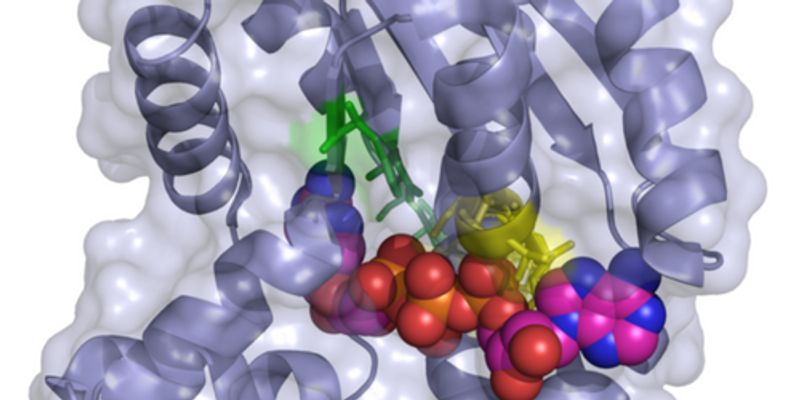
Biomarkers are critical tools for all stages of cancer research, from drug development through clinical applications. Cancer is fundamentally a disease of unregulated cell growth and circumv...
DATE: November 7, 2019 TIME: 9:00am PST, 12:00pm EST In collaboration with Hematherix and Thermo Fisher, Dr. Laurent Mosnier is investigating a new treatment for acute traumatic bl...
DATE: September 27, 2019TIME: 9:00am PT, 12:00pm ET Thienopyrazole derivatives have recently emerged as effective antitumoral agents with kinase inhibitory activity. In this s...
DATE: September 10, 2019TIME: 9:00am PDTAfter new users become familiar with flow cytometry instrumentation and learn how to set up the instrument and acquire data, the next topic to ma...
DATE: September 5, 2019TIME: 7:00am PT, 10:00am ET, 4:00pm CEST PCR (Polymerase Chain Reaction) has gone through a massive evolution since its development in 1983. Besides it...
In this presentation, Dr. Kothari will provide an overview of the Precision Medicine Initiative from NIH and how NGS technologies have helped the researchers to look deep inside the human tra...
Next-generation transcriptome and miRNome sequencing are routinely performed on traditional cell or tissue samples, as well as more difficult samples such as FFPE samples and biofluids. Regar...
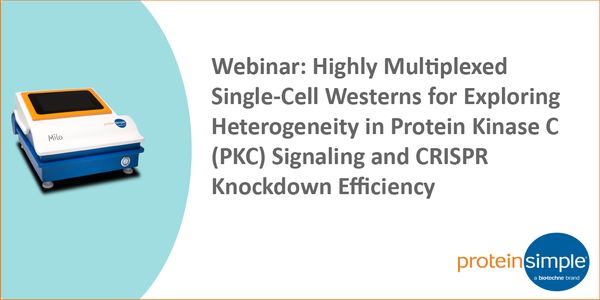
DATE: April 9, 2019TIME: 9:00 AM PDTWe will provide a general introduction to the Single-Cell Western Technology (SCW) and then present data from 2 ongoing projects from the Col...
Cellular research is optimal when using physiologically-relevant cell phenotypes and genotypes of human origin. This assertion has accelerated the adoption of primary cells, stem cells, and i...
Studies in drug development and on hematological and solid Tumors with a Thymidine Kinase 1 immunoassayThere are many tumor biomarkers but, they mostly reflect tumor mass or past growth,...
Recent clinical successes in cancer genome-inspired personalized medicine have been a major breakthrough in drug discovery. However, 98% of the patients have an incomplete therapeutic respons...
Second harmonic generation (SHG) is a biophysical method that sensitively measures real-time conformational change of biomolecules attached to membranes. SHG has recently been applied to dete...
Prodrugs are harmless in their native state, as they are not targeted by human enzymes. But they can be converted into highly toxic compounds (the “drug”) by viral or bacterial en...

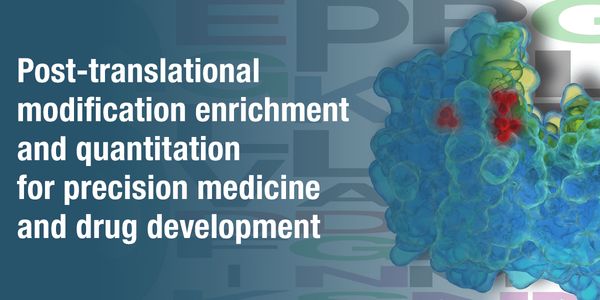
DATE: October 30, 2018TIME: 10:00am PT, 1:00pm ET Identification and quantification of post-translational modifications (PTM) presents a unique challenge to proteomic studies...
As the most common female malignancy, breast cancer is the most likely reason that a woman will die of cancer around the world. Breast cancer mortality has dropped in the U.S. by 35% since 19...
Lung cancer is the leading cause of cancer-related mortality worldwide. Large-scale sequencing studies have revealed the complex genomic landscape of NSCLC and genomic differences between lun...
Although targeted therapies often elicit profound initial patient responses, these effects are transient due to residual disease leading to acquired resistance. How tumors transition between...
Two projects looking at novel approaches to targeting inflammatory breast cancer will be presented. Inflammatory breast cancer (IBC) is a unique, understudied, and most lethal subtype account...
The oncogenic transcription factor c-MYC (MYC) is deregulated, and often overexpressed, in more than 50% of cancers. MYC deregulation is associated with poor prognosis and aggressive disease,...
In the past two decades a small number of infrequently dividing cells have been proposed as the source of multi-drug resistance during cancer treatment. These cells identified by their expres...
PacBio Sequencing simultaneously provides long sequence reads, high consensus accuracy, minimal sequence bias, and methylation detection. I will highlight new advances and updates on applying...
To date the anatomic extent of tumor (TNM-classification) has been by far the most important factors to predict the prognosis of cancer patients. However, this classification provides limited...
Biomarkers are critical tools for all stages of cancer research, from drug development through clinical applications. Cancer is fundamentally a disease of unregulated cell growth and circumv...
DATE: November 7, 2019 TIME: 9:00am PST, 12:00pm EST In collaboration with Hematherix and Thermo Fisher, Dr. Laurent Mosnier is investigating a new treatment for acute traumatic bl...
DATE: September 27, 2019TIME: 9:00am PT, 12:00pm ET Thienopyrazole derivatives have recently emerged as effective antitumoral agents with kinase inhibitory activity. In this s...
DATE: September 10, 2019TIME: 9:00am PDTAfter new users become familiar with flow cytometry instrumentation and learn how to set up the instrument and acquire data, the next topic to ma...
DATE: September 5, 2019TIME: 7:00am PT, 10:00am ET, 4:00pm CEST PCR (Polymerase Chain Reaction) has gone through a massive evolution since its development in 1983. Besides it...
In this presentation, Dr. Kothari will provide an overview of the Precision Medicine Initiative from NIH and how NGS technologies have helped the researchers to look deep inside the human tra...
Next-generation transcriptome and miRNome sequencing are routinely performed on traditional cell or tissue samples, as well as more difficult samples such as FFPE samples and biofluids. Regar...
DATE: April 9, 2019TIME: 9:00 AM PDTWe will provide a general introduction to the Single-Cell Western Technology (SCW) and then present data from 2 ongoing projects from the Col...
Cellular research is optimal when using physiologically-relevant cell phenotypes and genotypes of human origin. This assertion has accelerated the adoption of primary cells, stem cells, and i...
Studies in drug development and on hematological and solid Tumors with a Thymidine Kinase 1 immunoassayThere are many tumor biomarkers but, they mostly reflect tumor mass or past growth,...
Recent clinical successes in cancer genome-inspired personalized medicine have been a major breakthrough in drug discovery. However, 98% of the patients have an incomplete therapeutic respons...
Second harmonic generation (SHG) is a biophysical method that sensitively measures real-time conformational change of biomolecules attached to membranes. SHG has recently been applied to dete...
Prodrugs are harmless in their native state, as they are not targeted by human enzymes. But they can be converted into highly toxic compounds (the “drug”) by viral or bacterial en...
DATE: October 30, 2018TIME: 10:00am PT, 1:00pm ET Identification and quantification of post-translational modifications (PTM) presents a unique challenge to proteomic studies...
As the most common female malignancy, breast cancer is the most likely reason that a woman will die of cancer around the world. Breast cancer mortality has dropped in the U.S. by 35% since 19...
Lung cancer is the leading cause of cancer-related mortality worldwide. Large-scale sequencing studies have revealed the complex genomic landscape of NSCLC and genomic differences between lun...
Although targeted therapies often elicit profound initial patient responses, these effects are transient due to residual disease leading to acquired resistance. How tumors transition between...
Two projects looking at novel approaches to targeting inflammatory breast cancer will be presented. Inflammatory breast cancer (IBC) is a unique, understudied, and most lethal subtype account...
The oncogenic transcription factor c-MYC (MYC) is deregulated, and often overexpressed, in more than 50% of cancers. MYC deregulation is associated with poor prognosis and aggressive disease,...
In the past two decades a small number of infrequently dividing cells have been proposed as the source of multi-drug resistance during cancer treatment. These cells identified by their expres...
PacBio Sequencing simultaneously provides long sequence reads, high consensus accuracy, minimal sequence bias, and methylation detection. I will highlight new advances and updates on applying...
To date the anatomic extent of tumor (TNM-classification) has been by far the most important factors to predict the prognosis of cancer patients. However, this classification provides limited...
Opens in a new windowOpens an external siteOpens an external site in a new window