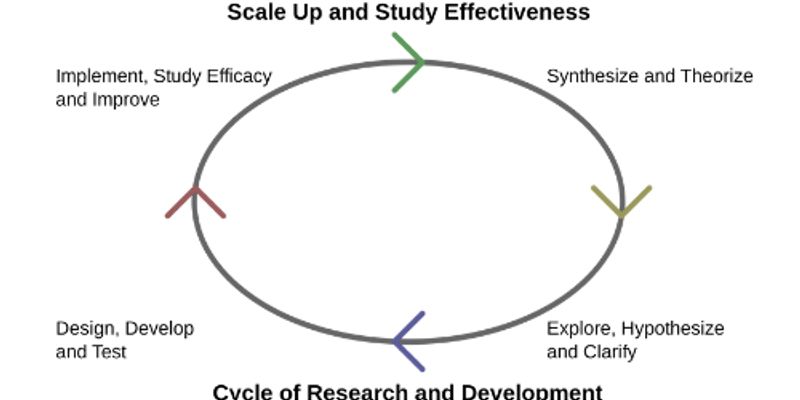
Research and Development: innovative activities performed by corporations or governments for the creation, discovery and advancement of services and products.
Recent FDA approval of the first Chimeric Antigen Receptor T cell (CAR-T) therapy offers cancer patients more promise than ever for curative effects. However, many technical challenges in T c...
DATE: October 17, 2017TIME: 08:00am PDT, 11:00am EDTResearching and understanding the mechanisms of drug resistance are essential to determine therapies that are more effective on an in...
The detection of circulating molecular biomarkers is useful for monitoring pathogenic processes and response to therapeutic intervention1,2. In cancer, genomic and proteomic biomarkers are us...
Acral lentiginous melanoma (ALM) is a rare sun-shielded melanoma subtype associated with worse survival than cutaneous melanoma (CM), a more common form of skin cancer linked to exposure to u...
The detection of circulating molecular biomarkers is useful for monitoring pathogenic processes and response to therapeutic intervention1,2. In cancer, genomic and proteomic biomarkers are us...
The promise of precision and personalized medicine is rooted in accurate, highly sensitive, and specific disease biomarkers. This is particularly true for cancer-a disease characterized by ma...
Pancreatic ductal adenocarcinoma (PDAC) has a five-year survival rate of only 9%. Acquired drug resistance is a major factor that limits the effectiveness of chemotherapy. Exosomes, secreted...
The analysis of circulating biomarkers in a patient’s blood holds significant potential for early disease detection and disease monitoring. Circulating DNA is the most commonly studied...
In order to expand the treatment options of cancers driven by oncogenic RAS, new cell surface targets need to be identified and characterized. Here, we describe mass spectrometry based phenot...
We developed two computational methods, CARE and TIDE, to predict response and resistance to targeted therapies and immunotherapies. CARE infers gene signatures of targeted therapy response b...
Recent advances in flow and mass cytometry have greatly expanded the number of immune cell parameters that can be interrogated, resulting in an improved understanding of the immune system het...
Nanopore sequencing has enormous potential for application to cancer, but specifically offers advantages into two main arenas, epigenetics and structural variation. Methylation is well-known...
The “R2G2” (B6;129-Rag2tm1FwaIL2rgtm1Rsky/DwlHsd) knockout mouse is the latest advancement to provide an alternative option in the highly immunodeficient mouse model category for...
Exosomes are nano-scale lipid membrane-enclosed extracellular vesicles that form in the cellular endosomal system but are released outside the cell. These virus-sized “fat balls”...
More and more decisions will center on the ability to molecularly characterize a disease. So the molecular diagnostic laboratory will have a pivotal role. What does that look like? Will we be...
DATE: October 11, 2017TIME: 08:30am PDT, 10:30am CDTSince 1993, Gibco™ B-27™ Supplement and Neurobasal™ Medium has been the trusted standard for a variety of neuronal...
The first small molecule inhibitor of the molecular chaperone Heat Shock Protein 90 (HSP90) was identified more than 20 years ago. Upon determination of the drug binding site and clarificatio...
There has been a great deal of renewed attention in immuno-oncology over the last decade. Therapies for cancer are being developed, approved, and administered that can either initiate,...
DATE: October 10, 2017TIME: 9:00AM PDTPatient-derived xenografts (PDX) are increasingly being used in biomedical research for therapeutic analysis in mice. Unlike traditional cell line...
DATE: October 10, 2017TIME: 7:00 AM PT, 10:00 AM ETQuality assessment of monoclonal antibodies can be a bottleneck in biopharmaceutical workflows because of the complexity and length of...
DATE: October 5th, 2017TIME: 6:00am PT, 9:00am ETIn this webinar you will learn: that temperature variations in your lab and detection instrument will distort your results...
Traditional high throughput screening (HTS) assays for neuronal targets employ non-human primary neuronal cells due to the scale necessary for HTS. Isolation of mouse primary neurons can be u...
The Resource Identification Initiative supports NIH's new guidelines for Rigor and Transparency as these apply in biomedical publications. Authors are instructed to authenticate key biolo...
Recent FDA approval of the first Chimeric Antigen Receptor T cell (CAR-T) therapy offers cancer patients more promise than ever for curative effects. However, many technical challenges in T c...
DATE: October 17, 2017TIME: 08:00am PDT, 11:00am EDTResearching and understanding the mechanisms of drug resistance are essential to determine therapies that are more effective on an in...
The detection of circulating molecular biomarkers is useful for monitoring pathogenic processes and response to therapeutic intervention1,2. In cancer, genomic and proteomic biomarkers are us...
Acral lentiginous melanoma (ALM) is a rare sun-shielded melanoma subtype associated with worse survival than cutaneous melanoma (CM), a more common form of skin cancer linked to exposure to u...
The detection of circulating molecular biomarkers is useful for monitoring pathogenic processes and response to therapeutic intervention1,2. In cancer, genomic and proteomic biomarkers are us...
The promise of precision and personalized medicine is rooted in accurate, highly sensitive, and specific disease biomarkers. This is particularly true for cancer-a disease characterized by ma...
Pancreatic ductal adenocarcinoma (PDAC) has a five-year survival rate of only 9%. Acquired drug resistance is a major factor that limits the effectiveness of chemotherapy. Exosomes, secreted...
The analysis of circulating biomarkers in a patient’s blood holds significant potential for early disease detection and disease monitoring. Circulating DNA is the most commonly studied...
In order to expand the treatment options of cancers driven by oncogenic RAS, new cell surface targets need to be identified and characterized. Here, we describe mass spectrometry based phenot...
We developed two computational methods, CARE and TIDE, to predict response and resistance to targeted therapies and immunotherapies. CARE infers gene signatures of targeted therapy response b...
Recent advances in flow and mass cytometry have greatly expanded the number of immune cell parameters that can be interrogated, resulting in an improved understanding of the immune system het...
Nanopore sequencing has enormous potential for application to cancer, but specifically offers advantages into two main arenas, epigenetics and structural variation. Methylation is well-known...
The “R2G2” (B6;129-Rag2tm1FwaIL2rgtm1Rsky/DwlHsd) knockout mouse is the latest advancement to provide an alternative option in the highly immunodeficient mouse model category for...
Exosomes are nano-scale lipid membrane-enclosed extracellular vesicles that form in the cellular endosomal system but are released outside the cell. These virus-sized “fat balls”...
More and more decisions will center on the ability to molecularly characterize a disease. So the molecular diagnostic laboratory will have a pivotal role. What does that look like? Will we be...
DATE: October 11, 2017TIME: 08:30am PDT, 10:30am CDTSince 1993, Gibco™ B-27™ Supplement and Neurobasal™ Medium has been the trusted standard for a variety of neuronal...
The first small molecule inhibitor of the molecular chaperone Heat Shock Protein 90 (HSP90) was identified more than 20 years ago. Upon determination of the drug binding site and clarificatio...
There has been a great deal of renewed attention in immuno-oncology over the last decade. Therapies for cancer are being developed, approved, and administered that can either initiate,...
DATE: October 10, 2017TIME: 9:00AM PDTPatient-derived xenografts (PDX) are increasingly being used in biomedical research for therapeutic analysis in mice. Unlike traditional cell line...
DATE: October 10, 2017TIME: 7:00 AM PT, 10:00 AM ETQuality assessment of monoclonal antibodies can be a bottleneck in biopharmaceutical workflows because of the complexity and length of...
DATE: October 5th, 2017TIME: 6:00am PT, 9:00am ETIn this webinar you will learn: that temperature variations in your lab and detection instrument will distort your results...
Traditional high throughput screening (HTS) assays for neuronal targets employ non-human primary neuronal cells due to the scale necessary for HTS. Isolation of mouse primary neurons can be u...
The Resource Identification Initiative supports NIH's new guidelines for Rigor and Transparency as these apply in biomedical publications. Authors are instructed to authenticate key biolo...
 Follow