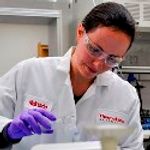
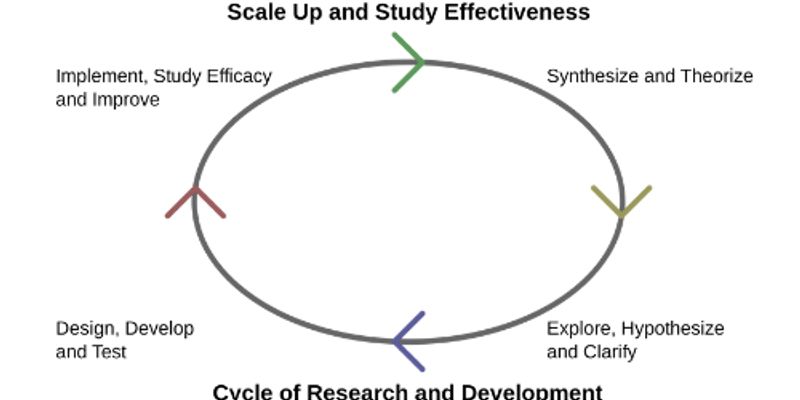
Research and Development: innovative activities performed by corporations or governments for the creation, discovery and advancement of services and products.
Buerger’s disease, commonly known as Thromboangiitis obliterans, is a non-atherosclerotic, segmental inflammatory disease that can affect the small and medium-sized arteries of young pe...
The reprogramming of somatic cells into induced Pluripotent Stem Cells (iPSC) has great potential of applications, not only in basic research, but also in drug screening and cell therapy. Wit...
Access this training to learn more about the evolution of pluripotent stem cell culture systems and which solution is best for your PSC culture goals....
Recent discoveries in stem cell biology have increased the importance of stem cells in therapeutics and have improved researchers’ understanding of normal and disease processes. The inh...
Neurons derived from human pluripotent stem cells (hPSCs), including embryonic stem cells (ESCs) and induced pluripotent stem cells (iPSCs), are excellent resources for disease modeling and d...
Stem cells, specifically induced pluripotent stem cells (iPSCs), offer exciting potential for the future of cell therapy and regenerative medicine. More recently, genetic engineering of stem ...
The human enteric nervous system (ENS) is derived from the neural crest and represents a complex network of ~500 million neurons with dozens of distinct neurotransmitter and hormone subtypes ...
In the last 10 years, PCSK9 emerged as a promising target for the treatment of autosomal dominant hypercholesterolemia (ADH). With the emergence of induced pluripotent stem (hiPS) cells and f...
Most discussions about pluripotent stem cells center around their promise for regenerative medicine. The most remarkable quality of these cells is their ability to turn into all of the ...
Mesenchymal stromal cell (MSC) therapy is a promising option to support endogenous regeneration and immunomodulation. However, the clinical results are contradictory. We think that the recent...
In our previous preclinical studies, when neural stem progenitor cells (NS/PCs)-derived from hiPSCs were transplanted into mouse or non-human primate spinal cord injury (SCI) models, long-ter...
A key aspect of translating great scientific discoveries to commercially viable cell therapies is the establishment of robust manufacturing processes that can produce the right quantity of ce...
A major challenge for the clinical application of pluripotent stem cell therapy for neurodegenerative diseases is large-scale manufacturing and cryopreservation of neurons and glia that can b...
Using human pluripotent stem cells as a screening platform, we have identified a novel cell surface maker that identifies foregut endoderm progenitors in pancreas and liver. We have sho...
Cataract, or vision loss due to clouding of the eye’s lens, is a large and costly international problem. Over 80 million people currently have low vision due to cataract. Cataracts can ...
One of the ultimate goals in Regenerative Medicine is the generation of pluripotent stem cells (PSCs) directly from somatic cells obtained from patients. Although major findings in the defini...
The study of human genetic neurodevelopmental disorders (NDDs) is complicated by the inaccessibility of the relevant tissue for study: it is extremely rare to obtain post-surgical brain sampl...
Years of significant effort can go into generating key proof of concept data to support moving bench research to clinical development.Yet, much work remains in order to transition from POC to...
The central nervous system (CNS) is a conglomerate of diverse, interconnected tissues that each contain cell phenotypes specific to their distinct anatomical region. Recent studies have demon...
My research program focuses on building the technology to generate diverse human cell-types for application in regenerative medicine and drug toxicology testing. While embryonic stem cells (E...
DATE: August 24th 2016TIME: 8:00AM PST, 11:00AM ESTPreclinical micro-computed tomography (microCT) imaging systems are utilized across a wide range of applications requiring imagi...
The export of tree nuts to the European Union (EU) is subject to a maximum residue limit (MRL) of 1.5 ppm for the fungicide fosetyl-Al. As fosetyl-Al readily hydrolyzes to phosphonic acid, th...
The use of Liquid Chromatography Mass Spectrometry (LC-MS/MS) is becoming more prevalent in clinical research laboratories throughout the world. This technology brings an additional level of...
Medicare is clearly moving to a pay for value paradigm, and commercial payers continue their own march away from traditional fee-for-service payment. How can you develop and articulate a pers...
Buerger’s disease, commonly known as Thromboangiitis obliterans, is a non-atherosclerotic, segmental inflammatory disease that can affect the small and medium-sized arteries of young pe...
The reprogramming of somatic cells into induced Pluripotent Stem Cells (iPSC) has great potential of applications, not only in basic research, but also in drug screening and cell therapy. Wit...
Access this training to learn more about the evolution of pluripotent stem cell culture systems and which solution is best for your PSC culture goals....
Recent discoveries in stem cell biology have increased the importance of stem cells in therapeutics and have improved researchers’ understanding of normal and disease processes. The inh...
Neurons derived from human pluripotent stem cells (hPSCs), including embryonic stem cells (ESCs) and induced pluripotent stem cells (iPSCs), are excellent resources for disease modeling and d...
Stem cells, specifically induced pluripotent stem cells (iPSCs), offer exciting potential for the future of cell therapy and regenerative medicine. More recently, genetic engineering of stem ...
The human enteric nervous system (ENS) is derived from the neural crest and represents a complex network of ~500 million neurons with dozens of distinct neurotransmitter and hormone subtypes ...
In the last 10 years, PCSK9 emerged as a promising target for the treatment of autosomal dominant hypercholesterolemia (ADH). With the emergence of induced pluripotent stem (hiPS) cells and f...
Most discussions about pluripotent stem cells center around their promise for regenerative medicine. The most remarkable quality of these cells is their ability to turn into all of the ...
Mesenchymal stromal cell (MSC) therapy is a promising option to support endogenous regeneration and immunomodulation. However, the clinical results are contradictory. We think that the recent...
In our previous preclinical studies, when neural stem progenitor cells (NS/PCs)-derived from hiPSCs were transplanted into mouse or non-human primate spinal cord injury (SCI) models, long-ter...
A key aspect of translating great scientific discoveries to commercially viable cell therapies is the establishment of robust manufacturing processes that can produce the right quantity of ce...
A major challenge for the clinical application of pluripotent stem cell therapy for neurodegenerative diseases is large-scale manufacturing and cryopreservation of neurons and glia that can b...
Using human pluripotent stem cells as a screening platform, we have identified a novel cell surface maker that identifies foregut endoderm progenitors in pancreas and liver. We have sho...
Cataract, or vision loss due to clouding of the eye’s lens, is a large and costly international problem. Over 80 million people currently have low vision due to cataract. Cataracts can ...
One of the ultimate goals in Regenerative Medicine is the generation of pluripotent stem cells (PSCs) directly from somatic cells obtained from patients. Although major findings in the defini...
The study of human genetic neurodevelopmental disorders (NDDs) is complicated by the inaccessibility of the relevant tissue for study: it is extremely rare to obtain post-surgical brain sampl...
Years of significant effort can go into generating key proof of concept data to support moving bench research to clinical development.Yet, much work remains in order to transition from POC to...
The central nervous system (CNS) is a conglomerate of diverse, interconnected tissues that each contain cell phenotypes specific to their distinct anatomical region. Recent studies have demon...
My research program focuses on building the technology to generate diverse human cell-types for application in regenerative medicine and drug toxicology testing. While embryonic stem cells (E...
DATE: August 24th 2016TIME: 8:00AM PST, 11:00AM ESTPreclinical micro-computed tomography (microCT) imaging systems are utilized across a wide range of applications requiring imagi...
The export of tree nuts to the European Union (EU) is subject to a maximum residue limit (MRL) of 1.5 ppm for the fungicide fosetyl-Al. As fosetyl-Al readily hydrolyzes to phosphonic acid, th...
The use of Liquid Chromatography Mass Spectrometry (LC-MS/MS) is becoming more prevalent in clinical research laboratories throughout the world. This technology brings an additional level of...
Medicare is clearly moving to a pay for value paradigm, and commercial payers continue their own march away from traditional fee-for-service payment. How can you develop and articulate a pers...
 Follow