In light of the numerous US FDA-approved humanized monoclonal antibodies (mAbs) for cancer immunotherapy, it is surprising that the advancement of B-cell epitope vaccines designed to elicit...
Cell-based therapeutics show immense promise in treating a variety of currently incurable diseases due to their potent mechanisms. However, despite recent successes, challenges persist in ma...
Chimeric antigen receptor (CAR) T-cell therapy shows significant potential in treating various human cancers. Unfortunately, researchers have faced difficulty in adapting this therapy to tar...
This presentation looks at the dynamic landscape of therapeutic antibody development, focusing on next-generation immuno-oncology therapeutics that target checkpoint inhibitors and incorpora...
Chimeric antigen receptor (CAR) T cell therapy has emerged as a novel therapeutic option for cancer patients in recent years. Despite its success, this approach faces acknowledged limitation...
Despite the remarkable clinical efficacy of chimeric antigen receptor (CAR) T cells in hematological malignancies, only a subset of patients achieve a durable complete response. Furthermore,...
Nanovials are emerging as an accessible platform for performing single-cell functional screening leveraging standard instrumentation, such as flow cytometers and microfluidic single-cell seq...
Chimeric antigen receptor (CAR) T-cell therapy has been extremely successful in treating relapsed/refractory B-cell malignancies, with six CAR T-cell products now FDA approved. Unfortunately...
Cell-based therapies are advanced medical treatments for cancers and other diseases. Autologous and allogeneic cell therapies use immune cells from either a patient or from healthy donor sam...
Understanding the spatial organization of the immune response within tumors is crucial for developing effective cancer immunotherapies. In this seminar, we delve into the interactions betwee...
Adoptive cell therapy (ACT) is an immunotherapy that employs living immune cells to target and destroy cancer cells. However, the inhibitory tumor microenvironment features several obstacles...
Chimeric antigen receptor T-cell (CAR-T) therapies have emerged as a revolutionary approach in the field of hematological malignancies, offering unprecedented clinical efficacy when patients...
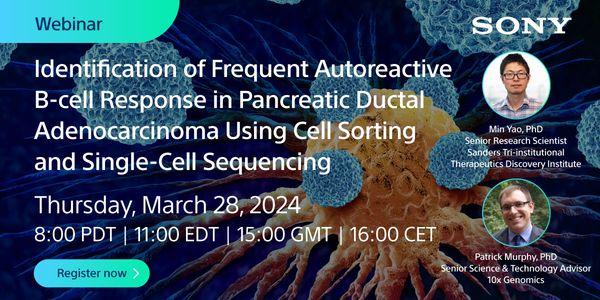
B cell responses within pancreatic ductal adenocarcinoma (PDAC) tumors are associated with improved patient outcomes, yet the specific triggering antigens remain largely unknown. In this web...
Join Dr. Emily Hodges, assistant professor of biochemistry at Vanderbilt University, to learn more about how the Hodges Lab is utilizing the 6-base genome to investigate the dynamics of enha...
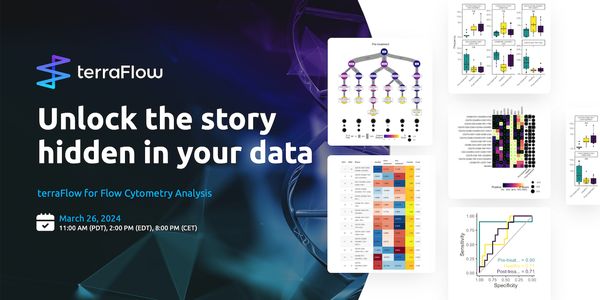
Ever wonder what you’re missing in your data? The sheer complexity of today’s flow and mass cytometry datasets demands automated solutions. Machine learning plugins only provide...
Nanovials are emerging as an accessible platform for performing single-cell functional screening leveraging standard instrumentation, such as flow cytometers and microfluidic single-cell seq...
The study of a single cell, the fundamental unit of our complex bodies, has become an important field in cellular biology, and researchers are using single-cell analysis to shed new light on...
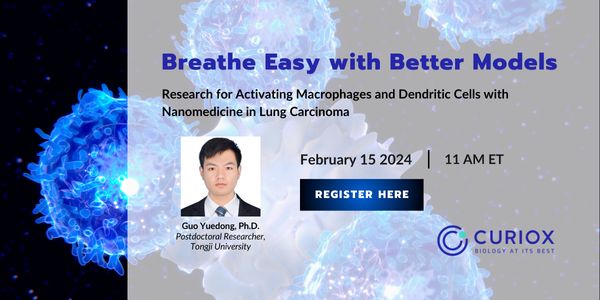
Macrophages can mediate phagocytosis of cancer cells and cytotoxic tumor killing, and engage in effective bidirectional interactions with components of the innate and adaptive immune system....
Calcium signaling is essential for cellular communication, orchestrating a myriad of physiological processes. As the quest for a more profound understanding of cellular dynamics intensifies,...
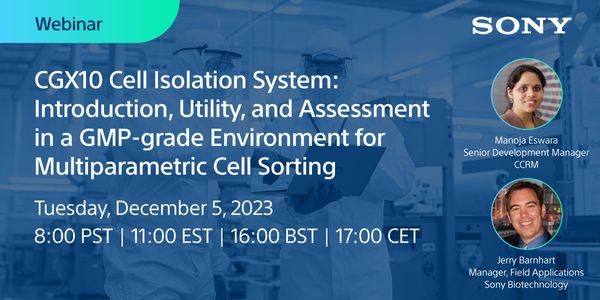
CGX10 Cell Isolation System: Introduction, Utility, and Assessment in a GMP-grade Environment for Multiparametric Cell Sorting A future of long-term, minimally toxic immunotherapy personaliz...
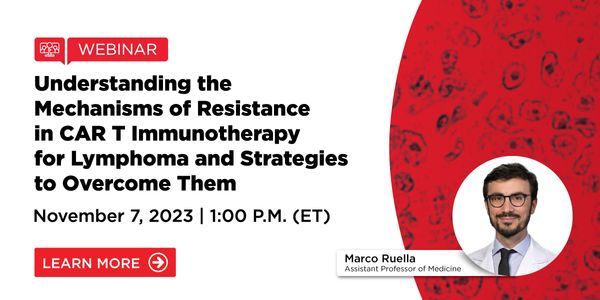
In the last 5 years, the US Food and Drug Administration has approved 4 anti-CD19 chimeric antigen receptor T cell (CART19) products for relapsed/refractory B cell lymphomas and leukemia. Ho...
With the fast progress and deeper understanding of CAR-T cell therapy, finding a better solution other than lentivirus transduction is more requested, to overcome the functional limitation o...
In the era of advanced biotechnology, automation plays a crucial role in accelerating cancer research. Next-generation sequencing (NGS) technology has revolutionized cancer research, but lab...
In light of the numerous US FDA-approved humanized monoclonal antibodies (mAbs) for cancer immunotherapy, it is surprising that the advancement of B-cell epitope vaccines designed to elicit...
Cell-based therapeutics show immense promise in treating a variety of currently incurable diseases due to their potent mechanisms. However, despite recent successes, challenges persist in ma...
Chimeric antigen receptor (CAR) T-cell therapy shows significant potential in treating various human cancers. Unfortunately, researchers have faced difficulty in adapting this therapy to tar...
This presentation looks at the dynamic landscape of therapeutic antibody development, focusing on next-generation immuno-oncology therapeutics that target checkpoint inhibitors and incorpora...
Chimeric antigen receptor (CAR) T cell therapy has emerged as a novel therapeutic option for cancer patients in recent years. Despite its success, this approach faces acknowledged limitation...
Despite the remarkable clinical efficacy of chimeric antigen receptor (CAR) T cells in hematological malignancies, only a subset of patients achieve a durable complete response. Furthermore,...
Nanovials are emerging as an accessible platform for performing single-cell functional screening leveraging standard instrumentation, such as flow cytometers and microfluidic single-cell seq...
Chimeric antigen receptor (CAR) T-cell therapy has been extremely successful in treating relapsed/refractory B-cell malignancies, with six CAR T-cell products now FDA approved. Unfortunately...
Cell-based therapies are advanced medical treatments for cancers and other diseases. Autologous and allogeneic cell therapies use immune cells from either a patient or from healthy donor sam...
Understanding the spatial organization of the immune response within tumors is crucial for developing effective cancer immunotherapies. In this seminar, we delve into the interactions betwee...
Adoptive cell therapy (ACT) is an immunotherapy that employs living immune cells to target and destroy cancer cells. However, the inhibitory tumor microenvironment features several obstacles...
Chimeric antigen receptor T-cell (CAR-T) therapies have emerged as a revolutionary approach in the field of hematological malignancies, offering unprecedented clinical efficacy when patients...
B cell responses within pancreatic ductal adenocarcinoma (PDAC) tumors are associated with improved patient outcomes, yet the specific triggering antigens remain largely unknown. In this web...
Join Dr. Emily Hodges, assistant professor of biochemistry at Vanderbilt University, to learn more about how the Hodges Lab is utilizing the 6-base genome to investigate the dynamics of enha...
Ever wonder what you’re missing in your data? The sheer complexity of today’s flow and mass cytometry datasets demands automated solutions. Machine learning plugins only provide...
Nanovials are emerging as an accessible platform for performing single-cell functional screening leveraging standard instrumentation, such as flow cytometers and microfluidic single-cell seq...
The study of a single cell, the fundamental unit of our complex bodies, has become an important field in cellular biology, and researchers are using single-cell analysis to shed new light on...
Macrophages can mediate phagocytosis of cancer cells and cytotoxic tumor killing, and engage in effective bidirectional interactions with components of the innate and adaptive immune system....
Calcium signaling is essential for cellular communication, orchestrating a myriad of physiological processes. As the quest for a more profound understanding of cellular dynamics intensifies,...
CGX10 Cell Isolation System: Introduction, Utility, and Assessment in a GMP-grade Environment for Multiparametric Cell Sorting A future of long-term, minimally toxic immunotherapy personaliz...
In the last 5 years, the US Food and Drug Administration has approved 4 anti-CD19 chimeric antigen receptor T cell (CART19) products for relapsed/refractory B cell lymphomas and leukemia. Ho...
With the fast progress and deeper understanding of CAR-T cell therapy, finding a better solution other than lentivirus transduction is more requested, to overcome the functional limitation o...
In the era of advanced biotechnology, automation plays a crucial role in accelerating cancer research. Next-generation sequencing (NGS) technology has revolutionized cancer research, but lab...
 Follow