
 Follow
Disease
Disease: is a disorder of structure or function in a human, animal, or plant, especially one that produces specific signs or symptoms that is not simply a direct result of physical injury.
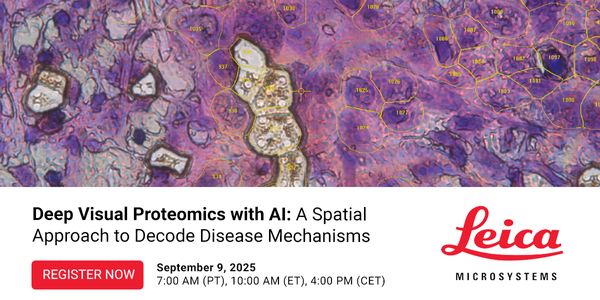

Sept. 3, 2025 | 10:30am (IST), 1:00pm (SGT), 2:00pm (KST), 3:00pm (AEST), 5:00pm (NZST)

Spatial Biology has emerged as the latest discipline with a demonstrably transformative impact on advancing translational research. In particular, spatial proteomics focuses on the localized...
AUG 28, 2025 | 10:00 AM
C.E. CREDITS
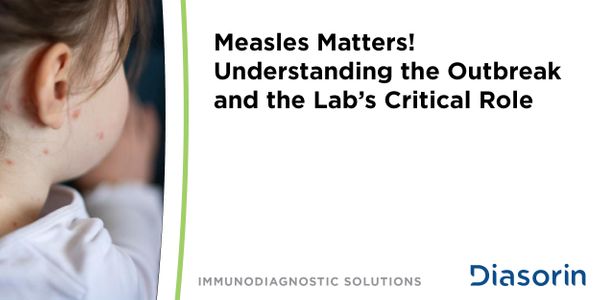
Measles is a highly contagious viral illness that can lead to severe complications, including fatal pneumonia. In early 2025, a measles outbreak was identified in west Texas. Since then, the...
July 31, 2025 7am PST/10am EST/4pm CET
microRNAs are emerging as powerful biomarkers for precision medicine, offering valuable insights into disease mechanisms, diagnosis, prognosis, and treatment response. However, successful di...
JUL 16, 2025 | 3:00 PM
C.E. CREDITS

Digital pathology has a crucial role in diagnostic pathology and is increasingly a technological requirement in the field. Integration of digital slides into the pathology workflow, advanced...
JUL 16, 2025 | 8:00 AM
The identification of reliable biomarkers from peripheral blood is crucial for improving disease diagnosis and monitoring. Spectral flow cytometry has emerged as a powerful tool for high-dim...
JUL 15, 2025 | 9:00 AM

Explore how super-resolution microscopy reveals GPCR and RTK receptor dimerization, with a focus on D2 dopamine receptor function and disease relevance....
JUL 10, 2025 | 8:00 AM
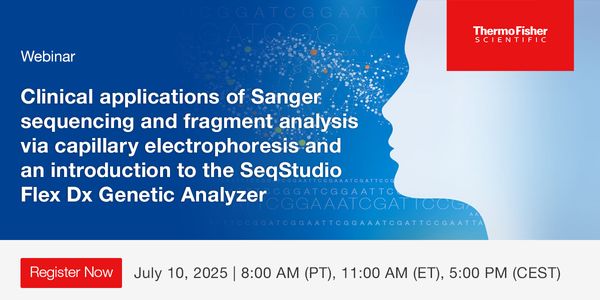
Due to its high accuracy and fast, simple workflow, Capillary Electrophoresis (CE) is a foundational technology for clinical applications. CE is an invaluable tool used to detect genetic var...
JUN 26, 2025 | 9:00 AM
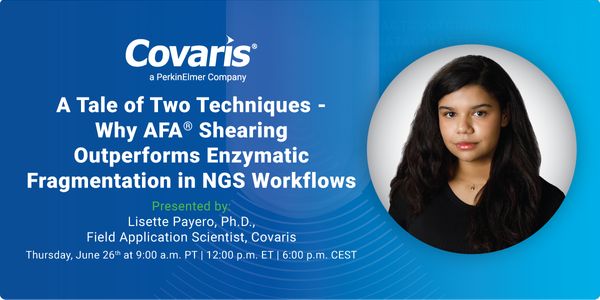
DNA fragmentation is a crucial first step in Next Generation Sequencing (NGS) workflows—from Whole Genome Sequencing (WGS) and Whole Exome Sequencing (WES) to ChIP-seq and Minimal Resi...
JUN 25, 2025 | 8:00 AM

The upcoming webinar will delve into the advanced applications of Next Generation Flow™ in the analysis of Minimal Residual Disease (MRD) in Multiple Myeloma (MM). Dr. Juan Flores-Mont...
JUN 25, 2025 | 8:00 AM
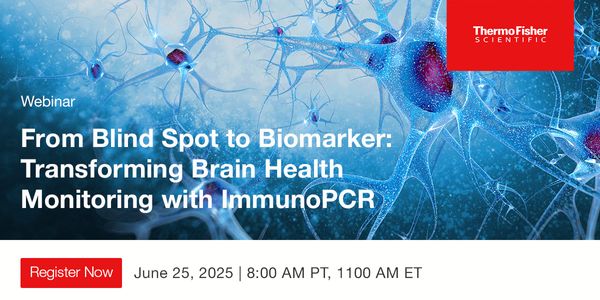
Traumatic brain injury, together with adjacent brain conditions such as Alzheimer’s disease, is a global health crisis. In this presentation, Aleksandra Hemm, Product Manager from Ther...
JUN 11, 2025 | 8:00 AM
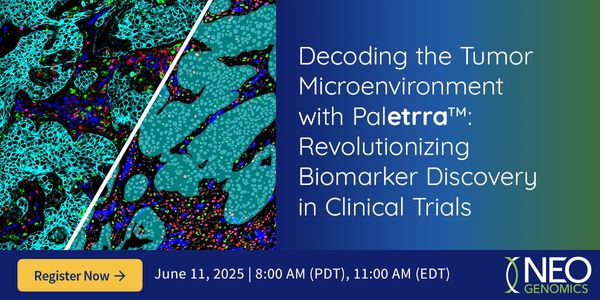
Advances in tissue-based technology in the past few years have created unprecedented opportunities to identify biomarkers of disease processes, especially within oncology by using multi-omic...
JUN 10, 2025 | 8:00 AM
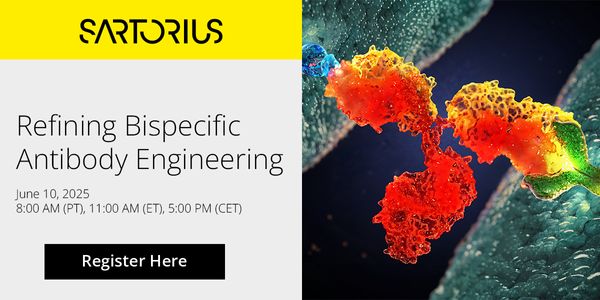
Bispecific antibodies (bsAbs) represent a versatile and increasingly important class of targeted therapeutics, designed to bind two distinct sites — either two different epitopes on th...
JUN 10, 2025 | 6:00 AM
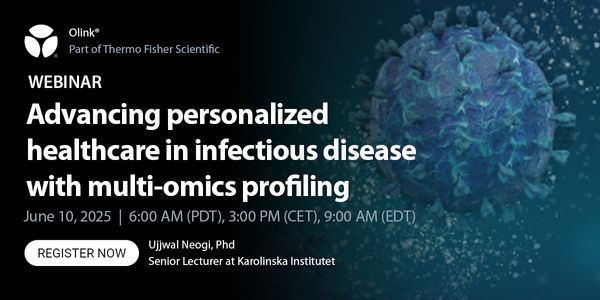
Personalized health profiling using multi-omics data has the potential to reveal immunometabolic disruptions among individuals living with HIV (PWH) who are effectively undergoing antiretrov...
JUN 05, 2025 | 9:00 AM

Harmonizing immunophenotyping assay designs facilitates integrating findings across trials, enabling biomarker identification and validation, revealing cohort-specific features and drug mech...
MAY 28, 2025 | 8:00 AM

Join us for an insightful session where we explore how NGS proteomics is transforming our understanding of health and disease. Discover how proteomics integrates seamlessly with genomics, me...
MAY 15, 2025 | 9:00 AM
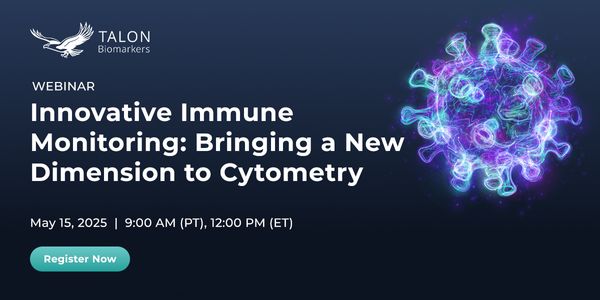
The immune system is dynamic and multifaceted, making the discovery of meaningful biomarkers and the study of disease a significant challenge. The leadership at Talon Biomarkers has a long h...
On Demand

LGC offers a comprehensive portfolio of reference standards and scientific tools for a wide range of disciplines. The focus of this talk will be on reference materials for clinical NGS produ...
MAY 13, 2025 | 9:00 AM
Immune checkpoint blockade (ICB) targeting T cells has enhanced clinical outcomes in patients with renal and bladder cancers; however, response rates remain limited, particularly in cases of...
MAY 07, 2025 | 8:00 AM
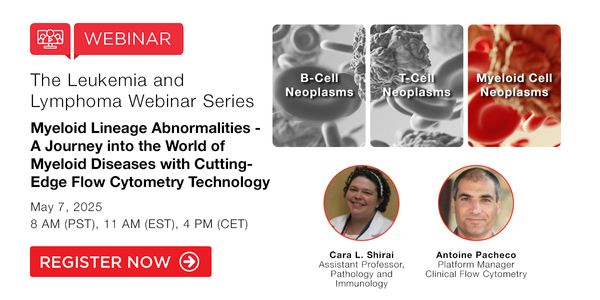
In this three-part webinar series, we invite you to explore the benefits of a standardized workflow in leukemia and lymphoma analysis. Join this showcase of Beckman Coulter’s new DxFLE...
APR 25, 2025 | 8:00 AM
C.E. CREDITS

Genomic data is vast and increasingly sparse. This problem grows as we sequence more and more patients. Herein, Professor Ennis will describe an algorithmic tool that reduces the sparsity of...
APR 16, 2025 | 9:00 AM
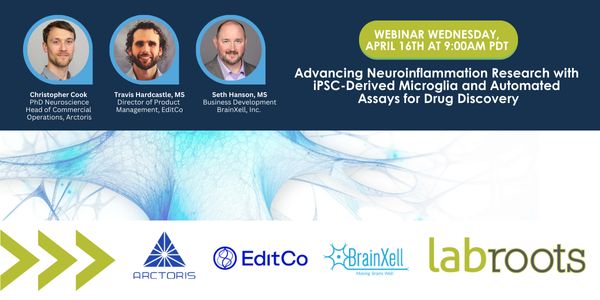
BrainXell offers the most comprehensive portfolio of high-purity iPSC-derived human neurons and glia, sourced from control, edited and disease lines, to advance translational research and dr...
APR 16, 2025 | 7:00 AM
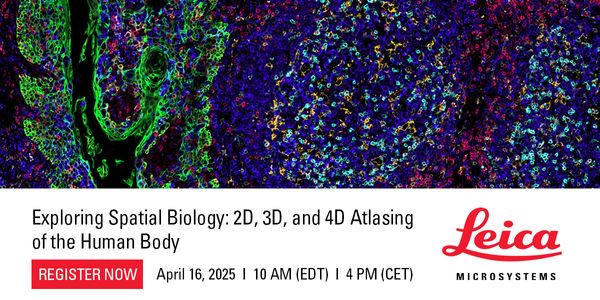
Join us for a live webinar on the latest advancements in spatial biology. Featuring two insightful presentations, learn how cutting-edge imaging and single-cell technologies are transforming...
JUN 25, 2025 | 8:00 AM
Traumatic brain injury, together with adjacent brain conditions such as Alzheimer’s disease, is a global health crisis. In this presentation, Aleksandra Hemm, Product Manager from Ther...
JUN 11, 2025 | 8:00 AM
Advances in tissue-based technology in the past few years have created unprecedented opportunities to identify biomarkers of disease processes, especially within oncology by using multi-omic...
JUN 10, 2025 | 8:00 AM
Bispecific antibodies (bsAbs) represent a versatile and increasingly important class of targeted therapeutics, designed to bind two distinct sites — either two different epitopes on th...
JUN 10, 2025 | 6:00 AM
Personalized health profiling using multi-omics data has the potential to reveal immunometabolic disruptions among individuals living with HIV (PWH) who are effectively undergoing antiretrov...
JUN 05, 2025 | 9:00 AM
Harmonizing immunophenotyping assay designs facilitates integrating findings across trials, enabling biomarker identification and validation, revealing cohort-specific features and drug mech...
MAY 28, 2025 | 8:00 AM
Join us for an insightful session where we explore how NGS proteomics is transforming our understanding of health and disease. Discover how proteomics integrates seamlessly with genomics, me...
MAY 15, 2025 | 9:00 AM
The immune system is dynamic and multifaceted, making the discovery of meaningful biomarkers and the study of disease a significant challenge. The leadership at Talon Biomarkers has a long h...
On Demand
LGC offers a comprehensive portfolio of reference standards and scientific tools for a wide range of disciplines. The focus of this talk will be on reference materials for clinical NGS produ...
MAY 13, 2025 | 9:00 AM
Immune checkpoint blockade (ICB) targeting T cells has enhanced clinical outcomes in patients with renal and bladder cancers; however, response rates remain limited, particularly in cases of...
MAY 07, 2025 | 8:00 AM
In this three-part webinar series, we invite you to explore the benefits of a standardized workflow in leukemia and lymphoma analysis. Join this showcase of Beckman Coulter’s new DxFLE...
APR 25, 2025 | 8:00 AM
C.E. CREDITS
Genomic data is vast and increasingly sparse. This problem grows as we sequence more and more patients. Herein, Professor Ennis will describe an algorithmic tool that reduces the sparsity of...