 Follow
Molecular Techniques
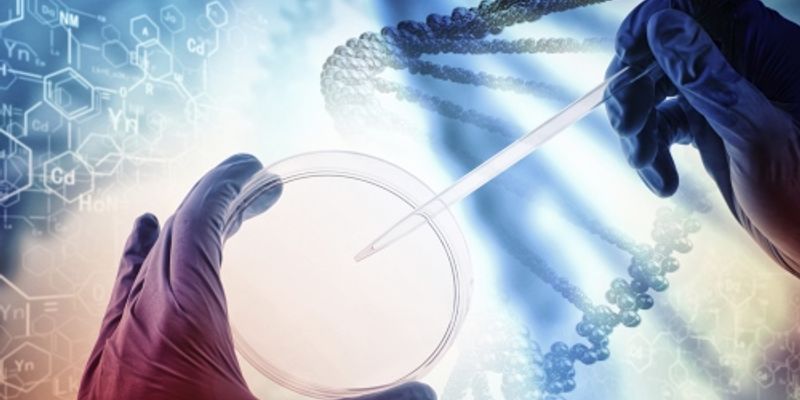
Molecular Techniques: are universal procedures used in molecular biology, genetics, biochemistry, and biophysics which mainly involve manipulation and analysis of DNA, RNA, protein, and lipid.
-
MAR 19, 2014 | 6:00 AM
 In physical systems built with many components, emergent properties, such as magnetism, are often generated from the interactions among these particles. These emergent properties are often in...FEB 05, 2014 | 11:00 AMC.E. CREDITS
Non-surgical transfer techniques for mouse embryos and sperm provide animal welfare benefits for assisted reproduction of mice. While surgical embryo transfer (ET) is an effective method for...
In physical systems built with many components, emergent properties, such as magnetism, are often generated from the interactions among these particles. These emergent properties are often in...FEB 05, 2014 | 11:00 AMC.E. CREDITS
Non-surgical transfer techniques for mouse embryos and sperm provide animal welfare benefits for assisted reproduction of mice. While surgical embryo transfer (ET) is an effective method for...
OCT 17, 2013 | 7:00 AM

RNA-Seq allows the simultaneous observation of gene expression levels, mutations in the coding sequences, splice variants and gene fusions, which are especially important in cancer studies. A...
Speaker:
Michaela Bowden, PhD
OCT 16, 2013 | 1:00 PM
C.E. CREDITS

Cancer cells have historically been classified by microscopic analysis of blood smears and tissue sections. Current technologies use molecular techniques to categorize and classify tumor cell...
Speaker:
Kristin Landis-Piwowar, PhD, MLS
AUG 21, 2013 | 5:00 PM

Dr Ivan Brukner entered into genomic era back in 1989 (ex-Yugoslavia), trying to describe and solve repeating sequence "branching motif problem" in building whole genome sequence. Next 5-10...
AUG 21, 2013 | 10:00 AM
C.E. CREDITS

Massively parallel sequencing technology has proven to enable the identification of driver genetic alterations in patients' tumors that may be suppressed by targeted therapies. Through retros...
AUG 21, 2013 | 8:00 AM
C.E. CREDITS

With the technical costs of genome sequencing continuously dropping, it is now feasible to offer this assay in a clinical context. Empirical evidence suggests that genome and exome sequencing...
MAR 19, 2014 | 6:00 AM
In physical systems built with many components, emergent properties, such as magnetism, are often generated from the interactions among these particles. These emergent properties are often in...
FEB 05, 2014 | 11:00 AM
C.E. CREDITS

Non-surgical transfer techniques for mouse embryos and sperm provide animal welfare benefits for assisted reproduction of mice. While surgical embryo transfer (ET) is an effective method for...
OCT 17, 2013 | 7:00 AM
RNA-Seq allows the simultaneous observation of gene expression levels, mutations in the coding sequences, splice variants and gene fusions, which are especially important in cancer studies. A...
Speaker:
Michaela Bowden, PhD
OCT 16, 2013 | 1:00 PM
C.E. CREDITS
Cancer cells have historically been classified by microscopic analysis of blood smears and tissue sections. Current technologies use molecular techniques to categorize and classify tumor cell...
Speaker:
Kristin Landis-Piwowar, PhD, MLS
AUG 21, 2013 | 5:00 PM
Dr Ivan Brukner entered into genomic era back in 1989 (ex-Yugoslavia), trying to describe and solve repeating sequence "branching motif problem" in building whole genome sequence. Next 5-10...
AUG 21, 2013 | 10:00 AM
C.E. CREDITS
Massively parallel sequencing technology has proven to enable the identification of driver genetic alterations in patients' tumors that may be suppressed by targeted therapies. Through retros...
AUG 21, 2013 | 8:00 AM
C.E. CREDITS
With the technical costs of genome sequencing continuously dropping, it is now feasible to offer this assay in a clinical context. Empirical evidence suggests that genome and exome sequencing...