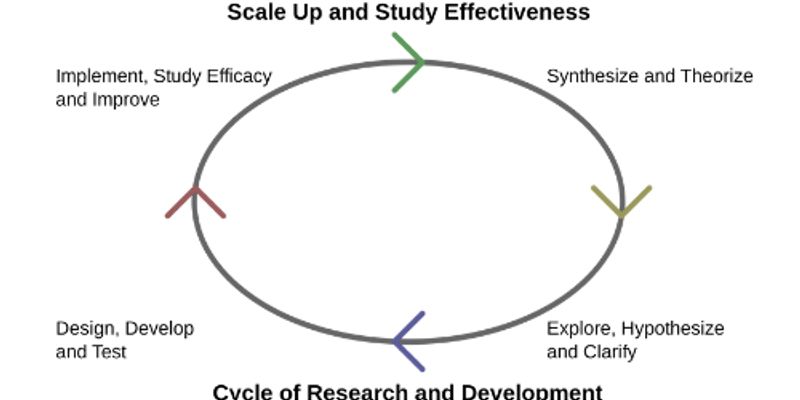
Research and Development: innovative activities performed by corporations or governments for the creation, discovery and advancement of services and products.
Consistent accuracy in reporting quantitative viral load results is critically important to patients, their physicians and to the clinical laboratory. In clinical practice, quantitative viral...
Errors in healthcare can have catastrophic results for patients. Work settings with a strong interdisciplinary teamwork culture can decrease the opportunities for errors to occur. Teamwork co...
Date: Thursday, June 11th, 2015Time: 07:00AM PDT, 10:00AM EDT, 03:00PM BST Alzheimer's disease (AD) is the most common form of dementia with nearly 44 million people affected worldwide. Chara...
Matching the mutational profile of a patient's tumor with appropriate targeted agents is a goal of personalized medicine in oncology. The number of FDA-approved targeted therapies, as well as...
Appropriate utilization of laboratory testing is important for the quality and safety in the healthcare system and to assist in the control of unnecessary costs in the healthcare system. Per...
When a patient presents with acute bloody diarrhea and tests negative for common causes such as campylobacter and salmonella, what's missing? Shiga toxin-producing E. coli (STEC) is increasin...
Review of recent, post ACA, health care legislation for impact on physicians and clinical laboratories. Overview of possible new health care legislation and update on Medicare regulatory act...
With the development of the XLA/XLI analytical ultracentrifuges and their exquisitely sensitive optics that can accurately detect absorbance signals in the range of 0.005 A to 1.5 A. and diff...
DATE: Tuesday, May 26th, 2015TIME: 09:00AM PDT, 12:00PM EDTNext-generation sequencing (NGS) is changing the landscape of clinical research. This powerful technology is enabling researchers to...
Sign up here to watch this Webinar On DemandCytotoxicity remains one of the major causes of drug withdrawal and there is an urgent need for reliable and time-saving assay workflows. Cells exp...
Germline cancer genetics became a reality with the cloning of the tumor suppressor gene RB1 for hereditary retinoblastoma in 1986 by Friend and Weinberg. The existence of cancer susceptibili...
Asthma is heritable, influenced by the environment, and is modified by in utero exposures and aging; all of these features are also common to epigenetic regulation. Furthermore, genetic varia...
Over the past few years, evidence has been accumulating to indicate that ribosomal subunits are not simply tape-heads that decode mRNA sequences into polypeptide chains, but that they also pl...
Deep mutational scanning is a method that marries selection for protein function amongst a large library of protein variants with high-throughput DNA sequencing to measure the activity of hun...
The next generation sequencing market has been experiencing rapid advancements over the past several years. While this makes for an exciting time in the field of genomics, it can be difficult...
I will discuss the use of genomic technologies - mostly ultrahigh-throughput DNA sequencing - to study normal human biology and to determine what goes wrong when we have disease. First I wil...
Cancer is complex, but recent findings are yielding a greater understanding of the disease. The tumor suppressor genes BRCA1 and BRCA2 are implicated in breast, ovarian, prostate, and other c...
Long noncoding RNAs (lncRNAs) are increasingly recognized as having key regulatory roles in development and disease. However, these regulatory molecules often have short half lives and are ex...
The continued growth of DNA sequencing as a fundamental data output has driven the need for the ability to generate high quality data from an increasing breadth of diminishing primary sample...
Technological advances in high throughput, low cost DNA sequencing coupled with the availability of a high quality reference assembly allow us to interrogate the genome with greater precision...
The Allen Institute for Brain Science provides several brain atlases that are freely available to the public at www.brain-map.org. A common use for these atlases is to study expression patter...
I will discuss recent statistical methods for identifying differentially expressed genes in static and time course bulk RNA-seq experiments. I will also provide an overview of the opportunit...
Advanced sequencing technologies have made population scale whole genome sequencing a possibility. However, current strategies for analysis of this data rely upon parallelization approaches t...
Next-generation sequencing technology allows us to peer inside the cell in exquisite detail, revealing new insights into biology, evolution, and disease that would have been impossible to dis...
Consistent accuracy in reporting quantitative viral load results is critically important to patients, their physicians and to the clinical laboratory. In clinical practice, quantitative viral...
Errors in healthcare can have catastrophic results for patients. Work settings with a strong interdisciplinary teamwork culture can decrease the opportunities for errors to occur. Teamwork co...
Date: Thursday, June 11th, 2015Time: 07:00AM PDT, 10:00AM EDT, 03:00PM BST Alzheimer's disease (AD) is the most common form of dementia with nearly 44 million people affected worldwide. Chara...
Matching the mutational profile of a patient's tumor with appropriate targeted agents is a goal of personalized medicine in oncology. The number of FDA-approved targeted therapies, as well as...
Appropriate utilization of laboratory testing is important for the quality and safety in the healthcare system and to assist in the control of unnecessary costs in the healthcare system. Per...
When a patient presents with acute bloody diarrhea and tests negative for common causes such as campylobacter and salmonella, what's missing? Shiga toxin-producing E. coli (STEC) is increasin...
Review of recent, post ACA, health care legislation for impact on physicians and clinical laboratories. Overview of possible new health care legislation and update on Medicare regulatory act...
With the development of the XLA/XLI analytical ultracentrifuges and their exquisitely sensitive optics that can accurately detect absorbance signals in the range of 0.005 A to 1.5 A. and diff...
DATE: Tuesday, May 26th, 2015TIME: 09:00AM PDT, 12:00PM EDTNext-generation sequencing (NGS) is changing the landscape of clinical research. This powerful technology is enabling researchers to...
Sign up here to watch this Webinar On DemandCytotoxicity remains one of the major causes of drug withdrawal and there is an urgent need for reliable and time-saving assay workflows. Cells exp...
Germline cancer genetics became a reality with the cloning of the tumor suppressor gene RB1 for hereditary retinoblastoma in 1986 by Friend and Weinberg. The existence of cancer susceptibili...
Asthma is heritable, influenced by the environment, and is modified by in utero exposures and aging; all of these features are also common to epigenetic regulation. Furthermore, genetic varia...
Over the past few years, evidence has been accumulating to indicate that ribosomal subunits are not simply tape-heads that decode mRNA sequences into polypeptide chains, but that they also pl...
Deep mutational scanning is a method that marries selection for protein function amongst a large library of protein variants with high-throughput DNA sequencing to measure the activity of hun...
The next generation sequencing market has been experiencing rapid advancements over the past several years. While this makes for an exciting time in the field of genomics, it can be difficult...
I will discuss the use of genomic technologies - mostly ultrahigh-throughput DNA sequencing - to study normal human biology and to determine what goes wrong when we have disease. First I wil...
Cancer is complex, but recent findings are yielding a greater understanding of the disease. The tumor suppressor genes BRCA1 and BRCA2 are implicated in breast, ovarian, prostate, and other c...
Long noncoding RNAs (lncRNAs) are increasingly recognized as having key regulatory roles in development and disease. However, these regulatory molecules often have short half lives and are ex...
The continued growth of DNA sequencing as a fundamental data output has driven the need for the ability to generate high quality data from an increasing breadth of diminishing primary sample...
Technological advances in high throughput, low cost DNA sequencing coupled with the availability of a high quality reference assembly allow us to interrogate the genome with greater precision...
The Allen Institute for Brain Science provides several brain atlases that are freely available to the public at www.brain-map.org. A common use for these atlases is to study expression patter...
I will discuss recent statistical methods for identifying differentially expressed genes in static and time course bulk RNA-seq experiments. I will also provide an overview of the opportunit...
Advanced sequencing technologies have made population scale whole genome sequencing a possibility. However, current strategies for analysis of this data rely upon parallelization approaches t...
Next-generation sequencing technology allows us to peer inside the cell in exquisite detail, revealing new insights into biology, evolution, and disease that would have been impossible to dis...
 Follow