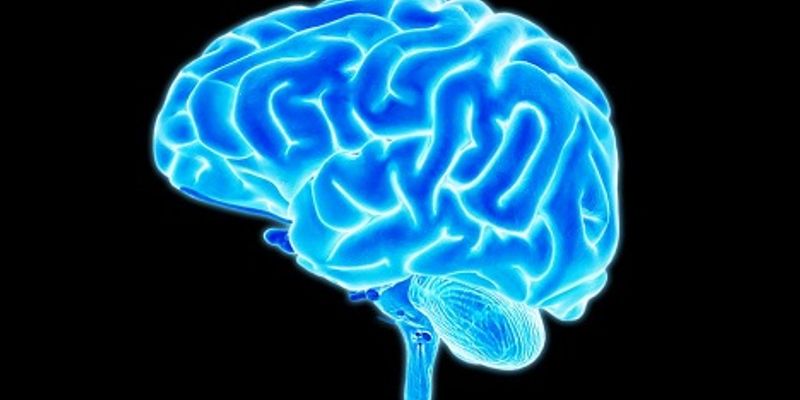
The brain: is the organ located in the head and serves as the center of the nervous system in all vertebrate. The brain is the most complex organ in a vertebrate's body and is close to the sensory organs for senses such as vision.
Deciphering somatic mosaicism in healthy tissues and clonal diversity in tumors necessitates single-cell analysis. High-quality genomic and transcriptomic data at the single-cell level depen...
In this webinar, we will briefly introduce Vizgen’s Vizgen® MERSCOPE® Platform for spatial transcriptomics. Following this introduction, we will showcase the capabilities of ME...
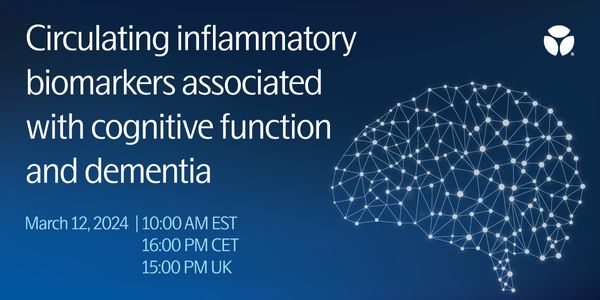
Inflammation is associated with cognitive decline and the pathogenesis of Alzheimer's disease, although exact pathways remain elusive. To further explore the role of inflammation, we uti...
The rapid growth of technologies capable of comprehensively collecting, managing, and allowing us to gain an in-depth picture of the brain, nervous system, and behavior across diverse spatia...
The nervous system of social species has evolved to perceive and evaluate signals within a social context. Social information therefore must impact how the brain processes information, yet l...
Learning Objectives: 1. Review the basic principle of 3D microscopy. 2. Recognize the pathophysiology of Parkinson disease. 3. Demonstrate knowledge on how alpha-synuclein aggregates spread...
Our ability to record large-scale neural and behavioral data has substantially improved in the last decade. However, the inference of quantitative dynamical models for cognition and motor co...
The Brain Behavior Quantification and Synchronization (BBQS) program is a basic research effort in the NIH BRAIN Initiative to develop new tools and approaches in support of a more comprehen...
We are developing the three-banded panther worm Hofstenia miamia as a new model system for neuroscience. Hofstenia is a rare, lab-tractable member of a lineage of early-branching marine inve...
The study of psychopathology is changing with the advent and pervasive use of smartphones, wearables, and connected devices together with significant advances in brain imaging. These new ave...
A central goal for neuroscience is to understand how our brains process information in real life, such as faces during natural social interactions. While we have gained important knowledge u...
Behaving animals continually reconcile the internal states of their neural circuits brain-wide with incoming sensory and environmental evidence to evaluate when and how to act. The brains of...
Individuals with substance use disorders often show impaired sensitivity to reward value. However, it is not clear whether such impairment impacts reward-related decision making and whether...
Studying motor behaviors can reveal fundamental principles of the brain and mind. This presentation focuses on our work towards developing the hardware and computational tools that will allo...
With the internet, society has been exposed to puzzling and exquisite animal behavior, while neuroscience has vastly concentrated on a few inbred animal models studied in trained unnatural s...
A core goal of neuroscience is to understand how the brain adaptively orchestrates movements to execute complex behaviors. Quantifying behavioral dynamics, however, has historically been pro...
Many nonhuman primate species show sex differences in behavior, which suggests that there may also be sex differences in brain organization. In order to better understand the evolution of se...
Speech neuroprostheses have the potential to restore communication to people living with paralysis, but naturalistic speed and expressivity are elusive. Here we use high-density surface reco...
Mental health is a multidimensional challenge, marked by rapid brain changes and essential interpersonal relationships. This complicates the application of traditional statistical methods an...
The ultimate goal of neuroscience is to understand and explain real-world behavior in terms of brain activity, and to use these insights to develop therapeutic approaches for neural disorder...
Infant motor development is measured clinically using short, subjective, observational scales. While these scales are useful, they have limitations. They provide us with a “snapshot&rd...
DBS for obsessive-compulsive disorder (OCD) achieves clinical benefit in 66% of treatment-resistant patients. However, there is still a lack of a fundamental understanding of the neurophysio...
Brain organoids are self-assembled three-dimensional cellular aggregates with cell types and tissue architectures that resemble the embryonic human brain. As they recapitulate many key featu...
Deciphering somatic mosaicism in healthy tissues and clonal diversity in tumors necessitates single-cell analysis. High-quality genomic and transcriptomic data at the single-cell level depen...
In this webinar, we will briefly introduce Vizgen’s Vizgen® MERSCOPE® Platform for spatial transcriptomics. Following this introduction, we will showcase the capabilities of ME...
Inflammation is associated with cognitive decline and the pathogenesis of Alzheimer's disease, although exact pathways remain elusive. To further explore the role of inflammation, we uti...
The rapid growth of technologies capable of comprehensively collecting, managing, and allowing us to gain an in-depth picture of the brain, nervous system, and behavior across diverse spatia...
The nervous system of social species has evolved to perceive and evaluate signals within a social context. Social information therefore must impact how the brain processes information, yet l...
Learning Objectives: 1. Review the basic principle of 3D microscopy. 2. Recognize the pathophysiology of Parkinson disease. 3. Demonstrate knowledge on how alpha-synuclein aggregates spread...
Our ability to record large-scale neural and behavioral data has substantially improved in the last decade. However, the inference of quantitative dynamical models for cognition and motor co...
The Brain Behavior Quantification and Synchronization (BBQS) program is a basic research effort in the NIH BRAIN Initiative to develop new tools and approaches in support of a more comprehen...
We are developing the three-banded panther worm Hofstenia miamia as a new model system for neuroscience. Hofstenia is a rare, lab-tractable member of a lineage of early-branching marine inve...
The study of psychopathology is changing with the advent and pervasive use of smartphones, wearables, and connected devices together with significant advances in brain imaging. These new ave...
A central goal for neuroscience is to understand how our brains process information in real life, such as faces during natural social interactions. While we have gained important knowledge u...
Behaving animals continually reconcile the internal states of their neural circuits brain-wide with incoming sensory and environmental evidence to evaluate when and how to act. The brains of...
Individuals with substance use disorders often show impaired sensitivity to reward value. However, it is not clear whether such impairment impacts reward-related decision making and whether...
Studying motor behaviors can reveal fundamental principles of the brain and mind. This presentation focuses on our work towards developing the hardware and computational tools that will allo...
With the internet, society has been exposed to puzzling and exquisite animal behavior, while neuroscience has vastly concentrated on a few inbred animal models studied in trained unnatural s...
A core goal of neuroscience is to understand how the brain adaptively orchestrates movements to execute complex behaviors. Quantifying behavioral dynamics, however, has historically been pro...
Many nonhuman primate species show sex differences in behavior, which suggests that there may also be sex differences in brain organization. In order to better understand the evolution of se...
Speech neuroprostheses have the potential to restore communication to people living with paralysis, but naturalistic speed and expressivity are elusive. Here we use high-density surface reco...
Mental health is a multidimensional challenge, marked by rapid brain changes and essential interpersonal relationships. This complicates the application of traditional statistical methods an...
The ultimate goal of neuroscience is to understand and explain real-world behavior in terms of brain activity, and to use these insights to develop therapeutic approaches for neural disorder...
Infant motor development is measured clinically using short, subjective, observational scales. While these scales are useful, they have limitations. They provide us with a “snapshot&rd...
DBS for obsessive-compulsive disorder (OCD) achieves clinical benefit in 66% of treatment-resistant patients. However, there is still a lack of a fundamental understanding of the neurophysio...
Brain organoids are self-assembled three-dimensional cellular aggregates with cell types and tissue architectures that resemble the embryonic human brain. As they recapitulate many key featu...
 Follow