 Follow
Chromatin
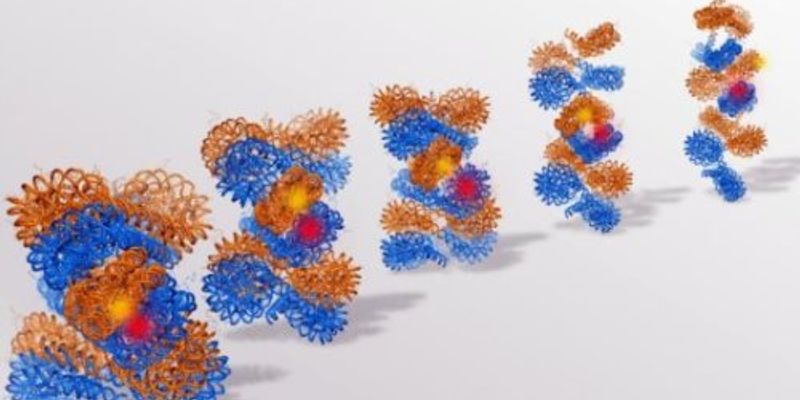
Chromatin: is a complex of DNA and proteins that forms chromosomes within the nucleus of eukaryotic cells. Chromatin exists in two forms. One form, called euchromatin, is less condensed and can be transcribed. The second form, called heterochromatin, is highly condensed and is typically not transcribed.

FEB 24, 2016 | 6:00 AM

Precision medicine promises a more effective approach to disease treatment and management. It is based on analyzing mutations of disease samples to unlock mechanisms of disease development an...
FEB 24, 2016 | 5:00 AM

Personalised Healthcare is essential to AstraZeneca’s approach to drug development and is adopted by more than 80% of drug products in clinical development. Selection of the right patie...
SEP 30, 2015 | 12:00 PM

Hepatocellular carcinoma (HCC) is a significant contributor to cancer-related mortality in the United States and worldwide. Current treatments are largely ineffective: single agent and combin...
APR 16, 2015 | 8:00 AM

In recent years, sophisticated new methods for sedimentation data analysis have opened up new avenues for leveraging AUC technology in a wide range of technology sectors, including life scien...
JAN 21, 2015 | 10:00 PM

In this presentation we will illustrate the advantages of AFA technology in clinically significant applications (NGS, FFPE, ChIP) and will demonstrate the flexibility of Covaris AFA in deliv...
SEP 24, 2014 | 2:00 PM

Master regulatory transcription factors localize to the genome in a manner influenced by chromatin accessibility and influencing global chromatin structure. With an interest in understanding...
AUG 21, 2014 | 6:45 AM

The Cas9 endonuclease from the microbial adaptive immune system CRISPR can be easily programmed to bind or cleave specific DNA sequence using a short RNA guide. Cas9 is enabling the generatio...
AUG 20, 2014 | 7:00 AM

The ENCODE and modENCODE consortia have generated a resource containing large amounts of transcriptomic data, extensive mapping of chromatin states, as well as the binding locations of >30...
APR 17, 2014 | 11:00 AM

Formalin Fixation and Paraffin Embedding (FFPE) of tissue samples is a routine practice by pathologists; the technique enables high quality preservation of structural information. However, ...
OCT 16, 2013 | 7:00 AM

Cancer cells are characterized by major alterations in both cellular metabolism and epigenetic profiles. Current understanding of links between metabolism and chromatin in the context of can...
AUG 22, 2013 | 4:00 PM
C.E. CREDITS

The next generation sequencing technologies are profoundly influencing our way to study biology. We have previously developed cap-analysis gene expression (CAGE) to simultaneously mRNA/noncod...
AUG 22, 2013 | 7:00 AM
C.E. CREDITS
Cancer cells are characterized by major alterations in both cellular metabolism and epigenetic profiles. Current understanding of links between metabolism and chromatin in the context of canc...