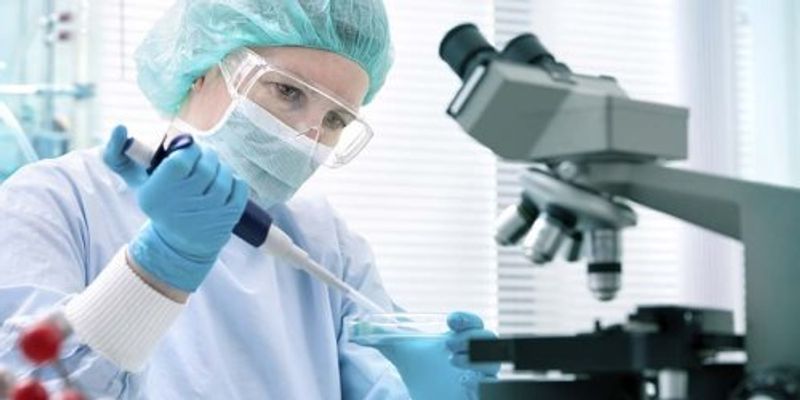
Clinical Medicine: is a field of medicine that deals primarily with the practice and study of medicine based on the direct examination of the patient. This is in contrast to other science fields that focus more on the theoretical and basics of medical science. In clinical medicine, medical practitioners assess patients in order to diagnose, treat, and prevent disease.
With the exception of the Microbiome Quality Control (MBQC), very little has been published on best practices and reference standards for microbiome and metagenomic studies. As evidenced by r...
This presentation describes the new process by which the Centers for Medicare and Medicaid Services (CMS) will establish the prices the Agency pays for clinical diagnostic laboratory tests.&n...
As next generation sequencing has lowered the price of DNA sequencing orders of magnitude below what it cost to create the first consensus human genome, the sheer diversity of human sequence...
DATE: April 11, 2017TIME: 8:00 AM PT, 11:00 AM ET Checkpoint blockade therapy for cancer has had tremendous impact on clinical outcomes, yet only a subset of patients respond....
DATE: April 5, 2017TIME: 10:00am PT, 1:00pm ETThis presentation will focus on the use of Inductively-Coupled Plasma Mass Spectrometry as an alternative technology for measuring thyroid...
Alterations in homeostatic functions such as energy balance and sleep patterns are frequently seen in the elderly and these changes may precede and predict subsequent cognitive decline. ...
Epigenetics refers to the study of nuclear architecture and gene regulation. Epigenetic mechanisms govern many physiological processes such as cell differentiation, x-inactivation, and genomi...
Working memory ability matures late in life, in adolescence or early adulthood, and may be enhanced even in adulthood through cognitive training. The mechanisms through which working memory i...
Gilles de la Tourette syndrome (GTS) is a neurodevelopmental disorder exhibiting both motor and behavioral impairment. Like most neuropsychiatric disorders, its pathophysiology has yet to be...
Dr. Kasthuri is a Neuroscience Researcher at Argonne National Labs and an Assistant Professor (adjunct) in the Dept. of Neurobiology, University of Chicago. He has an MD from Washington...
Parkinson’s disease (PD) is characterized by the loss of dopamine and the disruption of brain circuits (basal ganglia and cortex) that are responsible for normal cognitive and motor per...
We are nearing three decades of research on the neural circuits of Pavlovian fear conditioning. The advent of new techniques such as genetic and optogenetic manipulations have greatly advance...
Healthcare is becoming more proactive and data-rich than anything before possible – and will increasingly focus on maintaining and enhancing wellness more than just reacting to disease....
Cell growth and regulation involve vast networks of interacting DNAs, RNAs, proteins, lipids and sugars. Through a fundamental strategy of life, these interactions push multiple cellular proc...
In this era of precision molecular medicine, knowledge changes rapidly and is highly dispersed. Physicians and patients are faced with conflicting expert opinions and a shortage of acti...
Despite vast investment for decades in cancer research and development, cancer is still among the leading causes of death worldwide and its toll is expected to rise by about 70% over the next...
Clinical whole genome sequencing (cWGS) is rapidly gaining acceptance as cost is decreasing and success rates in identifying disease-causing variants are increasing. While the application of...
Although there have been enormous advances in gene sequencing, the results give massive amounts of data that only point to disease risk. Major health factors, including diet, lifestyle, envir...
Psychiatric disorders are among the leading causes of disability worldwide. One fifth of the population will suffer from a psychiatric disorder in their lifetime. Antipsychotic and antidepres...
Best practices for developing precision medicine diagnostics can include completing a retrospective analysis. Obtaining enough samples to have a statistically significant study typicall...
Liquid Biopsies are gaining acceptance in the Oncology community as a surrogate or complement to the gold standard of tissue biopsy. A liquid biopsy provides biomarker information that...
Biobanks are a powerful resource in the advancement of precision medicine, and integrating large scale genomics data across Biobank cohorts offer opportunities to further enhance and expedite...
In this talk, I will use examples from my research using big data analytics to define ideals of precision medicine and digital health across a variety of diseases. Specifically, I will i...
Challenges in achieving comparability, reproducibility and accuracy in biological assays has driven a demand for improved confidence in measurements that support development of regenerative m...
With the exception of the Microbiome Quality Control (MBQC), very little has been published on best practices and reference standards for microbiome and metagenomic studies. As evidenced by r...
This presentation describes the new process by which the Centers for Medicare and Medicaid Services (CMS) will establish the prices the Agency pays for clinical diagnostic laboratory tests.&n...
As next generation sequencing has lowered the price of DNA sequencing orders of magnitude below what it cost to create the first consensus human genome, the sheer diversity of human sequence...
DATE: April 11, 2017TIME: 8:00 AM PT, 11:00 AM ET Checkpoint blockade therapy for cancer has had tremendous impact on clinical outcomes, yet only a subset of patients respond....
DATE: April 5, 2017TIME: 10:00am PT, 1:00pm ETThis presentation will focus on the use of Inductively-Coupled Plasma Mass Spectrometry as an alternative technology for measuring thyroid...
Alterations in homeostatic functions such as energy balance and sleep patterns are frequently seen in the elderly and these changes may precede and predict subsequent cognitive decline. ...
Epigenetics refers to the study of nuclear architecture and gene regulation. Epigenetic mechanisms govern many physiological processes such as cell differentiation, x-inactivation, and genomi...
Working memory ability matures late in life, in adolescence or early adulthood, and may be enhanced even in adulthood through cognitive training. The mechanisms through which working memory i...
Gilles de la Tourette syndrome (GTS) is a neurodevelopmental disorder exhibiting both motor and behavioral impairment. Like most neuropsychiatric disorders, its pathophysiology has yet to be...
Dr. Kasthuri is a Neuroscience Researcher at Argonne National Labs and an Assistant Professor (adjunct) in the Dept. of Neurobiology, University of Chicago. He has an MD from Washington...
Parkinson’s disease (PD) is characterized by the loss of dopamine and the disruption of brain circuits (basal ganglia and cortex) that are responsible for normal cognitive and motor per...
We are nearing three decades of research on the neural circuits of Pavlovian fear conditioning. The advent of new techniques such as genetic and optogenetic manipulations have greatly advance...
Healthcare is becoming more proactive and data-rich than anything before possible – and will increasingly focus on maintaining and enhancing wellness more than just reacting to disease....
Cell growth and regulation involve vast networks of interacting DNAs, RNAs, proteins, lipids and sugars. Through a fundamental strategy of life, these interactions push multiple cellular proc...
In this era of precision molecular medicine, knowledge changes rapidly and is highly dispersed. Physicians and patients are faced with conflicting expert opinions and a shortage of acti...
Despite vast investment for decades in cancer research and development, cancer is still among the leading causes of death worldwide and its toll is expected to rise by about 70% over the next...
Clinical whole genome sequencing (cWGS) is rapidly gaining acceptance as cost is decreasing and success rates in identifying disease-causing variants are increasing. While the application of...
Although there have been enormous advances in gene sequencing, the results give massive amounts of data that only point to disease risk. Major health factors, including diet, lifestyle, envir...
Psychiatric disorders are among the leading causes of disability worldwide. One fifth of the population will suffer from a psychiatric disorder in their lifetime. Antipsychotic and antidepres...
Best practices for developing precision medicine diagnostics can include completing a retrospective analysis. Obtaining enough samples to have a statistically significant study typicall...
Liquid Biopsies are gaining acceptance in the Oncology community as a surrogate or complement to the gold standard of tissue biopsy. A liquid biopsy provides biomarker information that...
Biobanks are a powerful resource in the advancement of precision medicine, and integrating large scale genomics data across Biobank cohorts offer opportunities to further enhance and expedite...
In this talk, I will use examples from my research using big data analytics to define ideals of precision medicine and digital health across a variety of diseases. Specifically, I will i...
Challenges in achieving comparability, reproducibility and accuracy in biological assays has driven a demand for improved confidence in measurements that support development of regenerative m...
 Follow