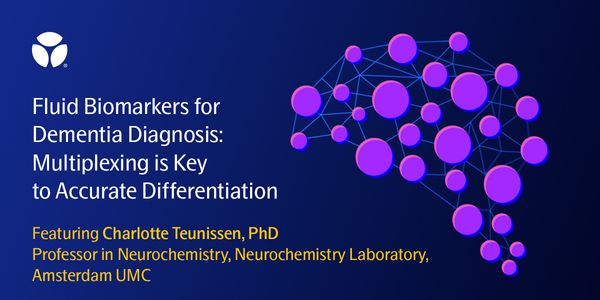
Fluid biomarkers for Alzheimer’s disease (AD) have advanced rapidly during the past several years driven by breakthroughs including development of ultrasensitive and multiplexing techn...
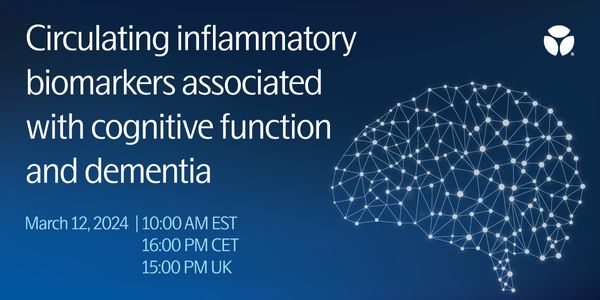
Inflammation is associated with cognitive decline and the pathogenesis of Alzheimer's disease, although exact pathways remain elusive. To further explore the role of inflammation, we uti...
A central goal for neuroscience is to understand how our brains process information in real life, such as faces during natural social interactions. While we have gained important knowledge u...
With the internet, society has been exposed to puzzling and exquisite animal behavior, while neuroscience has vastly concentrated on a few inbred animal models studied in trained unnatural s...
How do the cognitive and physiological traits of individuals translate into real-world group dynamics? There is an empirical and theoretical gap between understanding individual-level proces...
Our ability to record large-scale neural and behavioral data has substantially improved in the last decade. However, the inference of quantitative dynamical models for cognition and motor co...
Social interactions are essential for the survival of social animals. Across species the medial prefrontal cortex (mPFC) has been identified as a hub of social cognition. In mouse models we...
Recent advances in gene editing has allowed the generation of advanced rodent research models, mimicking some aspects of human conditions. For neurodegenerative disorders such as Alzheimer&r...
Artificial neural networks can be useful for studying brain functions. In cognitive neuroscience, recurrent neural networks are often used to model cognitive functions. I will first offer my...
Animal models present a unique opportunity to understand molecular mechanisms of pathological changes involved in cognitive dysfunction in neurological disorders. However, most of the work f...
Neural networks are a powerful tool for modeling neural activity in the brain. In this talk, I will discuss how these models have helped in my own research and highlight recent work building...
Black Americans have an increased risk for age-related cognitive decline and Alzheimer's disease (AD) compared to other ethnic and racialized groups. However, risk factors for age-relate...
Date: February 23, 2023 Time: 8:00am (PST), 11:00am (EST), 5:00pm (CET) The RNAscope in situ hybridization (ISH) technology is a powerful method for detecting gene expression with spatial an...
Date: September 27, 2022 Time: 10:00am (PDT), 1:00pm (EDT), 7:00pm (CEST) Alzheimer’s disease is the most common cause of dementia and the seventh leading cause of death in the United...
Date: July 14, 2022 Time: 8:00am (PDT), 11:00am (EDT), 5:00pm (CEST) Sensory perception is modulated in a top-down fashion by higher brain regions to regulate behavioral responses. In olfact...
Neurological manifestations, including headache, altered mental status, and stroke, are a major complication of severe acute respiratory syndrome coronavirus-2 (SARS-CoV-2) infection and cor...
Treatment-resistant depression is an immense source of disability and suffering, and represents a major unmet clinical need for innovative and effective therapies. Deep brain stimulation tri...
Neuroscience is experiencing an exciting era of integrating novel materials and tools to record neural activity made possible through significant advances in materials science, electrical en...
Brain wave synchronization, also called neuronal coherence, is a fundamental mechanism of communication in the brain, where synchronized field potentials coordinate synaptic and spiking even...
While our lives unfold over time, weaving dynamic information into continuous experience, our memories are organized as discrete events. Detection of cognitive boundaries is critical for seg...
Emerging data from several expansive clinical trials indicates that common chronic vascular risk factors such as diabetes, hypertension, obesity, and age increase the risk of stroke and deme...
Adolescence is a critical period for the developing brain, and binge drinking during this neuromaturation can result in enduring abnormal brain function and behavior. Repeated adolescent bin...
Learning Objectives: 1. Delineate the goals of studies of brain, computation and behavior and how they can be integrated. 2. Describe how neuromodulators such as oxytocin transform circuits...
Learning Objections: 1. To learn a new approach to understanding brain function by creating networks to perform tasks using machine learning. 2. To learn how how to probe these networks to d...
Fluid biomarkers for Alzheimer’s disease (AD) have advanced rapidly during the past several years driven by breakthroughs including development of ultrasensitive and multiplexing techn...
Inflammation is associated with cognitive decline and the pathogenesis of Alzheimer's disease, although exact pathways remain elusive. To further explore the role of inflammation, we uti...
A central goal for neuroscience is to understand how our brains process information in real life, such as faces during natural social interactions. While we have gained important knowledge u...
With the internet, society has been exposed to puzzling and exquisite animal behavior, while neuroscience has vastly concentrated on a few inbred animal models studied in trained unnatural s...
How do the cognitive and physiological traits of individuals translate into real-world group dynamics? There is an empirical and theoretical gap between understanding individual-level proces...
Our ability to record large-scale neural and behavioral data has substantially improved in the last decade. However, the inference of quantitative dynamical models for cognition and motor co...
Social interactions are essential for the survival of social animals. Across species the medial prefrontal cortex (mPFC) has been identified as a hub of social cognition. In mouse models we...
Recent advances in gene editing has allowed the generation of advanced rodent research models, mimicking some aspects of human conditions. For neurodegenerative disorders such as Alzheimer&r...
Artificial neural networks can be useful for studying brain functions. In cognitive neuroscience, recurrent neural networks are often used to model cognitive functions. I will first offer my...
Animal models present a unique opportunity to understand molecular mechanisms of pathological changes involved in cognitive dysfunction in neurological disorders. However, most of the work f...
Neural networks are a powerful tool for modeling neural activity in the brain. In this talk, I will discuss how these models have helped in my own research and highlight recent work building...
Black Americans have an increased risk for age-related cognitive decline and Alzheimer's disease (AD) compared to other ethnic and racialized groups. However, risk factors for age-relate...
Date: February 23, 2023 Time: 8:00am (PST), 11:00am (EST), 5:00pm (CET) The RNAscope in situ hybridization (ISH) technology is a powerful method for detecting gene expression with spatial an...
Date: September 27, 2022 Time: 10:00am (PDT), 1:00pm (EDT), 7:00pm (CEST) Alzheimer’s disease is the most common cause of dementia and the seventh leading cause of death in the United...
Date: July 14, 2022 Time: 8:00am (PDT), 11:00am (EDT), 5:00pm (CEST) Sensory perception is modulated in a top-down fashion by higher brain regions to regulate behavioral responses. In olfact...
Neurological manifestations, including headache, altered mental status, and stroke, are a major complication of severe acute respiratory syndrome coronavirus-2 (SARS-CoV-2) infection and cor...
Treatment-resistant depression is an immense source of disability and suffering, and represents a major unmet clinical need for innovative and effective therapies. Deep brain stimulation tri...
Neuroscience is experiencing an exciting era of integrating novel materials and tools to record neural activity made possible through significant advances in materials science, electrical en...
Brain wave synchronization, also called neuronal coherence, is a fundamental mechanism of communication in the brain, where synchronized field potentials coordinate synaptic and spiking even...
While our lives unfold over time, weaving dynamic information into continuous experience, our memories are organized as discrete events. Detection of cognitive boundaries is critical for seg...
Emerging data from several expansive clinical trials indicates that common chronic vascular risk factors such as diabetes, hypertension, obesity, and age increase the risk of stroke and deme...
Adolescence is a critical period for the developing brain, and binge drinking during this neuromaturation can result in enduring abnormal brain function and behavior. Repeated adolescent bin...
Learning Objectives: 1. Delineate the goals of studies of brain, computation and behavior and how they can be integrated. 2. Describe how neuromodulators such as oxytocin transform circuits...
Learning Objections: 1. To learn a new approach to understanding brain function by creating networks to perform tasks using machine learning. 2. To learn how how to probe these networks to d...

 Follow