Learning Objections: 1. To learn a new approach to understanding brain function by creating networks to perform tasks using machine learning. 2. To learn how how to probe these networks to d...
We will show how to combine large scale neural recordings and mechanistic neural network models to advance our conceptual understanding of how neural circuits mediate cognitive functions lik...
Cortical circuits often receive multiple inputs from upstream populations with non-overlapping stimulus tuning. Both the feedforward and recurrent architectures of the receiving cortical lay...
Drawing from the latest research and intervention practices, this presentation will address overcoming burn-out, compassion fatigue and vicarious trauma generally, and specifically as relate...
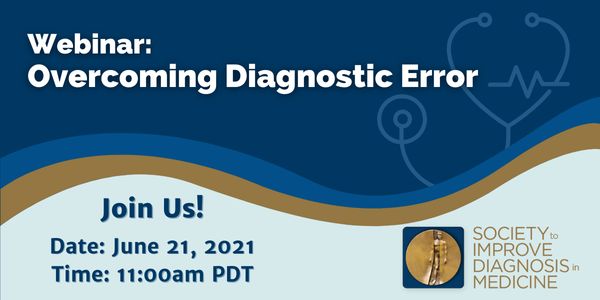
Date: June 21, 2021 Time: 11:00am PDT The COVID-19 Pandemic has demonstrated how much healthcare depends on the clinical laboratory, but it also has demonstrated how much opportunity remains...
Traumatic brain injury (TBI) is best characterized as brain dysfunction caused by an outside force, usually a violent blow to the head, often occurring as a result of a severe sports injury...
As pharmaceutical companies have reduced or eliminated neuroscience drug development due to high costs and low approval rates, the economic and healthcare burden of CNS disorders in the Unit...
Similar to the “histone code” hypothesis in which epigenetic marks on histone tails expand the information potential of the genetic code, different tubulin isoforms, combined wit...
The justification of sample size is one of the hardest sections of a proposal an IACUC (ethical review board) has to assess, yet is arguably one of the most important (1). This is a key oppo...
Biomedical research suffers from a translation gap, where most treatments that seem effective when tested on animals turn out not to work in human patients. This is likely due in large part...
Animal welfare is the most important issue in any in vivo laboratory. The ability to detect and intervene in cases where the conditions of animals may be deteriorating as well as the ability...
The potential for cognitive bias in forensic evidence interpretation and crime scene investigation continues to receive attention and debate within forensic and academic communities. Startin...
Working memory (the ability to hold some information in mind for a few seconds, and to manipulate that information) and decision-making (committing to one out of multiple possible choices) a...
Episodic memories are essential for human cognition, but the underlying neural mechanisms remain poorly understood. We utilize the opportunity to record in-vivo from human single neurons sim...
Brain machine interfaces (BMIs) aim to help patients with paralysis to use their recorded brain activity to control assistive devices. BMI research requires the collaboration of neuroscienti...
Although neuroscience has provided a great deal of information about how neurons work, the fundamental question of how neurons function together in a network to produce cognition has been di...
In Andalman et al, 2018, we explored the activity of over 10,000 neurons across more than 15 regions imaged simultaneously in larval zebrafish in a novel behavioral challenge paradigm. Compl...
The dopamine D4 receptor (D4R) is enriched in the prefrontal cortex where it plays important roles in cognition, attention, decision making and executive function. Novel D4R-selective ligand...
Recent technological advancements in neuroprosthetics allow for wireless recording and stimulation of brain activity in freely moving human participants. At the same time, advancements in vi...
Open Science has changed research by making data accessible and shareable, contributing to replicability to accelerate and disseminate knowledge. However, for rodent cognitive studies the av...
The introduction of robot-assisted surgical technology into urological practice, has introduced new horizons for reducing the morbidity and enhancing the efficacy of surgery. Open radical cys...
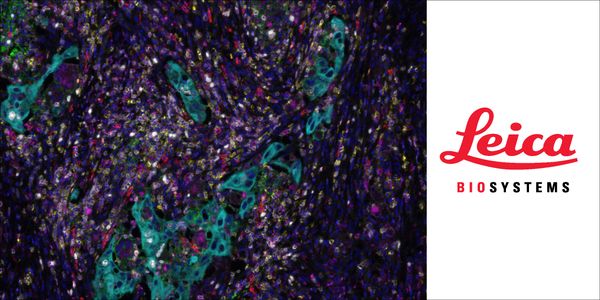
DATE: September 19, 2019TIME: 9:00am PT, 12:00pm ET Cancer research continues to push the boundaries with new advancements in tissue analysis and biomarker detection. Now, more...
Learning Objections: 1. To learn a new approach to understanding brain function by creating networks to perform tasks using machine learning. 2. To learn how how to probe these networks to d...
We will show how to combine large scale neural recordings and mechanistic neural network models to advance our conceptual understanding of how neural circuits mediate cognitive functions lik...
Cortical circuits often receive multiple inputs from upstream populations with non-overlapping stimulus tuning. Both the feedforward and recurrent architectures of the receiving cortical lay...
Drawing from the latest research and intervention practices, this presentation will address overcoming burn-out, compassion fatigue and vicarious trauma generally, and specifically as relate...
Date: June 21, 2021 Time: 11:00am PDT The COVID-19 Pandemic has demonstrated how much healthcare depends on the clinical laboratory, but it also has demonstrated how much opportunity remains...
Traumatic brain injury (TBI) is best characterized as brain dysfunction caused by an outside force, usually a violent blow to the head, often occurring as a result of a severe sports injury...
As pharmaceutical companies have reduced or eliminated neuroscience drug development due to high costs and low approval rates, the economic and healthcare burden of CNS disorders in the Unit...
Similar to the “histone code” hypothesis in which epigenetic marks on histone tails expand the information potential of the genetic code, different tubulin isoforms, combined wit...
The justification of sample size is one of the hardest sections of a proposal an IACUC (ethical review board) has to assess, yet is arguably one of the most important (1). This is a key oppo...
Biomedical research suffers from a translation gap, where most treatments that seem effective when tested on animals turn out not to work in human patients. This is likely due in large part...
Animal welfare is the most important issue in any in vivo laboratory. The ability to detect and intervene in cases where the conditions of animals may be deteriorating as well as the ability...
The potential for cognitive bias in forensic evidence interpretation and crime scene investigation continues to receive attention and debate within forensic and academic communities. Startin...
Working memory (the ability to hold some information in mind for a few seconds, and to manipulate that information) and decision-making (committing to one out of multiple possible choices) a...
Episodic memories are essential for human cognition, but the underlying neural mechanisms remain poorly understood. We utilize the opportunity to record in-vivo from human single neurons sim...
Brain machine interfaces (BMIs) aim to help patients with paralysis to use their recorded brain activity to control assistive devices. BMI research requires the collaboration of neuroscienti...
Although neuroscience has provided a great deal of information about how neurons work, the fundamental question of how neurons function together in a network to produce cognition has been di...
In Andalman et al, 2018, we explored the activity of over 10,000 neurons across more than 15 regions imaged simultaneously in larval zebrafish in a novel behavioral challenge paradigm. Compl...
The dopamine D4 receptor (D4R) is enriched in the prefrontal cortex where it plays important roles in cognition, attention, decision making and executive function. Novel D4R-selective ligand...
Recent technological advancements in neuroprosthetics allow for wireless recording and stimulation of brain activity in freely moving human participants. At the same time, advancements in vi...
Open Science has changed research by making data accessible and shareable, contributing to replicability to accelerate and disseminate knowledge. However, for rodent cognitive studies the av...
The introduction of robot-assisted surgical technology into urological practice, has introduced new horizons for reducing the morbidity and enhancing the efficacy of surgery. Open radical cys...
DATE: September 19, 2019TIME: 9:00am PT, 12:00pm ET Cancer research continues to push the boundaries with new advancements in tissue analysis and biomarker detection. Now, more...

 Follow