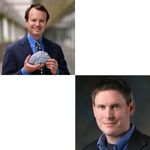
DATE: August 15, 2019TIME: 9:00am PDT, 12:00pm EDT Radiation therapy is a critical tool for the treatment of brain tumors, however, exposure to high doses of ionizing radiation...
An actual way of understanding complex systems in psychology and psychiatry is by building mathematical models on the functioning of mental, behavioral, or neural systems (computational syste...
The contemporary understanding of psychiatric disorders typically consists of a vast but often poorly interrelated set of facts and hypotheses that fail to coalesce into an integrated whole....
The size and burden of mental illness should ideally prompt a strategy of preemption and early intervention. On the neuroscientific side, this leads to the question of brain mechanisms of ris...
Localizing and identifying neuronal patterns that generate pathological brain signals may assist with tissue resection and intervention strategies in patients with neurological and psychiatri...
Direct recording of neural activity from the human brain (intracranial encephalography, iEEG, also known as electrocorticography, ECoG) using implanted electrodes is one of the fastest-growin...
The implications of NIH BRAIN research stretch beyond traditional medical and research contexts. This LabRoots session will present recent developments at the intersection of neuroscience and...
Humans have a remarkable ability to flexibly interact with the environment. A compelling demonstration of this cognitive flexibility is our ability to perform complex, yet previously un-pract...
The rapid formation of new memories and the recall of old memories to inform decisions is essential for human cognition, but the underlying neural mechanisms remain poorly understood. We util...
The human brain has a remarkable ability to store and retrieve information. Detailed memories can be formed after as little as one exposure, and those memories can be retained for decades. Im...
NIH representatives from the BRAIN Initiative will be presenting an overview of the NIH BRAIN Initiative and describing funding opportunity announcements (FOAs) supporting impacts in human ne...
DATE: March 5, 2019TIME: 10:00am PSTSingle cell analysis, starting with the earliest low parameter fluorescent experiments, helped define the major cell subsets of human ce...
Animal welfare is the most important issue in any in vivo laboratory. The ability to detect and intervene in cases where the conditions of animals may be deteriorating as well as the ability...
DATE: December 012, 2018TIME: 08:00 PSTImmunotherapy is a powerful treatment that harnesses the body’s immune system in the fight against cancer. With optimized cell therapy,...
The complexity of the human brain, with thousands of neuronal types, permits the development of sophisticated behavioral repertoires, such as language, tool use, self-awareness, symbolic thou...
The All of Us Research Program is a historic effort to gather data from one million or more people living in the United States to accelerate research and improve health. By taking into accoun...
Cannabidiol (CBD) has emerged as a promising anti-epileptic drug in otherwise treatment-resistant genetic epileptic disorders. However, the clinical trials have been limited by their use of C...
The study of rare, neurological disorder and the development of effect treatments can pose many unique challenges. A paucity of scientists working on these disorders often limits forward prog...
How does a low-level sensory representation rise into conscious awareness? What determines whether higher-order cortical areas have access to the representational content in sensory regions?...
Most neuropsychiatric diseases involve multifactorial systems characterized by complex interactions among genetic predisposition/resiliency, environmental/social determinants, molecular seque...
The cerebellum is incorporated into the distributed neural circuits subserving motor control, cognitive processing and the modulation of emotion. This lecture provides an overview of anatomic...
Rett syndrome (RTT) is a neurodevelopmental disorder caused by mutations in the Methyl CpG Binding Protein 2 (MECP2) gene. In mouse models of RTT, deficits in long-term potentiation (LTP) at...
DATE: August 15, 2019TIME: 9:00am PDT, 12:00pm EDT Radiation therapy is a critical tool for the treatment of brain tumors, however, exposure to high doses of ionizing radiation...
An actual way of understanding complex systems in psychology and psychiatry is by building mathematical models on the functioning of mental, behavioral, or neural systems (computational syste...
The contemporary understanding of psychiatric disorders typically consists of a vast but often poorly interrelated set of facts and hypotheses that fail to coalesce into an integrated whole....
The size and burden of mental illness should ideally prompt a strategy of preemption and early intervention. On the neuroscientific side, this leads to the question of brain mechanisms of ris...
Localizing and identifying neuronal patterns that generate pathological brain signals may assist with tissue resection and intervention strategies in patients with neurological and psychiatri...
Direct recording of neural activity from the human brain (intracranial encephalography, iEEG, also known as electrocorticography, ECoG) using implanted electrodes is one of the fastest-growin...
The implications of NIH BRAIN research stretch beyond traditional medical and research contexts. This LabRoots session will present recent developments at the intersection of neuroscience and...
Humans have a remarkable ability to flexibly interact with the environment. A compelling demonstration of this cognitive flexibility is our ability to perform complex, yet previously un-pract...
The rapid formation of new memories and the recall of old memories to inform decisions is essential for human cognition, but the underlying neural mechanisms remain poorly understood. We util...
The human brain has a remarkable ability to store and retrieve information. Detailed memories can be formed after as little as one exposure, and those memories can be retained for decades. Im...
NIH representatives from the BRAIN Initiative will be presenting an overview of the NIH BRAIN Initiative and describing funding opportunity announcements (FOAs) supporting impacts in human ne...
DATE: March 5, 2019TIME: 10:00am PSTSingle cell analysis, starting with the earliest low parameter fluorescent experiments, helped define the major cell subsets of human ce...
Animal welfare is the most important issue in any in vivo laboratory. The ability to detect and intervene in cases where the conditions of animals may be deteriorating as well as the ability...
DATE: December 012, 2018TIME: 08:00 PSTImmunotherapy is a powerful treatment that harnesses the body’s immune system in the fight against cancer. With optimized cell therapy,...
The complexity of the human brain, with thousands of neuronal types, permits the development of sophisticated behavioral repertoires, such as language, tool use, self-awareness, symbolic thou...
The All of Us Research Program is a historic effort to gather data from one million or more people living in the United States to accelerate research and improve health. By taking into accoun...
Cannabidiol (CBD) has emerged as a promising anti-epileptic drug in otherwise treatment-resistant genetic epileptic disorders. However, the clinical trials have been limited by their use of C...
The study of rare, neurological disorder and the development of effect treatments can pose many unique challenges. A paucity of scientists working on these disorders often limits forward prog...
How does a low-level sensory representation rise into conscious awareness? What determines whether higher-order cortical areas have access to the representational content in sensory regions?...
Most neuropsychiatric diseases involve multifactorial systems characterized by complex interactions among genetic predisposition/resiliency, environmental/social determinants, molecular seque...
The cerebellum is incorporated into the distributed neural circuits subserving motor control, cognitive processing and the modulation of emotion. This lecture provides an overview of anatomic...
Rett syndrome (RTT) is a neurodevelopmental disorder caused by mutations in the Methyl CpG Binding Protein 2 (MECP2) gene. In mouse models of RTT, deficits in long-term potentiation (LTP) at...

 Follow