Disease modeling is the use of a disease model, which is an animal or cells containing all or some of the pathological characteristics and mechanisms of a disease, to study that particular disease.
The coronavirus SARS-CoV-2 has led to a worldwide pandemic. Beside respiratory symptoms, infected people may develop neurologic dysfunctions such as loss of smell and taste, also seizures, a...
Neurological manifestations, including headache, altered mental status, and stroke, are a major complication of severe acute respiratory syndrome coronavirus-2 (SARS-CoV-2) infection and cor...
Cancer is a disease of the genome, and as such, tools that can analyze the genome are instrumental in understanding the mechanisms that lead to cancer, detecting cancerous cells, and providi...
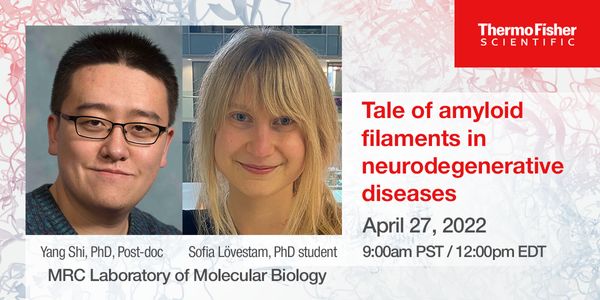
Date: April 27, 2022 Time: 9:00am (PDT), 12:00pm (EDT), 6:00pm (CEST) Abnormal accumulation of misfolded tau protein in filaments characterizes more than 20 neurodegenerative diseases—c...
Date: April 19, 2022 Time: 7:00am (PDT), 10:00am (EDT), 4:00pm (CEST) High-content (HC) phenotypic profiling approaches are a powerful tool to study the effect of biological, genetic, and ch...
Sex differences play an important role in development and progression of many diseases, and understanding how a disease differs between the sexes is essential for the advancement of preventi...
Understanding the order in which mutations accumulate during cancer progression could help us identify effective therapeutic targets. Yet, our insights are limited by the fact that we can on...
Biopharmaceuticals produced with mammalian cells are the key drivers for the medication of former untreatable diseases. The development of their production processes is still challenging bec...
In the last decades, the upstream processing in biopharma industry has been revolutionized regarding the production of bioactive materials such as monoclonal antibodies, proteins and biother...
Neuroscience is experiencing an exciting era of integrating novel materials and tools to record neural activity made possible through significant advances in materials science, electrical en...
Alzheimer’s and Parkinson’s diseases (AD, PD) are the two most common neurodegenerative disorders. Despite their debilitating effects and increasing prevalence in our society, no...
Neuropore Therapies is discovering and developing novel small molecule disease-modifying therapeutics to treat patients with neurodegenerative diseases, including Parkinson’s disease a...
The ability of light sheet microscopy to interrogate organoids, whole brain, and systems in 3D enables the study of complex neurological pathways, vasculature and disease models in unique wa...
Date: February 24, 2021 Time: 9:00am (PST), 12:00pm (EST) Cytokine profiling is a valuable tool used in preclinical research for monitoring an immune response and cell signaling pathways dur...
The quest for alternatives to animal safety testing has fueled the development, characterization, and validation of many new technologies. There have been advances in cell and tissue models...
Cancer still accounts for nearly 1 in every 4 deaths worldwide. New immunotherapies have the power to induce durable responses in patients with fatal cancers, but only a small percentage of...
Date: December 8, 2021 Time: 11:00am (PST), 2:00pam (EST) Breast cancer is the most common type of cancer and the leading cause of cancer deaths for women. Despite considerable ongoing resea...
Date: December 07, 2021 Time: 10:00am (PST) The RNAscope™ technology allows high sensitivity and spatial resolution providing pivotal single-cell information to gain better insights in...
Date: October 26, 2021 Time: 11:00am (PDT), 1:00pm (EDT) The retina is the light-sensing part of the visual system and is composed of six neuron types and several non-neuronal cell types, wi...
By examining the host response to SARS-CoV-2 infection we gain valuable insights into viral pathogenesis and COVID-19 progression. MicroRNAs (miRNAs), a class of small (18-22nt), non-coding...
Join me, an applied epidemiologist with boots on the ground, as we review key discoveries learned from the reopening of sports, entertainment and the arts. The four pillars of reopening incl...
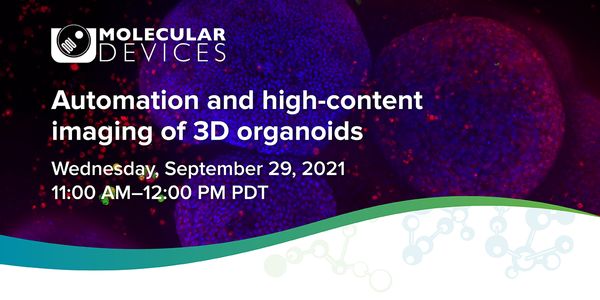
Date: September 16, 2021 Time: 9:00pm (PDT), 12:00am (EDT) 3D cellular models like organoids and spheroids offer an opportunity to better understand complex biology in a physiologically rele...
The coronavirus SARS-CoV-2 has led to a worldwide pandemic. Beside respiratory symptoms, infected people may develop neurologic dysfunctions such as loss of smell and taste, also seizures, a...
Neurological manifestations, including headache, altered mental status, and stroke, are a major complication of severe acute respiratory syndrome coronavirus-2 (SARS-CoV-2) infection and cor...
Cancer is a disease of the genome, and as such, tools that can analyze the genome are instrumental in understanding the mechanisms that lead to cancer, detecting cancerous cells, and providi...
Date: April 27, 2022 Time: 9:00am (PDT), 12:00pm (EDT), 6:00pm (CEST) Abnormal accumulation of misfolded tau protein in filaments characterizes more than 20 neurodegenerative diseases—c...
Date: April 19, 2022 Time: 7:00am (PDT), 10:00am (EDT), 4:00pm (CEST) High-content (HC) phenotypic profiling approaches are a powerful tool to study the effect of biological, genetic, and ch...
Sex differences play an important role in development and progression of many diseases, and understanding how a disease differs between the sexes is essential for the advancement of preventi...
Understanding the order in which mutations accumulate during cancer progression could help us identify effective therapeutic targets. Yet, our insights are limited by the fact that we can on...
Biopharmaceuticals produced with mammalian cells are the key drivers for the medication of former untreatable diseases. The development of their production processes is still challenging bec...
In the last decades, the upstream processing in biopharma industry has been revolutionized regarding the production of bioactive materials such as monoclonal antibodies, proteins and biother...
Neuroscience is experiencing an exciting era of integrating novel materials and tools to record neural activity made possible through significant advances in materials science, electrical en...
Alzheimer’s and Parkinson’s diseases (AD, PD) are the two most common neurodegenerative disorders. Despite their debilitating effects and increasing prevalence in our society, no...
Neuropore Therapies is discovering and developing novel small molecule disease-modifying therapeutics to treat patients with neurodegenerative diseases, including Parkinson’s disease a...
The ability of light sheet microscopy to interrogate organoids, whole brain, and systems in 3D enables the study of complex neurological pathways, vasculature and disease models in unique wa...
Date: February 24, 2021 Time: 9:00am (PST), 12:00pm (EST) Cytokine profiling is a valuable tool used in preclinical research for monitoring an immune response and cell signaling pathways dur...
The quest for alternatives to animal safety testing has fueled the development, characterization, and validation of many new technologies. There have been advances in cell and tissue models...
Cancer still accounts for nearly 1 in every 4 deaths worldwide. New immunotherapies have the power to induce durable responses in patients with fatal cancers, but only a small percentage of...
Date: December 8, 2021 Time: 11:00am (PST), 2:00pam (EST) Breast cancer is the most common type of cancer and the leading cause of cancer deaths for women. Despite considerable ongoing resea...
Date: December 07, 2021 Time: 10:00am (PST) The RNAscope™ technology allows high sensitivity and spatial resolution providing pivotal single-cell information to gain better insights in...
Date: October 26, 2021 Time: 11:00am (PDT), 1:00pm (EDT) The retina is the light-sensing part of the visual system and is composed of six neuron types and several non-neuronal cell types, wi...
By examining the host response to SARS-CoV-2 infection we gain valuable insights into viral pathogenesis and COVID-19 progression. MicroRNAs (miRNAs), a class of small (18-22nt), non-coding...
Join me, an applied epidemiologist with boots on the ground, as we review key discoveries learned from the reopening of sports, entertainment and the arts. The four pillars of reopening incl...
Date: September 16, 2021 Time: 9:00pm (PDT), 12:00am (EDT) 3D cellular models like organoids and spheroids offer an opportunity to better understand complex biology in a physiologically rele...

 Follow