Molecular Biology: concerns the molecular basis of biological activity between biomolecules in the various systems of a cell, including the interactions between DNA, RNA, and proteins and their biosynthesis, as well as the regulation of these interactions. Molecular biology explores cells, their characteristics, parts, and chemical processes, and pays special attention to how molecules control a cell's activities and growth. Looking at the molecular machinery of life began in the early 1930s, but truly modern molecular biology emerged with the uncovering of the structure of DNA in the 1960s.
Although neuroscience has provided a great deal of information about how neurons work, the fundamental question of how neurons function together in a network to produce cognition has been di...
The US Brain Research through Advancing Innovative Neurotechnologies is a research program focused on building fundamental knowledge of how brain circuits process information to enable human...
Brain function is remarkably reliable despite the imprecise performance of neurons, and the continuous perturbations caused by aging, disease or injury. How does the brain succeed in produci...
Autosomal dominant missense mutations that hyperactivate the LRRK2 protein kinase are a common cause of inherited Parkinson’s disease and therapeutic efficacy of LRRK2 inhibitors is be...
The locomotion of humans and other animals requires a seamless flow of information from sensory modalities all the way to the motor periphery. As such, locomotion is an excellent system for...
We present here a framework to generate a realistic multiscale circuit model of the larval zebrafish brain – the multiscale virtual fish (MVF). The model will be based on algorithms in...
Recommendations for key factors in testing and diagnosis of H. pylori infections to include information on appropriate patients for H.pylori testing, current testing options, post treatment...
DATE: March 3, 2020 TIME: 9:00am PT, 12:00pm ET Despite the advances of new drugs and the lowering of carbapenem breakpoints to enhance detection of CRE, there should be no complacency about...
Digital spatial profiling (DSP) on the NanoString GeoMx platform enables high plex molecular profiling of clinical tissue samples. This new profiling strategy enables deep insights into the...
CRISPR revolutionized gene editing, but multi-target screening remains a complex goal. In addition, the fast pace of CRISPR technology development has brought sophisticated options for libra...
Recent advances in DNA sequencing and omics-based capabilities are revealing incredible therapeutic opportunities and quickly transforming drug discovery. Molecularly targeted drugs aim to e...
DATE: January 22, 2019TIME: 9:00am PST, 12:00pm EST I describe the essentials for pursuing research grants from private foundations and corporations. Specifically, I revi...
DATE: January 15, 2020 TIME: 10:00am PST Genomics, personalized medicine and cost stewardship are just a few of the forces behind the need for better management of discrete testing informati...
Fecal elastase-1 – a biomarker for pancreatic exocrine insufficiency(EPI) continues to gain traction as an ideal biomarker for assessing EPI. This presentation will include a review of...
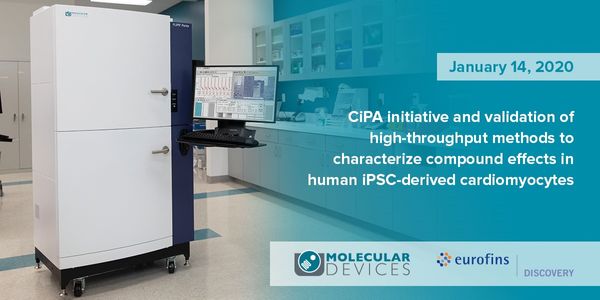
DATE: January 14, 2019 TIME: 8:00am PST Drug-induced QT interval prolongation and Torsades de Pointes (TdP) arrhythmias are the leading causes for drug withdrawals from market and compound a...
The aim of the lecture is to give an insight into the use of 3D liver micro tissues (3D liMTs) in drug discovery and translational safety. In translational toxicology, 3D LiMTs have a high i...
Accurate DNA replication is essential to transmit the genetic information from one generation to another. However, replication is frequently challenged by barriers that originate from exogen...
Open Science has changed research by making data accessible and shareable, contributing to replicability to accelerate and disseminate knowledge. However, for rodent cognitive studies the av...
“The poor translatability of early-stage preclinical models is a major setback in oncology drug development. Immortalized cell lines, that are extensively used in drug screens, undergo...
Normal behavior in any moving animal, including humans, relies on communication between motor systems that control movements, and the sensory systems we use to guide these actions. A critica...
The dopamine D4 receptor (D4R) is enriched in the prefrontal cortex where it plays important roles in cognition, attention, decision making and executive function. Novel D4R-selective ligand...
The study of biological function in intact organisms and the development of targeted cellular therapeutics necessitate methods to image and control cellular function in vivo. Technologies su...
Microphysiological systems (MPS), also known as organ-on-chips, are small scale in vitro cell cultures which mimic facets of tissue or organ level function. MPS frequently utilise primary hu...
Although neuroscience has provided a great deal of information about how neurons work, the fundamental question of how neurons function together in a network to produce cognition has been di...
The US Brain Research through Advancing Innovative Neurotechnologies is a research program focused on building fundamental knowledge of how brain circuits process information to enable human...
Brain function is remarkably reliable despite the imprecise performance of neurons, and the continuous perturbations caused by aging, disease or injury. How does the brain succeed in produci...
Autosomal dominant missense mutations that hyperactivate the LRRK2 protein kinase are a common cause of inherited Parkinson’s disease and therapeutic efficacy of LRRK2 inhibitors is be...
The locomotion of humans and other animals requires a seamless flow of information from sensory modalities all the way to the motor periphery. As such, locomotion is an excellent system for...
We present here a framework to generate a realistic multiscale circuit model of the larval zebrafish brain – the multiscale virtual fish (MVF). The model will be based on algorithms in...
Recommendations for key factors in testing and diagnosis of H. pylori infections to include information on appropriate patients for H.pylori testing, current testing options, post treatment...
DATE: March 3, 2020 TIME: 9:00am PT, 12:00pm ET Despite the advances of new drugs and the lowering of carbapenem breakpoints to enhance detection of CRE, there should be no complacency about...
Digital spatial profiling (DSP) on the NanoString GeoMx platform enables high plex molecular profiling of clinical tissue samples. This new profiling strategy enables deep insights into the...
CRISPR revolutionized gene editing, but multi-target screening remains a complex goal. In addition, the fast pace of CRISPR technology development has brought sophisticated options for libra...
Recent advances in DNA sequencing and omics-based capabilities are revealing incredible therapeutic opportunities and quickly transforming drug discovery. Molecularly targeted drugs aim to e...
DATE: January 22, 2019TIME: 9:00am PST, 12:00pm EST I describe the essentials for pursuing research grants from private foundations and corporations. Specifically, I revi...
DATE: January 15, 2020 TIME: 10:00am PST Genomics, personalized medicine and cost stewardship are just a few of the forces behind the need for better management of discrete testing informati...
Fecal elastase-1 – a biomarker for pancreatic exocrine insufficiency(EPI) continues to gain traction as an ideal biomarker for assessing EPI. This presentation will include a review of...
DATE: January 14, 2019 TIME: 8:00am PST Drug-induced QT interval prolongation and Torsades de Pointes (TdP) arrhythmias are the leading causes for drug withdrawals from market and compound a...
The aim of the lecture is to give an insight into the use of 3D liver micro tissues (3D liMTs) in drug discovery and translational safety. In translational toxicology, 3D LiMTs have a high i...
Accurate DNA replication is essential to transmit the genetic information from one generation to another. However, replication is frequently challenged by barriers that originate from exogen...
Open Science has changed research by making data accessible and shareable, contributing to replicability to accelerate and disseminate knowledge. However, for rodent cognitive studies the av...
“The poor translatability of early-stage preclinical models is a major setback in oncology drug development. Immortalized cell lines, that are extensively used in drug screens, undergo...
Normal behavior in any moving animal, including humans, relies on communication between motor systems that control movements, and the sensory systems we use to guide these actions. A critica...
The dopamine D4 receptor (D4R) is enriched in the prefrontal cortex where it plays important roles in cognition, attention, decision making and executive function. Novel D4R-selective ligand...
The study of biological function in intact organisms and the development of targeted cellular therapeutics necessitate methods to image and control cellular function in vivo. Technologies su...
Microphysiological systems (MPS), also known as organ-on-chips, are small scale in vitro cell cultures which mimic facets of tissue or organ level function. MPS frequently utilise primary hu...

 Follow