Learn how to manage clinical coagulation labs with expert guidance on reagent validation, CAP checklist compliance, and aPTT and factor sensitivity testing...
Antibody-drug conjugates (ADCs) represent the most successful class of active targeting drug-delivery systems, however, despite the increasing number of FDA approvals treatment-related adver...
CRISPR has emerged as a promising alternative to viral-based gene editing by allowing scientists to modify genes with unprecedented ease and flexibility. The discovery and development of a d...
Gene therapy involves introducing a functional gene into the patient's cells to replace a missing or defective one. It has revolutionized the field of medicine and has the potential to c...
One of the primary limitations in drug discovery and toxicology research is the lack of good model systems between the single cell level and animal or human systems. This is especially true...
Cannabis edibles and orally administered oils act slowly and unreliably because the incorporated cannabinoids do not dissolve in water. Similar poor performance profiles are observed for oth...
Gene therapy has revolutionized the field of medicine, and it has the potential to cure a wide variety of genetic disorders. Gene therapy involves the introduction of a functional gene into...
Quantifying critical quality attributes accurately and precisely is an important aspect of regulatory compliance. There is greater demand to optimize processes by integrating advanced analyt...
Speech neuroprostheses have the potential to restore communication to people living with paralysis, but naturalistic speed and expressivity are elusive. Here we use high-density surface reco...
NAFLD (non-alcoholic fatty liver disease) is a global epidemic that affects 25% of the world’s population, with its epicentre in the West. Twenty percent of NAFLD patients go on to dev...
Proliferation biomarkers are proteins that are up-regulated in growing cells. Immunological staining of tumor tissue can provide an indication of the aggressivity of the tumor and provide in...
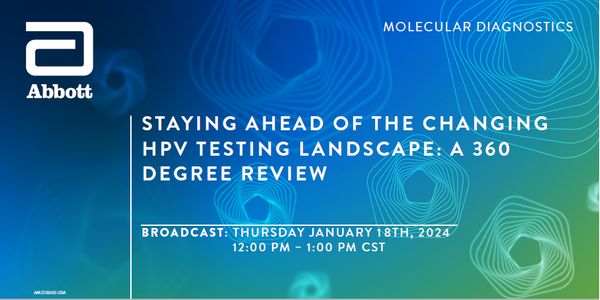
In 2020, American Cancer Society released an updated cervical cancer screening guideline calling for primary human papillomavirus (HPV) screening as the preferred strategy. Utility of HPV pr...
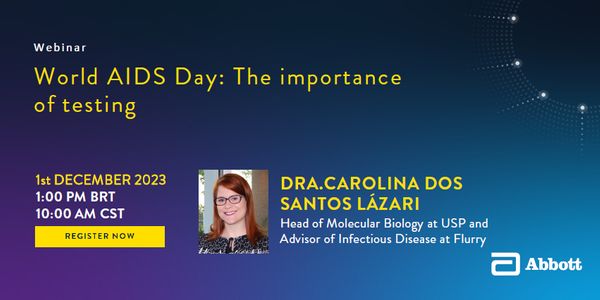
According to the most recent data from UNAIDS, in 2022, there were around 39 million people living with HIV worldwide. Of these, 5.5 million people were unaware of their diagnosis in 2021. M...
Spheroids and organoids, two examples of 3D cell culture models, have become invaluable tools to study the processes that dictate behavior of tissues under physiological and pathological con...
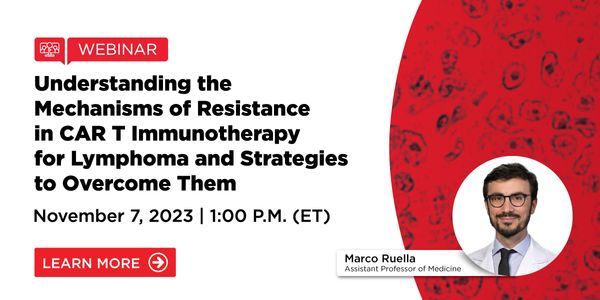
In the last 5 years, the US Food and Drug Administration has approved 4 anti-CD19 chimeric antigen receptor T cell (CART19) products for relapsed/refractory B cell lymphomas and leukemia. Ho...
Next-generation sequencing (NGS) has become increasingly popular with testing labs, as it allows them to obtain more data in less time and with minimal input. In this webinar, we will explor...
For patients with advanced non-small cell lung cancer (NSCLC), tissue samples are typically small biopsies. These samples undergo standard of care evaluation for >10 biomarkers to identif...
Rapid screening and speed of scale-up in protein therapeutics are critical factors in today’s immuno-oncology workflow. The ability to swiftly develop novel therapies often depends on...
Learn how to manage clinical coagulation labs with expert guidance on reagent validation, CAP checklist compliance, and aPTT and factor sensitivity testing...
Antibody-drug conjugates (ADCs) represent the most successful class of active targeting drug-delivery systems, however, despite the increasing number of FDA approvals treatment-related adver...
CRISPR has emerged as a promising alternative to viral-based gene editing by allowing scientists to modify genes with unprecedented ease and flexibility. The discovery and development of a d...
Gene therapy involves introducing a functional gene into the patient's cells to replace a missing or defective one. It has revolutionized the field of medicine and has the potential to c...
One of the primary limitations in drug discovery and toxicology research is the lack of good model systems between the single cell level and animal or human systems. This is especially true...
Cannabis edibles and orally administered oils act slowly and unreliably because the incorporated cannabinoids do not dissolve in water. Similar poor performance profiles are observed for oth...
Gene therapy has revolutionized the field of medicine, and it has the potential to cure a wide variety of genetic disorders. Gene therapy involves the introduction of a functional gene into...
Quantifying critical quality attributes accurately and precisely is an important aspect of regulatory compliance. There is greater demand to optimize processes by integrating advanced analyt...
Speech neuroprostheses have the potential to restore communication to people living with paralysis, but naturalistic speed and expressivity are elusive. Here we use high-density surface reco...
NAFLD (non-alcoholic fatty liver disease) is a global epidemic that affects 25% of the world’s population, with its epicentre in the West. Twenty percent of NAFLD patients go on to dev...
Proliferation biomarkers are proteins that are up-regulated in growing cells. Immunological staining of tumor tissue can provide an indication of the aggressivity of the tumor and provide in...
In 2020, American Cancer Society released an updated cervical cancer screening guideline calling for primary human papillomavirus (HPV) screening as the preferred strategy. Utility of HPV pr...
According to the most recent data from UNAIDS, in 2022, there were around 39 million people living with HIV worldwide. Of these, 5.5 million people were unaware of their diagnosis in 2021. M...
Spheroids and organoids, two examples of 3D cell culture models, have become invaluable tools to study the processes that dictate behavior of tissues under physiological and pathological con...
In the last 5 years, the US Food and Drug Administration has approved 4 anti-CD19 chimeric antigen receptor T cell (CART19) products for relapsed/refractory B cell lymphomas and leukemia. Ho...
Next-generation sequencing (NGS) has become increasingly popular with testing labs, as it allows them to obtain more data in less time and with minimal input. In this webinar, we will explor...
For patients with advanced non-small cell lung cancer (NSCLC), tissue samples are typically small biopsies. These samples undergo standard of care evaluation for >10 biomarkers to identif...
Rapid screening and speed of scale-up in protein therapeutics are critical factors in today’s immuno-oncology workflow. The ability to swiftly develop novel therapies often depends on...

 Follow