Single-Molecule methods provide access to details of a population's characteristics that are obscured by ensemble averaging. It is a powerful method used to examine a multitude of phenomena using advanced techniques such as total internal reflection (TIRF) and superresolution imaging.
DATE: October, 24, 2017TIME: 7:00 AM PDT Metabolomics focuses on the chemical processes central to cellular metabolism. A robust mass spectrometry solution for screening...
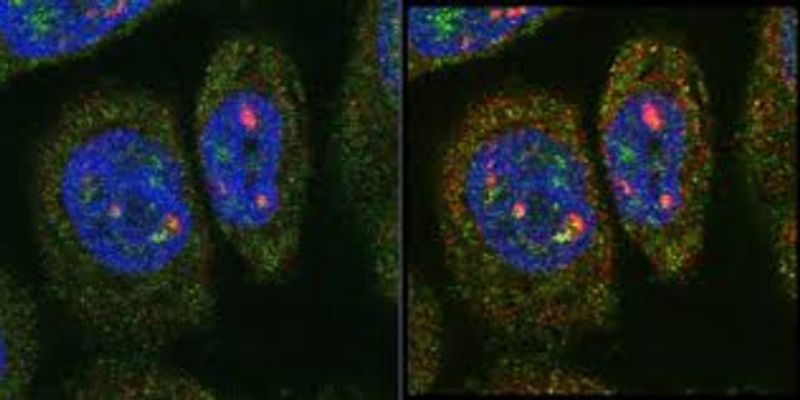
Einstein researcher Robert Singer, Ph.D., discusses a breakthrough in microscopy that is allowing scientists to track messenger RNA in living cells in real time. The study, published in the S...
The global threat of antimicrobial resistance has been recognized by the World Health Organization, the United Nations and many other expert bodies. The burden of resistant pathogens is immen...
Cardiomyocytes (CMs) derived from human induced pluripotent stem cells (iPSCs) as well as engineered heart muscles offer great potential for regenerative applications by CM transplantation, f...
Therapeutic application of pluripotent stem (PS) cell-derived products represents the ultimate goal of stem cell research. In order to apply this technology to patients, it is fundamental to ...
The presentation will describe the principles of the ultra-sensitive single-molecule array (Simoa) developed by Quanterix and the application of the Simoa technology to the development of a t...
Cell growth and regulation involve vast networks of interacting DNAs, RNAs, proteins, lipids and sugars. Through a fundamental strategy of life, these interactions push multiple cellular proc...
DATE: January 27, 2017TIME: 4:00am PT, 7:00am ET, 1:00pm CETThe study of the tumor ecosystem and its cell-to-cell communications is essential to enable an understanding of tumor biology...
DATE: November 17, 2016
TIME: 7:00am PT, 10:00am ET
Induced pluripotent stem (iPS) cell reprogramming allows turning an adult somatic cell into a pluripotent stem cell. Four Fac...
Bulk analysis often leads to conclusions that assume averages reflect the dominant biological mechanism operating within an entire population. To fully understand how cellular heterogeneity c...
The recent Zika virus outbreak highlights the need for low-cost diagnostics that can be rapidly developed for distribution and use in pandemic regions. In early 2016 we developed a pipe...
The immune system possesses significant cytotoxic potential. Stimulating natural immunity through vaccination has shown promising effects in some cancers; however, a number of barriers limit...
Our speaker, Wenjie Xu, Ph.D., will present his publication data demonstrating how nCounter® technology can advance your infectious disease research faster and more accurately with unprec...
DATE: June 14th, 2016
TIME: 8am Pacific time, 11am Eastern time
Recent breakthroughs in image sensor performance and signal processing have joined to enable new possibilities for live cel...
The biological state of the cell is characterized by a complex network of interacting genes, gene products, proteins, microRNAs, as well as other molecules. Microarrays and next generation se...
DATE: April 4, 2016
TIME: 8:00am Pacific time, 11:00am Eastern time
The use of surface plasmon resonance to characterize protein:protein interactions is well established and has bee...
Recent advances in next-generation sequencing (NGS) have helped to accelerate the pace of discovery in the field of genetic disease research and testing. The ability to analyze multiple genes...
The greatest health epidemic of our time is cancer. Deaths from cancer worldwide outnumber the combined deaths from HIV/AIDS, tuberculosis and malaria by a wide margin. There are at least 100...
Control of infection from methicillin resistant Staphylococcus aureus (MRSA) has been a healthcare focus for more than 50 years. One of the reasons that active surveillance testing (AST) for...
Respiratory viral infections remain a leading cause of medical visits and can contribute significantly to morbidity and mortality. Influenza, together with pneumonia, is the leading infectio...
Date: June 16, 2015Time: 8:00AM Pacific time, 11:00AM Eastern TimeGroup 2 innate lymphoid cells (ILC2s) are recently described innate immune cells that contribute to type 2 inflammation, tiss...
Every cell in the body can release several types of extracellular vesicles (EVs), often called ”exosomes” or ”microvesicles”. These vesicles carry a wide array of mole...
Single-cell analysis is one of the most rapidly growing fields in biomedical research that is significantly expanding our understanding on the biologic characteristics of various diseases. F...
DATE: October, 24, 2017TIME: 7:00 AM PDT Metabolomics focuses on the chemical processes central to cellular metabolism. A robust mass spectrometry solution for screening...
Einstein researcher Robert Singer, Ph.D., discusses a breakthrough in microscopy that is allowing scientists to track messenger RNA in living cells in real time. The study, published in the S...
The global threat of antimicrobial resistance has been recognized by the World Health Organization, the United Nations and many other expert bodies. The burden of resistant pathogens is immen...
Cardiomyocytes (CMs) derived from human induced pluripotent stem cells (iPSCs) as well as engineered heart muscles offer great potential for regenerative applications by CM transplantation, f...
Therapeutic application of pluripotent stem (PS) cell-derived products represents the ultimate goal of stem cell research. In order to apply this technology to patients, it is fundamental to ...
The presentation will describe the principles of the ultra-sensitive single-molecule array (Simoa) developed by Quanterix and the application of the Simoa technology to the development of a t...
Cell growth and regulation involve vast networks of interacting DNAs, RNAs, proteins, lipids and sugars. Through a fundamental strategy of life, these interactions push multiple cellular proc...
DATE: January 27, 2017TIME: 4:00am PT, 7:00am ET, 1:00pm CETThe study of the tumor ecosystem and its cell-to-cell communications is essential to enable an understanding of tumor biology...
DATE: November 17, 2016
TIME: 7:00am PT, 10:00am ET
Induced pluripotent stem (iPS) cell reprogramming allows turning an adult somatic cell into a pluripotent stem cell. Four Fac...
Bulk analysis often leads to conclusions that assume averages reflect the dominant biological mechanism operating within an entire population. To fully understand how cellular heterogeneity c...
The recent Zika virus outbreak highlights the need for low-cost diagnostics that can be rapidly developed for distribution and use in pandemic regions. In early 2016 we developed a pipe...
The immune system possesses significant cytotoxic potential. Stimulating natural immunity through vaccination has shown promising effects in some cancers; however, a number of barriers limit...
Our speaker, Wenjie Xu, Ph.D., will present his publication data demonstrating how nCounter® technology can advance your infectious disease research faster and more accurately with unprec...
DATE: June 14th, 2016
TIME: 8am Pacific time, 11am Eastern time
Recent breakthroughs in image sensor performance and signal processing have joined to enable new possibilities for live cel...
The biological state of the cell is characterized by a complex network of interacting genes, gene products, proteins, microRNAs, as well as other molecules. Microarrays and next generation se...
DATE: April 4, 2016
TIME: 8:00am Pacific time, 11:00am Eastern time
The use of surface plasmon resonance to characterize protein:protein interactions is well established and has bee...
Recent advances in next-generation sequencing (NGS) have helped to accelerate the pace of discovery in the field of genetic disease research and testing. The ability to analyze multiple genes...
The greatest health epidemic of our time is cancer. Deaths from cancer worldwide outnumber the combined deaths from HIV/AIDS, tuberculosis and malaria by a wide margin. There are at least 100...
Control of infection from methicillin resistant Staphylococcus aureus (MRSA) has been a healthcare focus for more than 50 years. One of the reasons that active surveillance testing (AST) for...
Respiratory viral infections remain a leading cause of medical visits and can contribute significantly to morbidity and mortality. Influenza, together with pneumonia, is the leading infectio...
Date: June 16, 2015Time: 8:00AM Pacific time, 11:00AM Eastern TimeGroup 2 innate lymphoid cells (ILC2s) are recently described innate immune cells that contribute to type 2 inflammation, tiss...
Every cell in the body can release several types of extracellular vesicles (EVs), often called ”exosomes” or ”microvesicles”. These vesicles carry a wide array of mole...
Single-cell analysis is one of the most rapidly growing fields in biomedical research that is significantly expanding our understanding on the biologic characteristics of various diseases. F...
 Follow