Gene Editing: a type of genetic engineering in which DNA is inserted, deleted or replaced in the genome of a living organism using engineered nucleases, or "molecular scissors". These nucleases create site-specific double-strand breaks (DSBs) at desired locations in the genome. The induced double-strand breaks are repaired through nonhomologous end-joining (NHEJ) or homologous recombination (HR), resulting in targeted mutations.

DATE: December 11, 2019TIME: 7:00am PST, 10:00am EST An important part of the biopharma industry, Plasmid DNA is used as a gene-delivery vehicle for DNA vaccination and as a key...
DATE: December 4, 2019TIME: 7:00am PST, 10:00am EST, 4:00pm CET Do you know how it feels when you just quickly want to redo an experiment that your colleague did, or an experim...
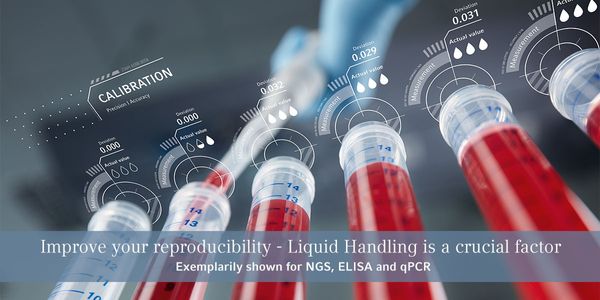
DATE: November 18, 2019TIME: 7:00am PST, 11:00am EST, 4:00pm CEWT How often do you pipette in your cell culture lab every day? Usually, we do it so often that we tend stop th...
Novel precision genetic technologies such as CRISPR/Cas9 genome editing technology offer novel avenues to a better understanding the mechanisms of diseases. Using CRISPR/Cas9 we are able to p...
Banana (Musa spp.) is one of the major staple food crops grown in over 140 countries in the subtropics and tropics with annual global production of around 148 million metric, feeding about 50...
Over the last decade, the policy and regulatory trajectory of genomic and reproductive technologies has been a checkered one. Approaches around the world range from constitutional and crimina...
CRISPR based gene editing has proven to be an incredibly powerful tool for studying functions of individual proteins, understanding the role of multi-gene pathways, and even knocking out prot...
CRISPR-Cas9 based gene editing is a powerful tool which can induce heritable mutations at desired genomic loci without leaving transgenic trace in plants. Here we constructed a robust, multip...
CRISPR/Cas9 technology has become very popular in the last 5 years and has profoundly changed our way to do genetically engineered animals. I will present the latest development in genome edi...
First discovered as a genome-editing tool just seven years ago, CRISPR systems have already changed the face of basic research, allowing researchers to alter the DNA of hundreds of organisms...
DATE: September 5, 2019TIME: 7:00am PT, 10:00am ET, 4:00pm CEST PCR (Polymerase Chain Reaction) has gone through a massive evolution since its development in 1983. Besides it...
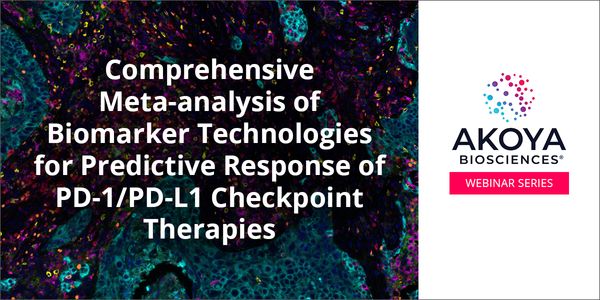
DATE: August 27, 2019 TIME: 9:00am PDT, 12:00pm EDT Immunotherapies targeting PD-1 or PD-L1 have proven remarkably effective for treating cancer in some patients, with considerabl...
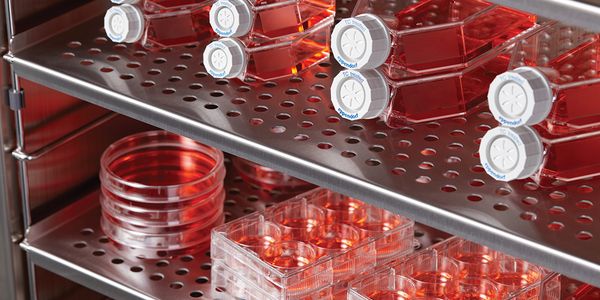
DATE: June 5, 2019TIME: 8:00am PDT, 11:00am EDT, 5:00pm CEST Eukaryotic cell cultures respond to the most subtle influence. Apart from the risk of contamination, minimal chan...
DATE: May 16, 2019TIME: 7:00am PDT, 10:00am EDT, 4:00pm CEST The emergence of NGS is revolutionizing the microbiological sciences and transforming medicine. Deep sequencing has...
In 2014, the Undiagnosed Diseases Network (UDN), which is funded by the NIH, was established as a network of seven clinical sites, two sequencing cores, and a coordinating center. Later, a ce...

Screening to identify all known viruses and other pathogenic microorganisms including bacteria, fungus and parasites in human tumor tissues will provide a more comprehensive understanding of...
Speculations that some form DNA alteration might be utilized by the brain date to the 1960s [1] wherein hypotheses for genomic alterations of germline DNA were proposed for immunoglobulins an...
Real-time PCR, or quantitative qPCR, is a commonly used molecular biology lab technique to determine the actual amount of PCR product at a given cycle. For quantitative reverse transcription...
The advent of precision medicine largely depends on the creation of precise and accurate predictive tools. While most late-onset diseases are moderately to highly heritable, using genetic inf...
Release of the first human genome assembly was a landmark achievement, and after nearly two decades of improvements, the current human reference genome (GRCh38) is the most accurate and compl...
Recent technological advances as well as longitudinal monitoring not only have the potential to improve the treatment of disease (Precision Medicine) but also empower people to stay healthy (...
Variant interpretation presents a bottleneck for many labs, posing a challenge to the broader adoption of precision medicine. The ACMG/AMP variant classification framework has provided a foun...
Recent improvements in sequencing chemistry and instrument performance combine to create a new PacBio data type of highly accurate (HiFi), long insert reads. Increased read length and improve...
DATE: December 11, 2019TIME: 7:00am PST, 10:00am EST An important part of the biopharma industry, Plasmid DNA is used as a gene-delivery vehicle for DNA vaccination and as a key...
DATE: December 4, 2019TIME: 7:00am PST, 10:00am EST, 4:00pm CET Do you know how it feels when you just quickly want to redo an experiment that your colleague did, or an experim...
DATE: November 18, 2019TIME: 7:00am PST, 11:00am EST, 4:00pm CEWT How often do you pipette in your cell culture lab every day? Usually, we do it so often that we tend stop th...
Novel precision genetic technologies such as CRISPR/Cas9 genome editing technology offer novel avenues to a better understanding the mechanisms of diseases. Using CRISPR/Cas9 we are able to p...
Banana (Musa spp.) is one of the major staple food crops grown in over 140 countries in the subtropics and tropics with annual global production of around 148 million metric, feeding about 50...
Over the last decade, the policy and regulatory trajectory of genomic and reproductive technologies has been a checkered one. Approaches around the world range from constitutional and crimina...
CRISPR based gene editing has proven to be an incredibly powerful tool for studying functions of individual proteins, understanding the role of multi-gene pathways, and even knocking out prot...
CRISPR-Cas9 based gene editing is a powerful tool which can induce heritable mutations at desired genomic loci without leaving transgenic trace in plants. Here we constructed a robust, multip...
CRISPR/Cas9 technology has become very popular in the last 5 years and has profoundly changed our way to do genetically engineered animals. I will present the latest development in genome edi...
First discovered as a genome-editing tool just seven years ago, CRISPR systems have already changed the face of basic research, allowing researchers to alter the DNA of hundreds of organisms...
DATE: September 5, 2019TIME: 7:00am PT, 10:00am ET, 4:00pm CEST PCR (Polymerase Chain Reaction) has gone through a massive evolution since its development in 1983. Besides it...
DATE: August 27, 2019 TIME: 9:00am PDT, 12:00pm EDT Immunotherapies targeting PD-1 or PD-L1 have proven remarkably effective for treating cancer in some patients, with considerabl...
DATE: June 5, 2019TIME: 8:00am PDT, 11:00am EDT, 5:00pm CEST Eukaryotic cell cultures respond to the most subtle influence. Apart from the risk of contamination, minimal chan...
DATE: May 16, 2019TIME: 7:00am PDT, 10:00am EDT, 4:00pm CEST The emergence of NGS is revolutionizing the microbiological sciences and transforming medicine. Deep sequencing has...
In 2014, the Undiagnosed Diseases Network (UDN), which is funded by the NIH, was established as a network of seven clinical sites, two sequencing cores, and a coordinating center. Later, a ce...

Screening to identify all known viruses and other pathogenic microorganisms including bacteria, fungus and parasites in human tumor tissues will provide a more comprehensive understanding of...
Speculations that some form DNA alteration might be utilized by the brain date to the 1960s [1] wherein hypotheses for genomic alterations of germline DNA were proposed for immunoglobulins an...
Real-time PCR, or quantitative qPCR, is a commonly used molecular biology lab technique to determine the actual amount of PCR product at a given cycle. For quantitative reverse transcription...
The advent of precision medicine largely depends on the creation of precise and accurate predictive tools. While most late-onset diseases are moderately to highly heritable, using genetic inf...
Release of the first human genome assembly was a landmark achievement, and after nearly two decades of improvements, the current human reference genome (GRCh38) is the most accurate and compl...
Recent technological advances as well as longitudinal monitoring not only have the potential to improve the treatment of disease (Precision Medicine) but also empower people to stay healthy (...
Variant interpretation presents a bottleneck for many labs, posing a challenge to the broader adoption of precision medicine. The ACMG/AMP variant classification framework has provided a foun...
Recent improvements in sequencing chemistry and instrument performance combine to create a new PacBio data type of highly accurate (HiFi), long insert reads. Increased read length and improve...