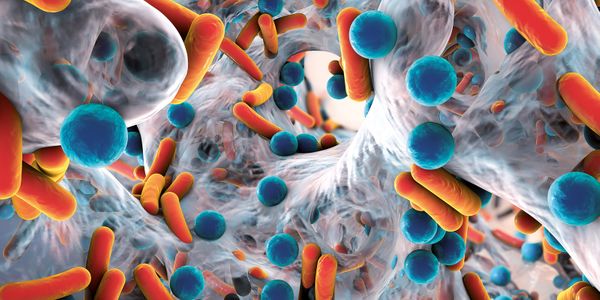
Pathogen is any disease-producing agent, especially a virus, bacterium, or other microorganism. It is an organism causing disease to its host, with the severity of the disease symptoms referred to as virulence. They include viruses, bacteria, fungi, and parasites that invade the body and can cause health issues.
The emergence and spread of antimicrobial-resistant (AMR) bacteria and resistance mechanisms pose a serious challenge to laboratories in both hospital clinical microbiology and public health...
Plants recruit soil microbes that provide nutrients, promote growth and protect against pathogens. However, the full potential of microbial communities for supporting plant health and agricul...
Background: The vast majority of all genes are contained within the genomes of the prokaryotes, including the eubacteria and the archaea. These largely single-cellular domains of life thus...
immunocompromised populations where the virus can cause systemic and even fatal infections. Indeed, we have shown that astrovirus infections are more prevalent than norovirus in our pediatric...
In contrast to other countries in Latin America, Peru had been notoriously spared by the global dissemination of carbapenem-resistant Klebsiella pneumoniae (CR-Kp) until recently. Isolated ca...
Canine parvovirus (CPV) is an important pathogen causing severe diseases in dogs, including acute hemorrhagic enteritis, myocarditis and cerebellar disease. Cross-species transmission of CPV...
Traditional pathogen detection methods rely on the identification of pathogens known to be associated with a particular syndrome. In many cases, it involves complex methodology, lengthy proce...
DATE: August 14, 2019TIME: 8:00am PDT Infectious disease surveillance and monitoring is critical in settings where disease outbreaks and antibiotic resistance can dramatically im...
DATE: May 16, 2019TIME: 7:00am PDT, 10:00am EDT, 4:00pm CEST The emergence of NGS is revolutionizing the microbiological sciences and transforming medicine. Deep sequencing has...
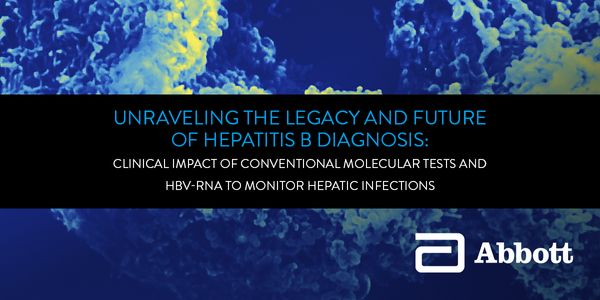
DATE: May 15, 2019TIME: 9:00am PDTHepatitis B infections remain a significant global healthcare burden resulting in 887,000 deaths in 2015. Clinical laboratories can have a measurable i...
Screening to identify all known viruses and other pathogenic microorganisms including bacteria, fungus and parasites in human tumor tissues will provide a more comprehensive understanding of...
Variant interpretation presents a bottleneck for many labs, posing a challenge to the broader adoption of precision medicine. The ACMG/AMP variant classification framework has provided a foun...
Tuberculosis has killed more than one billion people in the last 200 years. It is the oldest and the deadliest human pathogen, recently surpassing HIV. Its adaptation to host and drug pressur...
“Emerging infections” are those that appear suddenly or are rapidly increasing in incidence or geographic range (e.g., HIV/AIDS, Ebola, SARS, Middle East Respiratory Syndrome [MER...
The Ebola virus disease outbreak in West Africa in 2014-2016 was the largest of its kind in history. This was the first outbreak that involved a randomized clinical trial for therapeutics, a...
To reduce the global burden diseases causes by infectious disease, including parasites and bacteria, scientists need better information about mechanisms of virulence, immune evasion, and drug...
Myeloid leukemias encompass a group of different diseases that include myeloproliferative neoplasms (MPN), myelodysplastic syndrome (MDS) or acute myeloid leukemia (AML). These diseases are d...
QIAGEN helps your team focus on the opportunities, not the obstacles, with an end-to-end clinical testing solution. During this talk, we will present our clinical decision support solutions,...
The BRCA1 and BRCA2 genes represent the best examples of the modern understanding of cancer molecular genetics. Testing for germline and somatic mutations in BRCA 1/2 has gradually become com...
The laboratory diagnosis of infectious diseases has traditionally relied on recovery of pathogens in cultures and for many infections, this approach remains the standard of care. The developm...
Rapid, inexpensive, and sensitive nucleic acid detection may aid point-of-care pathogen detection, genotyping, and disease monitoring. We combine the RNA- targeting CRISPR effector Cas13 with...
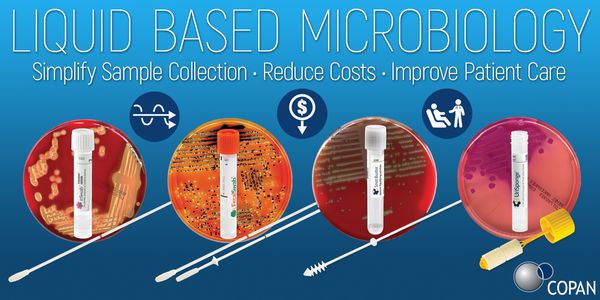
The world is filled with harmful pathogens that increasingly threaten the safety of our cannabis, food and beverages. And yet, testing labs still rely on the Petri dishes scientists invented...
DATE: March 5, 2019TIME: 09:00am PST, 12:00pm EST MicroRNA(miRNA) are short non-coding single stranded RNA molecules that regulate gene expression at the post tran...
The emergence and spread of antimicrobial-resistant (AMR) bacteria and resistance mechanisms pose a serious challenge to laboratories in both hospital clinical microbiology and public health...
Plants recruit soil microbes that provide nutrients, promote growth and protect against pathogens. However, the full potential of microbial communities for supporting plant health and agricul...
Background: The vast majority of all genes are contained within the genomes of the prokaryotes, including the eubacteria and the archaea. These largely single-cellular domains of life thus...
immunocompromised populations where the virus can cause systemic and even fatal infections. Indeed, we have shown that astrovirus infections are more prevalent than norovirus in our pediatric...
In contrast to other countries in Latin America, Peru had been notoriously spared by the global dissemination of carbapenem-resistant Klebsiella pneumoniae (CR-Kp) until recently. Isolated ca...
Canine parvovirus (CPV) is an important pathogen causing severe diseases in dogs, including acute hemorrhagic enteritis, myocarditis and cerebellar disease. Cross-species transmission of CPV...
Traditional pathogen detection methods rely on the identification of pathogens known to be associated with a particular syndrome. In many cases, it involves complex methodology, lengthy proce...
DATE: August 14, 2019TIME: 8:00am PDT Infectious disease surveillance and monitoring is critical in settings where disease outbreaks and antibiotic resistance can dramatically im...
DATE: May 16, 2019TIME: 7:00am PDT, 10:00am EDT, 4:00pm CEST The emergence of NGS is revolutionizing the microbiological sciences and transforming medicine. Deep sequencing has...
DATE: May 15, 2019TIME: 9:00am PDTHepatitis B infections remain a significant global healthcare burden resulting in 887,000 deaths in 2015. Clinical laboratories can have a measurable i...
Screening to identify all known viruses and other pathogenic microorganisms including bacteria, fungus and parasites in human tumor tissues will provide a more comprehensive understanding of...
Variant interpretation presents a bottleneck for many labs, posing a challenge to the broader adoption of precision medicine. The ACMG/AMP variant classification framework has provided a foun...
Tuberculosis has killed more than one billion people in the last 200 years. It is the oldest and the deadliest human pathogen, recently surpassing HIV. Its adaptation to host and drug pressur...
“Emerging infections” are those that appear suddenly or are rapidly increasing in incidence or geographic range (e.g., HIV/AIDS, Ebola, SARS, Middle East Respiratory Syndrome [MER...
The Ebola virus disease outbreak in West Africa in 2014-2016 was the largest of its kind in history. This was the first outbreak that involved a randomized clinical trial for therapeutics, a...
To reduce the global burden diseases causes by infectious disease, including parasites and bacteria, scientists need better information about mechanisms of virulence, immune evasion, and drug...
Myeloid leukemias encompass a group of different diseases that include myeloproliferative neoplasms (MPN), myelodysplastic syndrome (MDS) or acute myeloid leukemia (AML). These diseases are d...
QIAGEN helps your team focus on the opportunities, not the obstacles, with an end-to-end clinical testing solution. During this talk, we will present our clinical decision support solutions,...
The BRCA1 and BRCA2 genes represent the best examples of the modern understanding of cancer molecular genetics. Testing for germline and somatic mutations in BRCA 1/2 has gradually become com...
The laboratory diagnosis of infectious diseases has traditionally relied on recovery of pathogens in cultures and for many infections, this approach remains the standard of care. The developm...
Rapid, inexpensive, and sensitive nucleic acid detection may aid point-of-care pathogen detection, genotyping, and disease monitoring. We combine the RNA- targeting CRISPR effector Cas13 with...
The world is filled with harmful pathogens that increasingly threaten the safety of our cannabis, food and beverages. And yet, testing labs still rely on the Petri dishes scientists invented...
DATE: March 5, 2019TIME: 09:00am PST, 12:00pm EST MicroRNA(miRNA) are short non-coding single stranded RNA molecules that regulate gene expression at the post tran...
 Follow