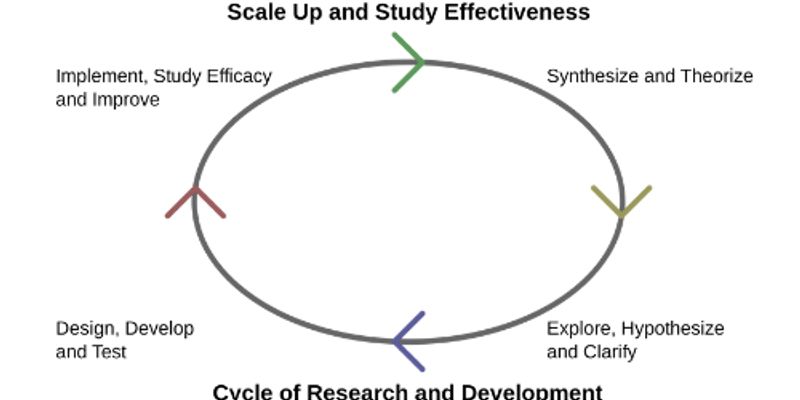
Research and Development: innovative activities performed by corporations or governments for the creation, discovery and advancement of services and products.
Many research laboratories use the ExpiCHO Expression System to transiently produce candidate biomolecules for biologics development. However, after the lead candidate is found, a stable cell...
Structural variants (SVs), defined as rearrangements of genomic sequences, are both a major source of genetic diversity in human populations and are also directly responsible for the pathogen...
Cell line screening studies require highly efficient protocols for studying many samples in parallel. We have developed a lyse-and-go protocol for digital gene expression profiling of u...
Triple-negative breast cancer (TNBC) has poor prognosis with frequent relapses and deaths using current standard of care treatments. Metabolic reprograming is now recognized as a fundam...
Short-read sequencing has found wide-spread use in metagenomics but the short read lengths and bias with regard to sequence composition have translated to limitations of the study of complex...
We introduce a differential abundance analysis method for the analysis of sparse high-throughput data from large-scale surveys of marker genes for microbial communities. Our approach relies o...
Our understanding of how genotype controls phenotype is limited by the scale at which we can precisely alter the genome and assess the phenotypic consequences of each perturbation. In this pr...
There is increasing evidence that intracellular miRNAs play a role in the pathogenesis of many complex disease phenotypes. In addition, extracellular miRNAs in exosomes are emerging as...
The Type 2 Diabetes Knowledge Portal is an open-access resource for human genetic information on type 2 diabetes (T2D). It is a central repository for data from large genomic studies that ide...
In this presentation I will describe results from a family study designed to identify the genetic cause for familial clustering of several early onset cancers. Data from next generatio...
Complex disease phenotypes - obesity, type II diabetes, and cancer challenge simple models in both evolution and biology. Examination of molecular networks and their dynamic behavior o...
In this presentation I will describe our latest work to obtain comprehensive genomes leveraging long and linked reads. The vast majority of NGS whole-genome data covers hundreds of thousands...
Dr. Sigrid Reinsch will discuss NASA’s GeneLab Project whose goal is to develop a unique publicly accessible repository and collaborative workspace that hosts multi-omics datasets gener...
Gene expression studies give a snapshot of the different types of RNAs being expressed at a given time point in cells or tissues in vivo. Different RNA types have different roles, for example...
The arrangement of chromatin inside the nucleus has long been recognized as a key element in genomic stability and an active participant in transcriptional control. With the development and d...
Genomic information has the potential to improve management or potentially prevent or enable early intervention of virtually every disease. However, despite massive technological leaps and ex...
The Genome in a Bottle Consortium (GIAB) has characterized an Ashkenazi trio from the Personal Genome Project (NIST Reference Material 8392) with 12 short, long, and linked read sequencing an...
DATE: May 3, 2018TIME: 11:00AM PDT, 2:00PM EDTWhile stress is one of the leading causes of neuropsychiatric disorders, the molecular underpinnings of how stress induces alterations in b...
DATE: May 3rd, 2018TIME: 8:00 AM PDT, 11:00 AM EDTIntestinal inflammation is a hallmark of the inflammatory bowel diseases (IBD), including ulcerative colitis and Cr...
Immunohistochemistry protocols, which utilize antibodies to visualize proteins in tissue sections, have many steps that need optimized to prevent non-specific background effects, artifacts, o...
Many research laboratories use the ExpiCHO Expression System to transiently produce candidate biomolecules for biologics development. However, after the lead candidate is found, a stable cell...
Structural variants (SVs), defined as rearrangements of genomic sequences, are both a major source of genetic diversity in human populations and are also directly responsible for the pathogen...
Cell line screening studies require highly efficient protocols for studying many samples in parallel. We have developed a lyse-and-go protocol for digital gene expression profiling of u...
Triple-negative breast cancer (TNBC) has poor prognosis with frequent relapses and deaths using current standard of care treatments. Metabolic reprograming is now recognized as a fundam...
Short-read sequencing has found wide-spread use in metagenomics but the short read lengths and bias with regard to sequence composition have translated to limitations of the study of complex...
We introduce a differential abundance analysis method for the analysis of sparse high-throughput data from large-scale surveys of marker genes for microbial communities. Our approach relies o...
Our understanding of how genotype controls phenotype is limited by the scale at which we can precisely alter the genome and assess the phenotypic consequences of each perturbation. In this pr...
There is increasing evidence that intracellular miRNAs play a role in the pathogenesis of many complex disease phenotypes. In addition, extracellular miRNAs in exosomes are emerging as...
The Type 2 Diabetes Knowledge Portal is an open-access resource for human genetic information on type 2 diabetes (T2D). It is a central repository for data from large genomic studies that ide...
In this presentation I will describe results from a family study designed to identify the genetic cause for familial clustering of several early onset cancers. Data from next generatio...
Complex disease phenotypes - obesity, type II diabetes, and cancer challenge simple models in both evolution and biology. Examination of molecular networks and their dynamic behavior o...
In this presentation I will describe our latest work to obtain comprehensive genomes leveraging long and linked reads. The vast majority of NGS whole-genome data covers hundreds of thousands...
Dr. Sigrid Reinsch will discuss NASA’s GeneLab Project whose goal is to develop a unique publicly accessible repository and collaborative workspace that hosts multi-omics datasets gener...
Gene expression studies give a snapshot of the different types of RNAs being expressed at a given time point in cells or tissues in vivo. Different RNA types have different roles, for example...
The arrangement of chromatin inside the nucleus has long been recognized as a key element in genomic stability and an active participant in transcriptional control. With the development and d...
Genomic information has the potential to improve management or potentially prevent or enable early intervention of virtually every disease. However, despite massive technological leaps and ex...
The Genome in a Bottle Consortium (GIAB) has characterized an Ashkenazi trio from the Personal Genome Project (NIST Reference Material 8392) with 12 short, long, and linked read sequencing an...
DATE: May 3, 2018TIME: 11:00AM PDT, 2:00PM EDTWhile stress is one of the leading causes of neuropsychiatric disorders, the molecular underpinnings of how stress induces alterations in b...
DATE: May 3rd, 2018TIME: 8:00 AM PDT, 11:00 AM EDTIntestinal inflammation is a hallmark of the inflammatory bowel diseases (IBD), including ulcerative colitis and Cr...
Immunohistochemistry protocols, which utilize antibodies to visualize proteins in tissue sections, have many steps that need optimized to prevent non-specific background effects, artifacts, o...
 Follow