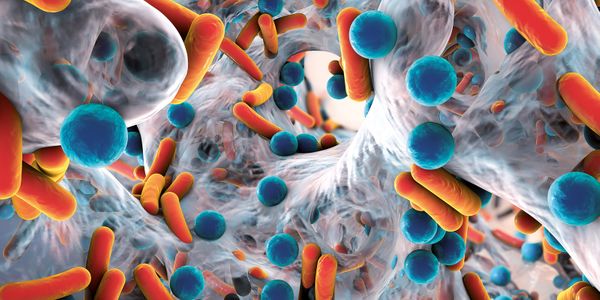
DATE: May 16, 2019TIME: 7:00am PDT, 10:00am EDT, 4:00pm CEST The emergence of NGS is revolutionizing the microbiological sciences and transforming medicine. Deep sequencing has...
DATE: April 9, 2019TIME: 9:00 AM PDTWe will provide a general introduction to the Single-Cell Western Technology (SCW) and then present data from 2 ongoing projects from the Col...
Late-onset Alzheimer’s disease (LOAD) is the most common form of dementia worldwide. To date, animal models of Alzheimer’s have focused on rare familial mutations, due to a lack o...
The size and burden of mental illness should ideally prompt a strategy of preemption and early intervention. On the neuroscientific side, this leads to the question of brain mechanisms of ris...
Joshua Gordon, M.D., Ph.D., Director of the National Institute of Mental Health, will provide an overview of challenges and opportunities in mental health research. Dr. Gordon will present em...
Date: February 7, 2019Time: 8:00am PST, 11:00am EST Modern microscopes are becoming increasingly complex instruments enabling registration of image sets far beyon...
Development of novel types of therapeutics require adaptation of traditional bioprocessing applications to include the use of primary cells, such as stem cells, fibroblasts, astrocytes and ne...
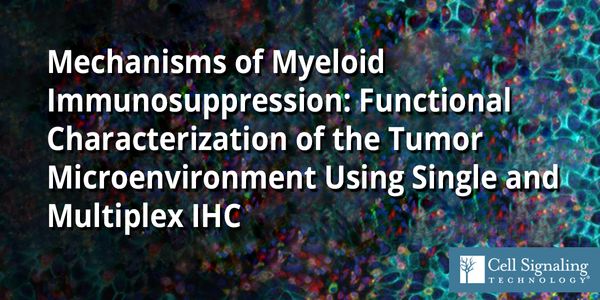
DATE: November 15, 2018TIME: 10:00am PT, 1:00pm ET Multiplex fluorescence immunohistochemistry offers a window into the biology of human disease, enabling the ana...
DATE: November 7, 2018TIME: 8:00PM PSTExosomes have been shown to have significant roles in cancer including disease progression acting in the tumor micro-environment, metasta...
DATE: November 7, 2018TIME: 7:00AM PDTExosomes have been shown to have significant roles in cancer including disease progression acting in the tumor micro-environment, metastasis a...
As the most common female malignancy, breast cancer is the most likely reason that a woman will die of cancer around the world. Breast cancer mortality has dropped in the U.S. by 35% since 19...
Lung cancer is the leading cause of cancer-related mortality worldwide. Large-scale sequencing studies have revealed the complex genomic landscape of NSCLC and genomic differences between lun...
Two projects looking at novel approaches to targeting inflammatory breast cancer will be presented. Inflammatory breast cancer (IBC) is a unique, understudied, and most lethal subtype account...
The oncogenic transcription factor c-MYC (MYC) is deregulated, and often overexpressed, in more than 50% of cancers. MYC deregulation is associated with poor prognosis and aggressive disease,...
In the past two decades a small number of infrequently dividing cells have been proposed as the source of multi-drug resistance during cancer treatment. These cells identified by their expres...
PacBio Sequencing simultaneously provides long sequence reads, high consensus accuracy, minimal sequence bias, and methylation detection. I will highlight new advances and updates on applying...
To date the anatomic extent of tumor (TNM-classification) has been by far the most important factors to predict the prognosis of cancer patients. However, this classification provides limited...
RNA sequencing unlocks the mysteries hidden in the transcriptome. Whether your goal is gene expression analysis, gene fusion analysis, SNP analysis or miRNA expression analysis, achieving hig...
High-throughput screening is widely useful in identifying genes and pathways that drive changes in cell behavior such as cell cycle regulation, metastasis, and drug resistance. Millipor...
In prior work, we have pursued how tumor reactive monoclonal antibody (mAb), together with activators of innate immune cells, like NK cells, can augment antibody dependent cell-mediated cytot...
Molecular analyses of cancer biology have tended to segregate between a focus on nucleic acids – DNA, RNA and their modifications – and a focus on proteins and protein function. P...
Understanding the immune repertoire is an important aspect of immuno-oncology research, which can be used to gather insights into the function and overall status of the immune system. We have...
Cellular processes are orchestrated by a large number of biomolecules in a spatially and temporally coordinated manner within a tiny volume. To uncover the underlying organizational principle...
DATE: May 16, 2019TIME: 7:00am PDT, 10:00am EDT, 4:00pm CEST The emergence of NGS is revolutionizing the microbiological sciences and transforming medicine. Deep sequencing has...
DATE: April 9, 2019TIME: 9:00 AM PDTWe will provide a general introduction to the Single-Cell Western Technology (SCW) and then present data from 2 ongoing projects from the Col...
Late-onset Alzheimer’s disease (LOAD) is the most common form of dementia worldwide. To date, animal models of Alzheimer’s have focused on rare familial mutations, due to a lack o...
The size and burden of mental illness should ideally prompt a strategy of preemption and early intervention. On the neuroscientific side, this leads to the question of brain mechanisms of ris...
Joshua Gordon, M.D., Ph.D., Director of the National Institute of Mental Health, will provide an overview of challenges and opportunities in mental health research. Dr. Gordon will present em...
Date: February 7, 2019Time: 8:00am PST, 11:00am EST Modern microscopes are becoming increasingly complex instruments enabling registration of image sets far beyon...
Development of novel types of therapeutics require adaptation of traditional bioprocessing applications to include the use of primary cells, such as stem cells, fibroblasts, astrocytes and ne...
DATE: November 15, 2018TIME: 10:00am PT, 1:00pm ET Multiplex fluorescence immunohistochemistry offers a window into the biology of human disease, enabling the ana...
DATE: November 7, 2018TIME: 8:00PM PSTExosomes have been shown to have significant roles in cancer including disease progression acting in the tumor micro-environment, metasta...
DATE: November 7, 2018TIME: 7:00AM PDTExosomes have been shown to have significant roles in cancer including disease progression acting in the tumor micro-environment, metastasis a...
As the most common female malignancy, breast cancer is the most likely reason that a woman will die of cancer around the world. Breast cancer mortality has dropped in the U.S. by 35% since 19...
Lung cancer is the leading cause of cancer-related mortality worldwide. Large-scale sequencing studies have revealed the complex genomic landscape of NSCLC and genomic differences between lun...
Two projects looking at novel approaches to targeting inflammatory breast cancer will be presented. Inflammatory breast cancer (IBC) is a unique, understudied, and most lethal subtype account...
The oncogenic transcription factor c-MYC (MYC) is deregulated, and often overexpressed, in more than 50% of cancers. MYC deregulation is associated with poor prognosis and aggressive disease,...
In the past two decades a small number of infrequently dividing cells have been proposed as the source of multi-drug resistance during cancer treatment. These cells identified by their expres...
PacBio Sequencing simultaneously provides long sequence reads, high consensus accuracy, minimal sequence bias, and methylation detection. I will highlight new advances and updates on applying...
To date the anatomic extent of tumor (TNM-classification) has been by far the most important factors to predict the prognosis of cancer patients. However, this classification provides limited...
RNA sequencing unlocks the mysteries hidden in the transcriptome. Whether your goal is gene expression analysis, gene fusion analysis, SNP analysis or miRNA expression analysis, achieving hig...
High-throughput screening is widely useful in identifying genes and pathways that drive changes in cell behavior such as cell cycle regulation, metastasis, and drug resistance. Millipor...
In prior work, we have pursued how tumor reactive monoclonal antibody (mAb), together with activators of innate immune cells, like NK cells, can augment antibody dependent cell-mediated cytot...
Molecular analyses of cancer biology have tended to segregate between a focus on nucleic acids – DNA, RNA and their modifications – and a focus on proteins and protein function. P...
Understanding the immune repertoire is an important aspect of immuno-oncology research, which can be used to gather insights into the function and overall status of the immune system. We have...
Cellular processes are orchestrated by a large number of biomolecules in a spatially and temporally coordinated manner within a tiny volume. To uncover the underlying organizational principle...

 Follow