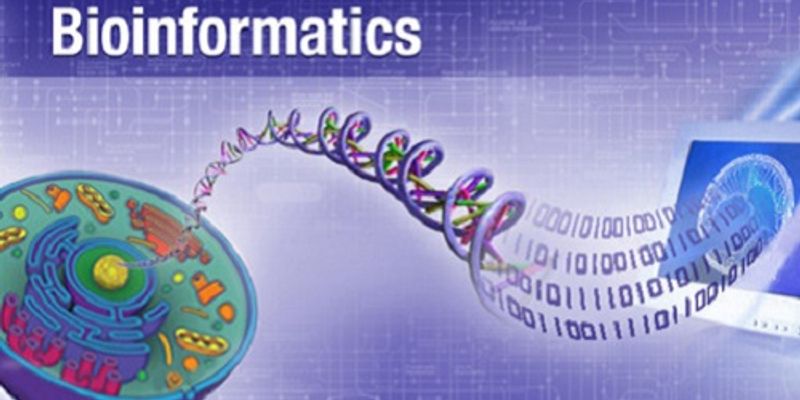
Bioinformatics: an interdisciplinary field that develops methods and software tools for understanding biological data. As an interdisciplinary field of science, bioinformatics combines computer science, statistics, mathematics, and engineering to analyze and interpret biological data.
Imaging-based techniques have traditionally been restricted to the diagnosis and staging of cancer. But technological advances are moving imaging modalities into the heart of patient care. Im...
We are at a time where traditionally risk-adverse health care systems and their IT architecture are confronted with the deluge of data at a massive scale and tremendous variability. In many H...
Pathology departments are under significant pressure to meet the demands of a precise medicine environment where general phenotypic attributes are no longer sufficient for accurately defining...
While next-generation sequencing has proven to be a very useful tool in basic research, two major hurdles remain for its broad adoption in the clinical research setting: lack of seamless work...
The advent of the microarray technology in 2000 has paved the way for advanced translational research methods that use molecular markers such as microRNA, proteins, metabolites and copy numbe...
In December 2012 the UK Prime Minister announced the 100,000 genomes project to introduce whole genome sequencing for treatment into the UK National Health Service (NHS) o...
DATE: February 2nd, 2016
TIME: 9am pacific time, 12pm eastern time
What is the most appropriate technology to empower your research?
Next generation sequencing (NGS) for RN...
DATE: January 21, 2016
TIME: 8am Pacific time, 11am Eastern time
In this webinar, you will learn:
basics of pooled lentiviral screening workflows
implications of ...
The HIV and AIDS pandemic ranks among the most devastating in recorded history. Substantial research efforts over the past 30 years have led to novel discoveries with respect to the vir...
Date: Dec 1, 2015 7:00am Pacific, 9:00am Central, 10:00am Eastern, 4pm European Time
Data generation is becoming easier and easier but within the fields of bioinformatics and data analysis...
DATE: November 17th, 2015TIME: 8am PDT, 11am EDT, 4pm GMTBiobanks provide important capacity to collect large genomic data sets intended to enable the study of genetic signatures of an...
While genomics has been used as a tool for research for many years, globally there is increasing momentum to deploy microbial genomics for routine public health microbiology. This technology...
Currently, next-generation sequencing is not only being used for basic discovery research but also in clinical settings for translational biomarker profiling and clinical research studies inc...
Next-generation sequencing has emerged as a valuable tool for generating patient-specific genetic information for clinical diagnostics and optimal selection of targeted therapies. The heterog...
DATE: November 4th, 2015
TIME: 11:00am Pacific time, 2:00pm Eastern time
AMPK, a highly conserved sensor of cellular energy status, is found in all eukaryotic cells and maintains met...
DATE: October 28th, 2015TIME: 11am Pacific time, 2pm Eastern timeNew discoveries uncover that exposure to current environmental, dietary, behavioral, and medical conditions can significantly...
ImmunoChemistry Technologies offers multiple tools for fluorescent imaging in the context of cancer research and oncology. ICT’s in vitro cell-based apoptosis assays allow biomedical re...
Of special interest in a clinical setting is the identification and interpretation of somatic variants from the DNA of a tumor/normal matched pair. Studies have shown that a large proportion...
Endometrial adenoarcinoma is a common cause of gynecological cancer death in Europe and North America. The most dominant subtype, Endometrioid Endometrial Cancer (EEC) accounts for >80% of...
Synthetic biology—the design and construction of new biological parts, devices, and systems, and the redesign of natural biological systems for useful purposes—is contributing sus...
Humans are colonized by vast numbers of symbiotic microorganisms whose metabolisms are inextricably intertwined with our own. To understand how chemical transformations performed by the human...
One of the challenges in sustaining innovation in computational molecular design is the need to harness and deliver promising solutions irrespective of their source, without creating new soft...
Next-generation sequencing (NGS) technologies are powerful approaches for diagnosis and surveillance of emerging infections. Unbiased metagenomic NGS can detect the full spectrum of pathogen...
Imaging-based techniques have traditionally been restricted to the diagnosis and staging of cancer. But technological advances are moving imaging modalities into the heart of patient care. Im...
We are at a time where traditionally risk-adverse health care systems and their IT architecture are confronted with the deluge of data at a massive scale and tremendous variability. In many H...
Pathology departments are under significant pressure to meet the demands of a precise medicine environment where general phenotypic attributes are no longer sufficient for accurately defining...
While next-generation sequencing has proven to be a very useful tool in basic research, two major hurdles remain for its broad adoption in the clinical research setting: lack of seamless work...
The advent of the microarray technology in 2000 has paved the way for advanced translational research methods that use molecular markers such as microRNA, proteins, metabolites and copy numbe...
In December 2012 the UK Prime Minister announced the 100,000 genomes project to introduce whole genome sequencing for treatment into the UK National Health Service (NHS) o...
DATE: February 2nd, 2016
TIME: 9am pacific time, 12pm eastern time
What is the most appropriate technology to empower your research?
Next generation sequencing (NGS) for RN...
DATE: January 21, 2016
TIME: 8am Pacific time, 11am Eastern time
In this webinar, you will learn:
basics of pooled lentiviral screening workflows
implications of ...
The HIV and AIDS pandemic ranks among the most devastating in recorded history. Substantial research efforts over the past 30 years have led to novel discoveries with respect to the vir...
Date: Dec 1, 2015 7:00am Pacific, 9:00am Central, 10:00am Eastern, 4pm European Time
Data generation is becoming easier and easier but within the fields of bioinformatics and data analysis...
DATE: November 17th, 2015TIME: 8am PDT, 11am EDT, 4pm GMTBiobanks provide important capacity to collect large genomic data sets intended to enable the study of genetic signatures of an...
While genomics has been used as a tool for research for many years, globally there is increasing momentum to deploy microbial genomics for routine public health microbiology. This technology...
Currently, next-generation sequencing is not only being used for basic discovery research but also in clinical settings for translational biomarker profiling and clinical research studies inc...
Next-generation sequencing has emerged as a valuable tool for generating patient-specific genetic information for clinical diagnostics and optimal selection of targeted therapies. The heterog...
DATE: November 4th, 2015
TIME: 11:00am Pacific time, 2:00pm Eastern time
AMPK, a highly conserved sensor of cellular energy status, is found in all eukaryotic cells and maintains met...
DATE: October 28th, 2015TIME: 11am Pacific time, 2pm Eastern timeNew discoveries uncover that exposure to current environmental, dietary, behavioral, and medical conditions can significantly...
ImmunoChemistry Technologies offers multiple tools for fluorescent imaging in the context of cancer research and oncology. ICT’s in vitro cell-based apoptosis assays allow biomedical re...
Of special interest in a clinical setting is the identification and interpretation of somatic variants from the DNA of a tumor/normal matched pair. Studies have shown that a large proportion...
Endometrial adenoarcinoma is a common cause of gynecological cancer death in Europe and North America. The most dominant subtype, Endometrioid Endometrial Cancer (EEC) accounts for >80% of...
Synthetic biology—the design and construction of new biological parts, devices, and systems, and the redesign of natural biological systems for useful purposes—is contributing sus...
Humans are colonized by vast numbers of symbiotic microorganisms whose metabolisms are inextricably intertwined with our own. To understand how chemical transformations performed by the human...
One of the challenges in sustaining innovation in computational molecular design is the need to harness and deliver promising solutions irrespective of their source, without creating new soft...
Next-generation sequencing (NGS) technologies are powerful approaches for diagnosis and surveillance of emerging infections. Unbiased metagenomic NGS can detect the full spectrum of pathogen...
 Follow