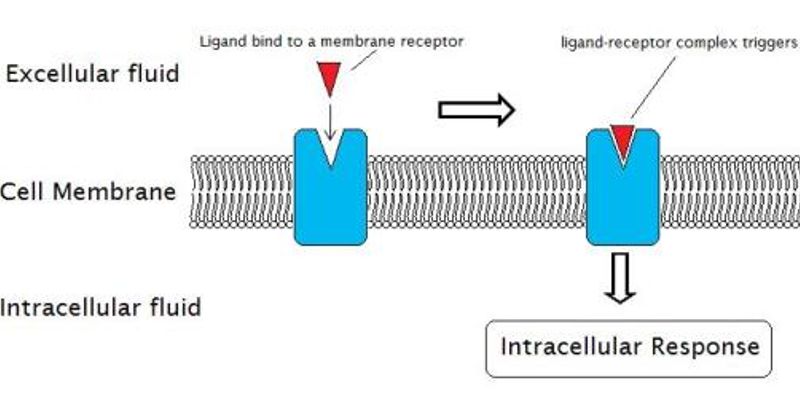
Cell Signaling: the process of cells communicating with other cells within the body, or with the external environment. As a process, cell signaling refers to a vast network of communication between, and within, each cell of our body.
We routinely face decisions requiring evaluation and choice of different actions may or may not yield different types of rewards. These situations trigger competitive decision biases that ref...
Optogenetics or optophysiology is a rapidly growing technique used across an ever broadening array of research fields. Investigators now genetically modify many signalling pathway elements to...
Our goal - To Understand the Neurobiology of Emotions and Affect and Its Relevance to Psychiatric Disorders. This includes: Understanding basic mechanisms of affect, stre...
DATE: January 21, 2016
TIME: 8am Pacific time, 11am Eastern time
In this webinar, you will learn:
basics of pooled lentiviral screening workflows
implications of ...
Over the past decade, there has been a rapid growth in studies of secreted membrane vesicles, collectively called extracellular vesicles (EVs). (1) The release of EVs has been reported in the...
DATE: January 15, 2016
TIME: 7am EST, 12pm UK, 1pm CET
With an increasing number of biomarkers and, often, limited availability of biopsy material, there is a growing need for multiplexed...
Cancer-derived extracellular vesicles (EVs) play an important role in cancer progression and metastasis. They can be identified in biological fluids thus providing appealing candidates for no...
DATE: November 17th, 2015TIME: 8am PDT, 11am EDT, 4pm GMTBiobanks provide important capacity to collect large genomic data sets intended to enable the study of genetic signatures of an...
November 5, 2015, 8:00am PT, 11:00am ET, 3:00pm GMT
T-cells form an integral part of the human immune system by fighting off infection and eliminating transformed cells. Over the last deca...
DATE: November 4th, 2015
TIME: 11:00am Pacific time, 2:00pm Eastern time
AMPK, a highly conserved sensor of cellular energy status, is found in all eukaryotic cells and maintains met...
During the development of oral cancer (OC), cancer-associated fibroblasts (CAFs) create a supporting niche by maintaining a bidirectional crosstalk with cancer cells, mediated by classically ...
DATE: October 7th, 2015TIME: 9am Pacific time, 12pm Eastern timeThe neuroscience field is rapidly evolving as both a burgeoning area for basic research (Parkinson’s, Alzheimer’s, ...
Melanoma, a cancer of pigment-producing cells, accounts for nearly 200,000 new cases of cancer reported each year worldwide. It is the deadliest skin cancer. Alarmingly, in the U.S., the inci...
Endometrial adenoarcinoma is a common cause of gynecological cancer death in Europe and North America. The most dominant subtype, Endometrioid Endometrial Cancer (EEC) accounts for >80% of...
Micro RNAs (miRNAs) are small, naturally-occurring non-coding ribonucleic acids with sizes between 18 and 40 nucleotides (nts) that have been demonstrated to play a significant role in the re...
The Warburg effect or aerobic glycolysis is a well-known cancer metabolism phenomenon and serves as an established test for tumor detection with FDG-PET scanning technology. Cancer cells swit...
DATE: September 15, 2015TIME: 8:00AM PT, 11:00AM ETSkin Cell Motility: Integrins Lead the WayYou will learn about efforts to dissect mechanisms that underlie the directed migration of epiderm...
Rapid advances in sequencing technology and spectroscopy have led to new measurements of the microbiome. Labs make choices based on their environment of interest and the questions they wish t...
Exosomes are small secreted vesicles that have a diameter of ~50-200 nm. Exosomes are enriched for a specific subset of host-derived proteins, nucleic acids, lipids and carbohydrates, though ...
Cancers exhibit abnormal molecular signatures associated with disease initiation and progression. Molecular signatures could improve cancer screening, detection, drug development and selectio...
Please click here to watch this webinar On DemandsiRNA-mediated silencing of gene expression has revolutionized the study of biology by enabling rapid and unbiased loss-of-function studies to...
The NIH BRAIN initiative, informed by the report from the scientific community (BRAIN 2025) is underway. The major funded efforts at this time fit into 3 main categories; 1) defining the comp...
DARPA’s investments aim to leverage brain-function research to alleviate the burden of illness and injury and provide novel, neurotechnology-based capabilities for military personnel an...
Behaviors are motivated by two emotional valences: Seeking pleasure and avoiding pain. The ability to select appropriate behavioral responses to environmental stimuli, such as avoiding a pred...
We routinely face decisions requiring evaluation and choice of different actions may or may not yield different types of rewards. These situations trigger competitive decision biases that ref...
Optogenetics or optophysiology is a rapidly growing technique used across an ever broadening array of research fields. Investigators now genetically modify many signalling pathway elements to...
Our goal - To Understand the Neurobiology of Emotions and Affect and Its Relevance to Psychiatric Disorders. This includes: Understanding basic mechanisms of affect, stre...
DATE: January 21, 2016
TIME: 8am Pacific time, 11am Eastern time
In this webinar, you will learn:
basics of pooled lentiviral screening workflows
implications of ...
Over the past decade, there has been a rapid growth in studies of secreted membrane vesicles, collectively called extracellular vesicles (EVs). (1) The release of EVs has been reported in the...
DATE: January 15, 2016
TIME: 7am EST, 12pm UK, 1pm CET
With an increasing number of biomarkers and, often, limited availability of biopsy material, there is a growing need for multiplexed...
Cancer-derived extracellular vesicles (EVs) play an important role in cancer progression and metastasis. They can be identified in biological fluids thus providing appealing candidates for no...
DATE: November 17th, 2015TIME: 8am PDT, 11am EDT, 4pm GMTBiobanks provide important capacity to collect large genomic data sets intended to enable the study of genetic signatures of an...
November 5, 2015, 8:00am PT, 11:00am ET, 3:00pm GMT
T-cells form an integral part of the human immune system by fighting off infection and eliminating transformed cells. Over the last deca...
DATE: November 4th, 2015
TIME: 11:00am Pacific time, 2:00pm Eastern time
AMPK, a highly conserved sensor of cellular energy status, is found in all eukaryotic cells and maintains met...
During the development of oral cancer (OC), cancer-associated fibroblasts (CAFs) create a supporting niche by maintaining a bidirectional crosstalk with cancer cells, mediated by classically ...
DATE: October 7th, 2015TIME: 9am Pacific time, 12pm Eastern timeThe neuroscience field is rapidly evolving as both a burgeoning area for basic research (Parkinson’s, Alzheimer’s, ...
Melanoma, a cancer of pigment-producing cells, accounts for nearly 200,000 new cases of cancer reported each year worldwide. It is the deadliest skin cancer. Alarmingly, in the U.S., the inci...
Endometrial adenoarcinoma is a common cause of gynecological cancer death in Europe and North America. The most dominant subtype, Endometrioid Endometrial Cancer (EEC) accounts for >80% of...
Micro RNAs (miRNAs) are small, naturally-occurring non-coding ribonucleic acids with sizes between 18 and 40 nucleotides (nts) that have been demonstrated to play a significant role in the re...
The Warburg effect or aerobic glycolysis is a well-known cancer metabolism phenomenon and serves as an established test for tumor detection with FDG-PET scanning technology. Cancer cells swit...
DATE: September 15, 2015TIME: 8:00AM PT, 11:00AM ETSkin Cell Motility: Integrins Lead the WayYou will learn about efforts to dissect mechanisms that underlie the directed migration of epiderm...
Rapid advances in sequencing technology and spectroscopy have led to new measurements of the microbiome. Labs make choices based on their environment of interest and the questions they wish t...
Exosomes are small secreted vesicles that have a diameter of ~50-200 nm. Exosomes are enriched for a specific subset of host-derived proteins, nucleic acids, lipids and carbohydrates, though ...
Cancers exhibit abnormal molecular signatures associated with disease initiation and progression. Molecular signatures could improve cancer screening, detection, drug development and selectio...
Please click here to watch this webinar On DemandsiRNA-mediated silencing of gene expression has revolutionized the study of biology by enabling rapid and unbiased loss-of-function studies to...
The NIH BRAIN initiative, informed by the report from the scientific community (BRAIN 2025) is underway. The major funded efforts at this time fit into 3 main categories; 1) defining the comp...
DARPA’s investments aim to leverage brain-function research to alleviate the burden of illness and injury and provide novel, neurotechnology-based capabilities for military personnel an...
Behaviors are motivated by two emotional valences: Seeking pleasure and avoiding pain. The ability to select appropriate behavioral responses to environmental stimuli, such as avoiding a pred...
 Follow