Clinical Medicine: is a field of medicine that deals primarily with the practice and study of medicine based on the direct examination of the patient. This is in contrast to other science fields that focus more on the theoretical and basics of medical science. In clinical medicine, medical practitioners assess patients in order to diagnose, treat, and prevent disease.
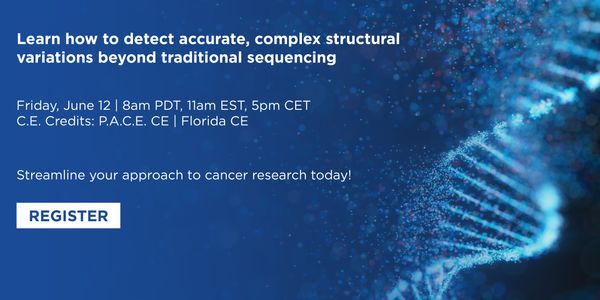
DATE: June 12, 2020 TIME: 08:00 am PDT, 11:00 am EDT Whole genome imaging using the Saphyr instrument from Bionano detects structural variants (SVs), such as insertions, deletions,...
DATE: June 9, 2020 TIME: 6am PT, 9am ET, 3pm CEST The importance of disposable plastic consumables and their overall impact on the experimental workflow of qPCR has been taken into considera...
The RNAscope in situ hybridization technology allows high sensitivity, specificity and spatial resolution providing pivotal single-cell gene expression information to gain better insights in...
Neoantigen based personalized immuno-oncology drugs are a relatively new therapeutic avenue that have shown strong anti-tumor efficacy in the clinic. Neoantigen peptides have been widely rep...
Gene manipulation studies in primary human immune cells can answer important biological questions within a clinically relevant cellular context. In this webinar we explore the use of several...
A key step in the clinical production of CAR T cells is the expansion of engineered T cells. To generate enough cells for viable adoptive cell therapy, cells must be robustly stimulated, whi...
Immune checkpoint blockade has revolutionized the treatment for patients with cancer. Great efforts remain to better understand resistant mechanisms to treatment as well as means to improve...
Cancer cells can acquire immune resistance resulting in a loss of immunosurveillance. Tumor cells can upregulate PDL-1 which binds to PD-1. This complex inhibits CD8 Tumor Infiltrating cells...
Cancer initiation and virulence depends on mechanisms to evade host immunosurveillance and suppression of early invasion and growth. Distinct phenotypes of the immune infiltrates in and arou...
Immune checkpoint therapies targeting the CTLA-4 and PD-(L)1 pathways have been largely clinically disappointing for patients with prostate cancer. This can be attributed to the highly immun...
NCI estimates that cancer will be the leading cause of death in 2030, worldwide. Checkpoint inhibitors and adoptive cell therapies (ACTs) cost up to ~$2 million/patient and have shown durabl...
1. Identify 3 barriers to immune cell response to cancer 2. List 3 approaches to overcome immunosuppressive barriers to bolster the immune response to cancer 3. Explain how fusion proteins c...
Platinum-based chemotherapy has been the cornerstone for treating metastatic urothelial cancer, which compromises the majority of bladder cancer. While urothelial cancer is chemosensitive, p...
Learning Objectives: 1. Define applications of approved and experimental (multiplexing IF) biomarker assessment in Immuno-Oncology 2. Define bottlenecks and areas of improvement to current t...
DATE: June 1, 2020 TIME: 11:00am PDT, 2:00pm EDT This webinar will provide an overview of the host response to bacterial and viral infections. The rationale for the use of procalcitonin in a...
Optimizing a routine LC/MS workflow can greatly improve laboratory efficiency and time to results. Often, a considerable burden to improving LC/MS productivity is the time and cost associate...
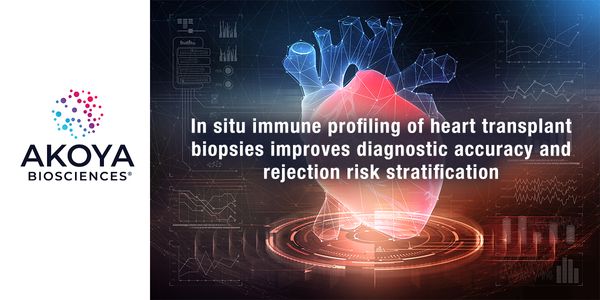
DATE: May 28, 2020 TIME: 10:00am PT, 1:00pm ET Cardiac allograft rejection is a serious concern in transplant medicine, conferring an increased risk of acute graft failure and adverse patient...
A recently proposed model for the incorporation of xenobiotics of clinical and forensic interest into the human skeleton suggests nerve agent metabolites may incorporate into bone at relativ...
Many questions at the forefront of biology depend on the interactions of millions of single cells. My lab develops technologies for studying large numbers of single cells. In this talk, I wi...
Personalized medicine has beomce a paradigm in lung cancer management; ~ 25–30% of advanced lung cancer patients could benefit from a targeted therapy. Several guidelines currently end...
Precision medicine is the paradigm to develop treatments for patients based on molecular-targets that are effective in vivo when administered. In addition to identifying the molecular and ce...
The spread of severe acute respiratory syndrome coronavirus 2 (SARS CoV2), changed the daily life of medical oncologists. To keep safe both patients and healthy workers is the most important...
DATE: June 12, 2020 TIME: 08:00 am PDT, 11:00 am EDT Whole genome imaging using the Saphyr instrument from Bionano detects structural variants (SVs), such as insertions, deletions,...
DATE: June 9, 2020 TIME: 6am PT, 9am ET, 3pm CEST The importance of disposable plastic consumables and their overall impact on the experimental workflow of qPCR has been taken into considera...
The RNAscope in situ hybridization technology allows high sensitivity, specificity and spatial resolution providing pivotal single-cell gene expression information to gain better insights in...
Neoantigen based personalized immuno-oncology drugs are a relatively new therapeutic avenue that have shown strong anti-tumor efficacy in the clinic. Neoantigen peptides have been widely rep...
Gene manipulation studies in primary human immune cells can answer important biological questions within a clinically relevant cellular context. In this webinar we explore the use of several...
A key step in the clinical production of CAR T cells is the expansion of engineered T cells. To generate enough cells for viable adoptive cell therapy, cells must be robustly stimulated, whi...
Immune checkpoint blockade has revolutionized the treatment for patients with cancer. Great efforts remain to better understand resistant mechanisms to treatment as well as means to improve...
Cancer cells can acquire immune resistance resulting in a loss of immunosurveillance. Tumor cells can upregulate PDL-1 which binds to PD-1. This complex inhibits CD8 Tumor Infiltrating cells...
Cancer initiation and virulence depends on mechanisms to evade host immunosurveillance and suppression of early invasion and growth. Distinct phenotypes of the immune infiltrates in and arou...
Immune checkpoint therapies targeting the CTLA-4 and PD-(L)1 pathways have been largely clinically disappointing for patients with prostate cancer. This can be attributed to the highly immun...
NCI estimates that cancer will be the leading cause of death in 2030, worldwide. Checkpoint inhibitors and adoptive cell therapies (ACTs) cost up to ~$2 million/patient and have shown durabl...
1. Identify 3 barriers to immune cell response to cancer 2. List 3 approaches to overcome immunosuppressive barriers to bolster the immune response to cancer 3. Explain how fusion proteins c...
Platinum-based chemotherapy has been the cornerstone for treating metastatic urothelial cancer, which compromises the majority of bladder cancer. While urothelial cancer is chemosensitive, p...
Learning Objectives: 1. Define applications of approved and experimental (multiplexing IF) biomarker assessment in Immuno-Oncology 2. Define bottlenecks and areas of improvement to current t...
DATE: June 1, 2020 TIME: 11:00am PDT, 2:00pm EDT This webinar will provide an overview of the host response to bacterial and viral infections. The rationale for the use of procalcitonin in a...
Optimizing a routine LC/MS workflow can greatly improve laboratory efficiency and time to results. Often, a considerable burden to improving LC/MS productivity is the time and cost associate...
DATE: May 28, 2020 TIME: 10:00am PT, 1:00pm ET Cardiac allograft rejection is a serious concern in transplant medicine, conferring an increased risk of acute graft failure and adverse patient...
A recently proposed model for the incorporation of xenobiotics of clinical and forensic interest into the human skeleton suggests nerve agent metabolites may incorporate into bone at relativ...
Many questions at the forefront of biology depend on the interactions of millions of single cells. My lab develops technologies for studying large numbers of single cells. In this talk, I wi...
Personalized medicine has beomce a paradigm in lung cancer management; ~ 25–30% of advanced lung cancer patients could benefit from a targeted therapy. Several guidelines currently end...
Precision medicine is the paradigm to develop treatments for patients based on molecular-targets that are effective in vivo when administered. In addition to identifying the molecular and ce...
The spread of severe acute respiratory syndrome coronavirus 2 (SARS CoV2), changed the daily life of medical oncologists. To keep safe both patients and healthy workers is the most important...
 Follow