Disease: is a disorder of structure or function in a human, animal, or plant, especially one that produces specific signs or symptoms that is not simply a direct result of physical injury.
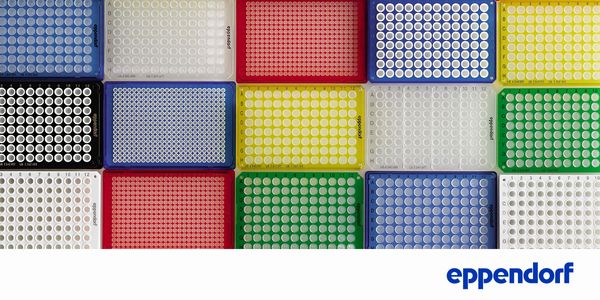
DATE: June 9, 2020 TIME: 6am PT, 9am ET, 3pm CEST The importance of disposable plastic consumables and their overall impact on the experimental workflow of qPCR has been taken into considera...
In 2019, over 220,000 Canadians will be diagnosed with cancer and 82,000 will die of the disease. Approximately 90% of cancer related deaths are the result of metastatic disease. This is ind...
Gene manipulation studies in primary human immune cells can answer important biological questions within a clinically relevant cellular context. In this webinar we explore the use of several...
A key step in the clinical production of CAR T cells is the expansion of engineered T cells. To generate enough cells for viable adoptive cell therapy, cells must be robustly stimulated, whi...
Multiplexed immunofluorescent imaging sheds new light on cancer and other complex conditions. This imaging technique offers a deeper understanding of cells and their surroundings by providin...
Cancer cells can acquire immune resistance resulting in a loss of immunosurveillance. Tumor cells can upregulate PDL-1 which binds to PD-1. This complex inhibits CD8 Tumor Infiltrating cells...
Cancer initiation and virulence depends on mechanisms to evade host immunosurveillance and suppression of early invasion and growth. Distinct phenotypes of the immune infiltrates in and arou...
How organisms control organ size is a fundamental question in developmental and regenerative biology. The underlaying mechanisms are not well defined. For instance, we don’t fully unde...
NCI estimates that cancer will be the leading cause of death in 2030, worldwide. Checkpoint inhibitors and adoptive cell therapies (ACTs) cost up to ~$2 million/patient and have shown durabl...
Platinum-based chemotherapy has been the cornerstone for treating metastatic urothelial cancer, which compromises the majority of bladder cancer. While urothelial cancer is chemosensitive, p...
DATE: June 2, 2020 TIME: 7:00am PT, 10:00am ET In just a few months COVID-19 has risen from a regional crisis to a global threat, and drug makers are now scrambling to develop vaccines aimed...
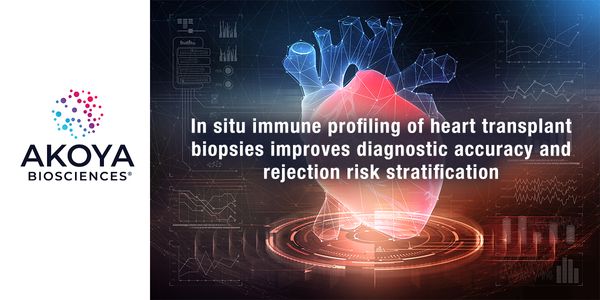
DATE: May 28, 2020 TIME: 10:00am PT, 1:00pm ET Cardiac allograft rejection is a serious concern in transplant medicine, conferring an increased risk of acute graft failure and adverse patient...
A recently proposed model for the incorporation of xenobiotics of clinical and forensic interest into the human skeleton suggests nerve agent metabolites may incorporate into bone at relativ...
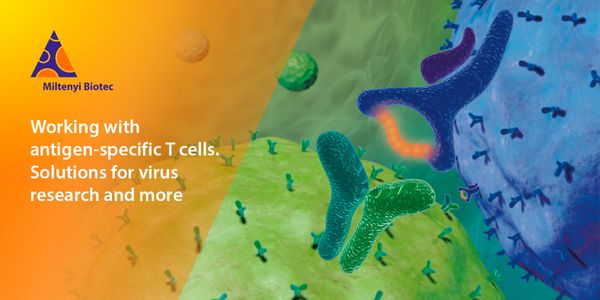
DATE: May 27, 2020 TIME: 9:00am PT Analysis of antigen- and virus-specific T cells is essential to the understanding of fundamental immunological processes in the contexts of e.g. infectious...
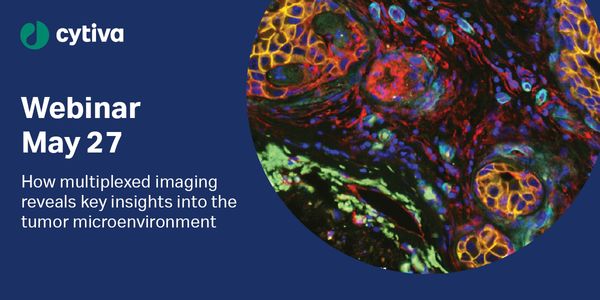
DATE: May 27, 2020 TIME: 8:00am PT, 11:00am ET Multiplexed immunofluorescent imaging sheds new light on cancer and other complex conditions. This imaging technique offers a deeper understand...
Background: Acute myeloid leukemia (AML) is a molecularly and clinically heterogeneous hematological malignancy. Despite recent advancements in the treatment of AML, approximately 50% of pat...
Background: CDK4/6 inhibitors increase tumor immunogenicity in preclinical models of breast cancer and several trials combining CDK4/6 inhibitors and anti-PD1/PDL1 therapies are underway. Ho...
Metastatic prostate cancer (mPC) is a phenotypically diverse disease with poor responses to immune based therapeutics. Development of immunotherapeutic strategies for mPC is hampered by the...
Precision medicine is the paradigm to develop treatments for patients based on molecular-targets that are effective in vivo when administered. In addition to identifying the molecular and ce...
The amount of data that is produced each day is mind boggling. Over 2.5 quintillion bytes of data are created every single day, and this number continues to grow every single day. This year...
Proteins are the functional blocks of any biological entity from 50 nm sized viruses to the 100 ft long mammals (blue whale). They perform intra cellular, tissue, organ, system, or organism...
Design and interpretation of genome sequencing assays and data in both clinical diagnostics and research labs is complicated by an inability to identify information from the medical literatu...
The basic units of biological structure and function are cells, which exhibit wide variation in regard to both type and state. We assess such variation by simultaneously profiling the transc...
While many technologies focus on either exploring the spatial context of a handful of targets, or expression patterns of hundreds or thousands of targets in bulk samples or dissociated singl...
DATE: June 9, 2020 TIME: 6am PT, 9am ET, 3pm CEST The importance of disposable plastic consumables and their overall impact on the experimental workflow of qPCR has been taken into considera...
In 2019, over 220,000 Canadians will be diagnosed with cancer and 82,000 will die of the disease. Approximately 90% of cancer related deaths are the result of metastatic disease. This is ind...
Gene manipulation studies in primary human immune cells can answer important biological questions within a clinically relevant cellular context. In this webinar we explore the use of several...
A key step in the clinical production of CAR T cells is the expansion of engineered T cells. To generate enough cells for viable adoptive cell therapy, cells must be robustly stimulated, whi...
Multiplexed immunofluorescent imaging sheds new light on cancer and other complex conditions. This imaging technique offers a deeper understanding of cells and their surroundings by providin...
Cancer cells can acquire immune resistance resulting in a loss of immunosurveillance. Tumor cells can upregulate PDL-1 which binds to PD-1. This complex inhibits CD8 Tumor Infiltrating cells...
Cancer initiation and virulence depends on mechanisms to evade host immunosurveillance and suppression of early invasion and growth. Distinct phenotypes of the immune infiltrates in and arou...
How organisms control organ size is a fundamental question in developmental and regenerative biology. The underlaying mechanisms are not well defined. For instance, we don’t fully unde...
NCI estimates that cancer will be the leading cause of death in 2030, worldwide. Checkpoint inhibitors and adoptive cell therapies (ACTs) cost up to ~$2 million/patient and have shown durabl...
Platinum-based chemotherapy has been the cornerstone for treating metastatic urothelial cancer, which compromises the majority of bladder cancer. While urothelial cancer is chemosensitive, p...
DATE: June 2, 2020 TIME: 7:00am PT, 10:00am ET In just a few months COVID-19 has risen from a regional crisis to a global threat, and drug makers are now scrambling to develop vaccines aimed...
DATE: May 28, 2020 TIME: 10:00am PT, 1:00pm ET Cardiac allograft rejection is a serious concern in transplant medicine, conferring an increased risk of acute graft failure and adverse patient...
A recently proposed model for the incorporation of xenobiotics of clinical and forensic interest into the human skeleton suggests nerve agent metabolites may incorporate into bone at relativ...
DATE: May 27, 2020 TIME: 9:00am PT Analysis of antigen- and virus-specific T cells is essential to the understanding of fundamental immunological processes in the contexts of e.g. infectious...
DATE: May 27, 2020 TIME: 8:00am PT, 11:00am ET Multiplexed immunofluorescent imaging sheds new light on cancer and other complex conditions. This imaging technique offers a deeper understand...
Background: Acute myeloid leukemia (AML) is a molecularly and clinically heterogeneous hematological malignancy. Despite recent advancements in the treatment of AML, approximately 50% of pat...
Background: CDK4/6 inhibitors increase tumor immunogenicity in preclinical models of breast cancer and several trials combining CDK4/6 inhibitors and anti-PD1/PDL1 therapies are underway. Ho...
Metastatic prostate cancer (mPC) is a phenotypically diverse disease with poor responses to immune based therapeutics. Development of immunotherapeutic strategies for mPC is hampered by the...
Precision medicine is the paradigm to develop treatments for patients based on molecular-targets that are effective in vivo when administered. In addition to identifying the molecular and ce...
The amount of data that is produced each day is mind boggling. Over 2.5 quintillion bytes of data are created every single day, and this number continues to grow every single day. This year...
Proteins are the functional blocks of any biological entity from 50 nm sized viruses to the 100 ft long mammals (blue whale). They perform intra cellular, tissue, organ, system, or organism...
Design and interpretation of genome sequencing assays and data in both clinical diagnostics and research labs is complicated by an inability to identify information from the medical literatu...
The basic units of biological structure and function are cells, which exhibit wide variation in regard to both type and state. We assess such variation by simultaneously profiling the transc...
While many technologies focus on either exploring the spatial context of a handful of targets, or expression patterns of hundreds or thousands of targets in bulk samples or dissociated singl...
 Follow