Industrial: a broad term to describe all aspects of industry or a company engaged in industry through the manufacture of products, such as industrial workers, or industrial pollution. Industrial scientists perform research and development work with a commercial focus in fields like agriculture, food science, environmental science, earth science, pharmaceutical science, engineering and technology. Much of an industrial scientist's time is spent on stressful and challenging deadline-oriented projects.
COVID-19 has developed into a crisis of global proportions. COVID-19 is caused by severe acute respiratory syndrome coronavirus 2 (SARS-CoV-2). Key to SARS-CoV-2 therapeutic development is u...
Learning Objectives: 1. Understanding the integral value of collaboration for advancement in scientific research; how to establish and grow academic, Pharma, and industry connections 2. Lear...
Therapeutic antibody can provide key protection or lifesaving treatment for those who haven't been or can’t be vaccinated, or when vaccines don’t “take". We galvan...
Infectious diseases, such as COVID-19, are challenging to study in animal models due to species differences, and conventional 2D cell-based systems lack the complexity to appropriately model...
This talk will peek under the hood to show how we combine deep learning models with biology lab automation at Recursion Pharmaceuticals. Every week, we generate millions of microscopy images...
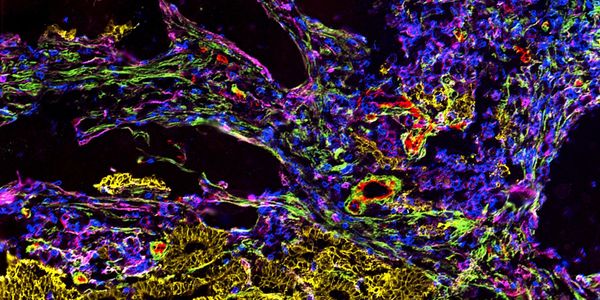
DATE: September 15, 2020 TIME: 08:00am PT Tumorigenesis and cancer progression are affected by the tumor immune microenvironment (TIME). The TIME not only influences the efficiency of existi...
While global demand for food is expected to increase significantly (70% by 2050), the agricultural industry is suffering from a decline in soil fertility, the adverse effects of climate chan...
While live cell imaging offers advantages over traditional static imaging, this approach has been challenging for studying microbes due to the difficulty in tracking very small cells in a si...
In Pacific Northwest watersheds several species of Pacific salmonid fishes are hosts for the rhabdovirus infectious hematopoietic necrosis virus (IHNV). In this multi-host ecosystem speciali...
In this webinar, we will present QIAGEN CLC Genomics Workbench and its utility for bacterial isolate identification, strain discrimination using core genome multi-locus typing (cgMLST) and d...
Learning Objectives: 1. Understand the challenges of extracting DNA from human samples for microbiome analysis, and learn about the best technologies for accomplishing this 2. Learn about pr...
Enigmatic and often vilified, viruses are now known to play important and possibly indispensable roles in the biology and ecology of cellular organisms. Evidence of viral impacts are everywh...
Congenital CMV is the most frequent infectious cause of neonatal malformation in developed nations. It is more prevalent than other neonatal conditions such as spina bifida and Down syndrome...
Date: September 10, 2020 Time: 9:00am (PDT), 12:00pm (EDT) Osmolality testing is relevant throughout the entire bioprocessing workflow. As customers look to refine mAb and gene therapy workf...
The selective pressure placed on the resident microbiota by local changes in the host environment – DNA damage, chronic inflammation, metabolic shifts, barrier damage, reduced immunosu...
Coronavirus disease 2019 (COVID-19), caused by SARS-CoV-2, is spreading rapidly across the world and was announced as a “global pandemic” by the World Health Organization (WHO) o...
Sepsis is a life-threatening condition that is caused by the immune system’s inability to respond appropriately to an infection. How sepsis can change the gut microbiome in ways that a...
Microbial biofilms form on all aquatic surfaces and can harbor pathogenic bacteria. In the aquaculture industry, Flavobacteria species can cause serious diseases and lead to high mortality....
The host response to infection is a critical determinant of virus pathogenicity. Emerging viruses require the host cellular machinery to replicate and successfully infect new hosts, and must...
The microbiome has emerged as a major contributor to human health and disease. Numerous sources implicate shifts in the gut microbiome as potentially pathologic for a variety of autoimmune d...
Focusing on the urgent clinical problem of increasing carbapenem resistance in Enterobacteriaceae we have been evaluating detection methods in clinical microbiology and molecular transmissio...
The transfer of antimicrobial resistance genes (ARG) to pathogenic microbes is a major concern in modern medicine. Antibiotic therapies are often rendered ineffective by horizontal acquisiti...
Lessons around leveraging high-complexity next-generation sequencing tests for precision infectious disease discovery to guide patient treatment and improve health outcomes. Learning Objecti...
Viruses are the causative agents of approximately 12% of human cancers. The most recently discovered herpesvirus, Kaposi’s sarcoma herpesvirus (KSHV) is known to cause three human canc...
COVID-19 has developed into a crisis of global proportions. COVID-19 is caused by severe acute respiratory syndrome coronavirus 2 (SARS-CoV-2). Key to SARS-CoV-2 therapeutic development is u...
Learning Objectives: 1. Understanding the integral value of collaboration for advancement in scientific research; how to establish and grow academic, Pharma, and industry connections 2. Lear...
Therapeutic antibody can provide key protection or lifesaving treatment for those who haven't been or can’t be vaccinated, or when vaccines don’t “take". We galvan...
Infectious diseases, such as COVID-19, are challenging to study in animal models due to species differences, and conventional 2D cell-based systems lack the complexity to appropriately model...
This talk will peek under the hood to show how we combine deep learning models with biology lab automation at Recursion Pharmaceuticals. Every week, we generate millions of microscopy images...
DATE: September 15, 2020 TIME: 08:00am PT Tumorigenesis and cancer progression are affected by the tumor immune microenvironment (TIME). The TIME not only influences the efficiency of existi...
While global demand for food is expected to increase significantly (70% by 2050), the agricultural industry is suffering from a decline in soil fertility, the adverse effects of climate chan...
While live cell imaging offers advantages over traditional static imaging, this approach has been challenging for studying microbes due to the difficulty in tracking very small cells in a si...
In Pacific Northwest watersheds several species of Pacific salmonid fishes are hosts for the rhabdovirus infectious hematopoietic necrosis virus (IHNV). In this multi-host ecosystem speciali...
In this webinar, we will present QIAGEN CLC Genomics Workbench and its utility for bacterial isolate identification, strain discrimination using core genome multi-locus typing (cgMLST) and d...
Learning Objectives: 1. Understand the challenges of extracting DNA from human samples for microbiome analysis, and learn about the best technologies for accomplishing this 2. Learn about pr...
Enigmatic and often vilified, viruses are now known to play important and possibly indispensable roles in the biology and ecology of cellular organisms. Evidence of viral impacts are everywh...
Congenital CMV is the most frequent infectious cause of neonatal malformation in developed nations. It is more prevalent than other neonatal conditions such as spina bifida and Down syndrome...
Date: September 10, 2020 Time: 9:00am (PDT), 12:00pm (EDT) Osmolality testing is relevant throughout the entire bioprocessing workflow. As customers look to refine mAb and gene therapy workf...
The selective pressure placed on the resident microbiota by local changes in the host environment – DNA damage, chronic inflammation, metabolic shifts, barrier damage, reduced immunosu...
Coronavirus disease 2019 (COVID-19), caused by SARS-CoV-2, is spreading rapidly across the world and was announced as a “global pandemic” by the World Health Organization (WHO) o...
Sepsis is a life-threatening condition that is caused by the immune system’s inability to respond appropriately to an infection. How sepsis can change the gut microbiome in ways that a...
Microbial biofilms form on all aquatic surfaces and can harbor pathogenic bacteria. In the aquaculture industry, Flavobacteria species can cause serious diseases and lead to high mortality....
The host response to infection is a critical determinant of virus pathogenicity. Emerging viruses require the host cellular machinery to replicate and successfully infect new hosts, and must...
The microbiome has emerged as a major contributor to human health and disease. Numerous sources implicate shifts in the gut microbiome as potentially pathologic for a variety of autoimmune d...
Focusing on the urgent clinical problem of increasing carbapenem resistance in Enterobacteriaceae we have been evaluating detection methods in clinical microbiology and molecular transmissio...
The transfer of antimicrobial resistance genes (ARG) to pathogenic microbes is a major concern in modern medicine. Antibiotic therapies are often rendered ineffective by horizontal acquisiti...
Lessons around leveraging high-complexity next-generation sequencing tests for precision infectious disease discovery to guide patient treatment and improve health outcomes. Learning Objecti...
Viruses are the causative agents of approximately 12% of human cancers. The most recently discovered herpesvirus, Kaposi’s sarcoma herpesvirus (KSHV) is known to cause three human canc...

 Follow