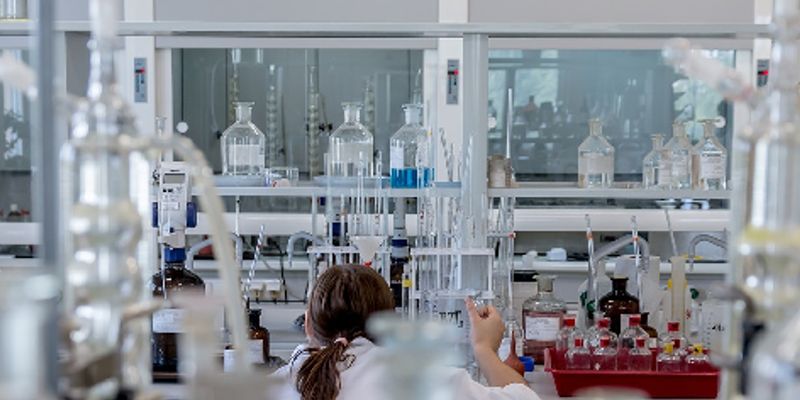
A medical laboratory (also known as clinical laboratory) is a laboratory where tests are done on clinical specimens with the purpose of getting information about a patients health in order to treat, diagnose and/or prevent disease. Medical laboratories often staff the following: Phlebotomists, Pathologists, Pathologists's assistants, Medical laboratory scientists, Medical laboratory assistants, Medical laboratory technicians, and Clinical biochemists, just to name a few.
Cancer is a multifactorial disease, and its genesis and progression are extremely complex. The scope of precision oncology is rapidly expanding to address previously undruggable targets. The...
Robotic partial nephrectomy (RPN) has increasingly been applied to the treatment of small renal masses. Because of space limitations and the size of the robot at the patient side, the standa...
Date: October 7, 2020 Time: 9:00am (PDT), 12:00pm (EDT) Recently the FDA approved the BD Onclarity HPV assay as a test to identify HPV high-risk genotypes in addition to HPV 16 and 18 i.e.,...
This lecture will encompass the learning experience I have had over my 14,000 RALP cases. We will present an evidence based prospective data collection and analysis of RALP outcomes. We will...
Activating mutations in PIK3CA are frequent in human breast cancer, and phosphoinositide 3-kinase alpha (PI3Kα) inhibitors have been approved for therapy. To characterize determinants...
Immune therapy approaches are being used in many different solid cancers today including clear cell renal carcinoma (mccRCC) and metastatic prostate adenocarcinoma. Over the past few years i...
RNA plays important and diverse roles in biology, but molecular tools to manipulate and measure RNA are limited. We demonstrate that RNA-targeting CRISPR effector Cas13 can be engineered for...
The CRISPR/Cas genome editing system has revolutionized nearly every aspect of the life science industry. Until recently, the most used formats for this technology have been plasmids, mRNA,...
Genome Engineering allows the easy manipulation of genomes down to the nucleotide level. Targeted deep sequencing enables the detection and quantification of low-frequency editing events. Ho...
The adenosine analogue remdesivir has emerged as a front-line antiviral treatment for SARS-CoV-2, with preliminary evidence that it reduces the duration and severity of illness. Prior clinic...
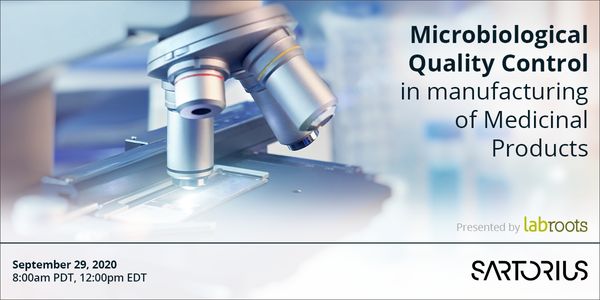
DATE: September 29, 2020 TIME: 8:00 am PDT There is a steady increase in FDA 483s related to microbiology. Though most are for sterile products, non-sterile and terminally sterilized product...
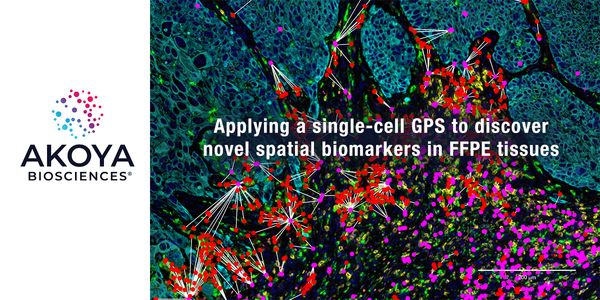
Date: September 28, 2020 Time: 5:00pm (PDT), 8:00am (HKT), 9:00am (JST) Although there have been dramatic advances in the field of single-cell sequencing, current methods cannot be applied t...
DATE: September 24th, 2020 TIME: 10:00am PT Abstract body Learning Objectives: Review biochemistry and kinetics of PCT in primary and secondary bacterial infection Analyze PCT as a biomarker...
For more than a century, breakthroughs in biological sciences have relied on the ability to study cells outside of respective organisms. While majority of cell culturing is still performed u...
Extracellular ligands bind to receptors on the cell surface leading to receptor internalization. Once internalized into small vesicles, the vesicles fuse with an organelle known as the sorti...
Suspension by day, imaging by night: how to efficiently manage your system and optimize utilization Presented By: Jared K. Burks, PhD Mass cytometry, be it suspension or imaging, opens the d...
On measuring photons and ions: Impact on panel design, signal detection and data quality 10:30–11:00 am PDT Presented By: Tim Bushnell, PhD, MBA Monitoring immunotherapy with a mass cy...
DATE: September 23, 2020 TIME: 10:00am PT, 1:00pm ET Diagnostics, particularly blood cultures, play a key role in sepsis diagnosis. Best practices are well-known for collection, transport, a...
Extracellular vesicles (EVs) are nanosized vesicles containing active proteins, lipids, and different types of genetic material such as non coding RNA species, related to the characteristics...
The extracellular matrix (ECM) is a three-dimensional structure that provides physical support for tissues/organs and biochemical/biomechanical cues for tissue morphogenesis, differentiation...
Extracellular vesicles (EV) from many cell types have demonstrated therapeutic potential against many different diseases. Inhibiting progress in this area is the capability to produce EVs in...
Learning Objectives: 1. Understand methods of isolating and enriching exosomes along with their pros/cons of the different techniques 2. What do we mean when we talk about subtyping, and wha...
The COVID-19 pandemic has resulted in demand for population scale pathogen screening. The most sensitive and reliable method for detecting SARS-CoV-2 remains reverse transcription PCR (RT-PC...
Richard Hughes: New immunogenicity strategies to meet the needs of a developing pandemic Shortly after the COVID-19 pandemic began, the subject of serological testing for anti-viral antibodi...
Cancer is a multifactorial disease, and its genesis and progression are extremely complex. The scope of precision oncology is rapidly expanding to address previously undruggable targets. The...
Robotic partial nephrectomy (RPN) has increasingly been applied to the treatment of small renal masses. Because of space limitations and the size of the robot at the patient side, the standa...
Date: October 7, 2020 Time: 9:00am (PDT), 12:00pm (EDT) Recently the FDA approved the BD Onclarity HPV assay as a test to identify HPV high-risk genotypes in addition to HPV 16 and 18 i.e.,...
This lecture will encompass the learning experience I have had over my 14,000 RALP cases. We will present an evidence based prospective data collection and analysis of RALP outcomes. We will...
Activating mutations in PIK3CA are frequent in human breast cancer, and phosphoinositide 3-kinase alpha (PI3Kα) inhibitors have been approved for therapy. To characterize determinants...
Immune therapy approaches are being used in many different solid cancers today including clear cell renal carcinoma (mccRCC) and metastatic prostate adenocarcinoma. Over the past few years i...
RNA plays important and diverse roles in biology, but molecular tools to manipulate and measure RNA are limited. We demonstrate that RNA-targeting CRISPR effector Cas13 can be engineered for...
The CRISPR/Cas genome editing system has revolutionized nearly every aspect of the life science industry. Until recently, the most used formats for this technology have been plasmids, mRNA,...
Genome Engineering allows the easy manipulation of genomes down to the nucleotide level. Targeted deep sequencing enables the detection and quantification of low-frequency editing events. Ho...
The adenosine analogue remdesivir has emerged as a front-line antiviral treatment for SARS-CoV-2, with preliminary evidence that it reduces the duration and severity of illness. Prior clinic...
DATE: September 29, 2020 TIME: 8:00 am PDT There is a steady increase in FDA 483s related to microbiology. Though most are for sterile products, non-sterile and terminally sterilized product...
Date: September 28, 2020 Time: 5:00pm (PDT), 8:00am (HKT), 9:00am (JST) Although there have been dramatic advances in the field of single-cell sequencing, current methods cannot be applied t...
DATE: September 24th, 2020 TIME: 10:00am PT Abstract body Learning Objectives: Review biochemistry and kinetics of PCT in primary and secondary bacterial infection Analyze PCT as a biomarker...
For more than a century, breakthroughs in biological sciences have relied on the ability to study cells outside of respective organisms. While majority of cell culturing is still performed u...
Extracellular ligands bind to receptors on the cell surface leading to receptor internalization. Once internalized into small vesicles, the vesicles fuse with an organelle known as the sorti...
Suspension by day, imaging by night: how to efficiently manage your system and optimize utilization Presented By: Jared K. Burks, PhD Mass cytometry, be it suspension or imaging, opens the d...
On measuring photons and ions: Impact on panel design, signal detection and data quality 10:30–11:00 am PDT Presented By: Tim Bushnell, PhD, MBA Monitoring immunotherapy with a mass cy...
DATE: September 23, 2020 TIME: 10:00am PT, 1:00pm ET Diagnostics, particularly blood cultures, play a key role in sepsis diagnosis. Best practices are well-known for collection, transport, a...
Extracellular vesicles (EVs) are nanosized vesicles containing active proteins, lipids, and different types of genetic material such as non coding RNA species, related to the characteristics...
The extracellular matrix (ECM) is a three-dimensional structure that provides physical support for tissues/organs and biochemical/biomechanical cues for tissue morphogenesis, differentiation...
Extracellular vesicles (EV) from many cell types have demonstrated therapeutic potential against many different diseases. Inhibiting progress in this area is the capability to produce EVs in...
Learning Objectives: 1. Understand methods of isolating and enriching exosomes along with their pros/cons of the different techniques 2. What do we mean when we talk about subtyping, and wha...
The COVID-19 pandemic has resulted in demand for population scale pathogen screening. The most sensitive and reliable method for detecting SARS-CoV-2 remains reverse transcription PCR (RT-PC...
Richard Hughes: New immunogenicity strategies to meet the needs of a developing pandemic Shortly after the COVID-19 pandemic began, the subject of serological testing for anti-viral antibodi...
 Follow