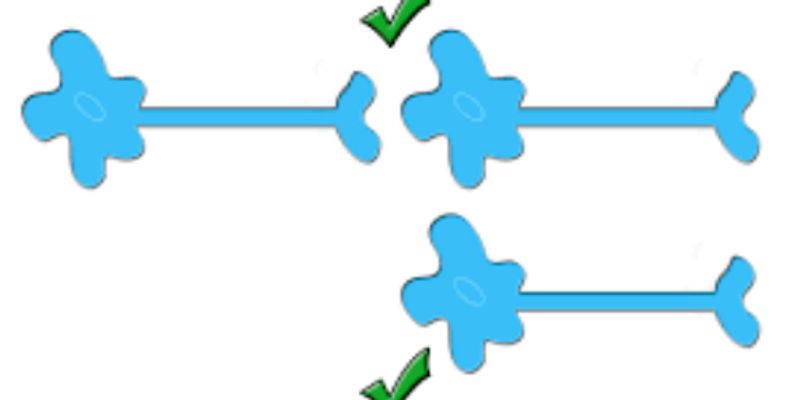
Plasticity is the ability of certain solids to flow or to change shape permanently when subjected to stresses of intermediate magnitude between those producing temporary deformation, or elastic behaviour. It is also the quality of being soft enough to be changed into a new shape.
Sensorimotor integration is important for the acquisition and performance of motor skills. Here,we show the emergence of neuroplastic changes in the interactions between the motor andsomatose...
Cell Sciences Innovation, Merck Research Laboratories, 2015 Galloping Hill Road, Kenilworth, NJ USA
In vitro translational models play a critical role in the drug discovery process because t...
PrPC is a conserved lipid-raft associated, GPI-anchored cell membrane glycoprotein. Misfolding of cellular PrPC into the pathogenic PrPSc results in Prion disease, an untreatable and fatal ne...
Maturing neural circuits are dramatically shaped by the environment, but this timing varies across brain regions and plasticity declines with age. Focusing on cellular/molecular mechanisms un...
The adolescent brain has been forged by evolution to have different features than those of a child or an adult, but it is not broken or defective. Phenomenal ability to adapt to environ...
Traditional models of basal ganglia disorders are grounded in the assumption that network dysfunction is driven by alterations in intrinsic excitability of striatal neurons. Recent work has c...
In the adult central nervous system (CNS) small populations of neurons are formed in the adult olfactory bulb and dentate gyrus of the hippocampus. In the adult hippocampus, newly born neuron...
Please note that Oct. 26, 11pm PDT means following time in Europe and Asia: Oct. 27, 07am CET, 2pm China Standard Time, 3pm JPTSubstances leaching out of plastic consumables – so-...
DATE: October 7th, 2015TIME: 9am Pacific time, 12pm Eastern timeThe neuroscience field is rapidly evolving as both a burgeoning area for basic research (Parkinson’s, Alzheimer’s, ...
DATE: June 17th, 2015TIME: 8am Pacific time, 11am Eastern timeSpatial heterogeneity of tumors has been identified within and between metastatic lesions and can be visualized wit...
The live event will start at 8am PDT, 11am EDT, 5pm CEST, 11pm CST.Substances leaching out of plastic consumables – so-called “leachables” – are still frequently under...
The hippocampal formation is one of the most extensively studied regions of the brain, with well described anatomy and basic physiology; moreover, aspects of human memory mediated by hippocam...
Schizophrenia is a severe psychiatric disorder affecting 1% of the world’s population, leading to high human, social and economic burdens. Understanding how the interaction of gene and...
The dorsal anterior cingulate cortex (dACC), orbitofrontal cortex (OFC), ventrolateral and ventromedial prefrontal cortex (vlPFC, vmPFC) and their connections with the basal ganglia play a ce...
Motor coordination relies on accurate predictions that specify how the body should move in particular sensorimotor contexts. Although such predictions are thought to be stored as associative...
The cholinergic system is a potent neuromodulatory system which plays a critical role in cortical plasticity, attention and learning. The cholinergic activation of the cortex increases the si...
Neural stem cells exist in the adult mammalian brain throughout life. They reside in the subgranular layer of the dentate gyrus and in the subventricular zone. Neural stem cells have the capa...
Synaptic dysfunction and loss caused by age-dependent accumulation of synaptotoxic Amyloid beta (Abeta)1-42 oligomers is proposed to underlie cognitive decline in Alzheimers disease (AD). Syn...
Dendritic spine shape enables sequestering of subcellular components needed for synaptic plasticity, including polyribosomes for local protein synthesis, smooth endoplasmic reticulum (SER) to...
With the rapid rise in the number of therapeutic options for men with castration-resistant prostate cancer (CRPC) comes increasingly complicated treatment decision-making, emphasizing the nee...
High throughput transcriptomic analyses have shown that most of the human genome is dynamically transcribed to produce an extraordinary range of overlapping and interlacing intronic, intergen...
Sensorimotor integration is important for the acquisition and performance of motor skills. Here,we show the emergence of neuroplastic changes in the interactions between the motor andsomatose...
Cell Sciences Innovation, Merck Research Laboratories, 2015 Galloping Hill Road, Kenilworth, NJ USA
In vitro translational models play a critical role in the drug discovery process because t...
PrPC is a conserved lipid-raft associated, GPI-anchored cell membrane glycoprotein. Misfolding of cellular PrPC into the pathogenic PrPSc results in Prion disease, an untreatable and fatal ne...
Maturing neural circuits are dramatically shaped by the environment, but this timing varies across brain regions and plasticity declines with age. Focusing on cellular/molecular mechanisms un...
The adolescent brain has been forged by evolution to have different features than those of a child or an adult, but it is not broken or defective. Phenomenal ability to adapt to environ...
Traditional models of basal ganglia disorders are grounded in the assumption that network dysfunction is driven by alterations in intrinsic excitability of striatal neurons. Recent work has c...
In the adult central nervous system (CNS) small populations of neurons are formed in the adult olfactory bulb and dentate gyrus of the hippocampus. In the adult hippocampus, newly born neuron...
Please note that Oct. 26, 11pm PDT means following time in Europe and Asia: Oct. 27, 07am CET, 2pm China Standard Time, 3pm JPTSubstances leaching out of plastic consumables – so-...
DATE: October 7th, 2015TIME: 9am Pacific time, 12pm Eastern timeThe neuroscience field is rapidly evolving as both a burgeoning area for basic research (Parkinson’s, Alzheimer’s, ...
DATE: June 17th, 2015TIME: 8am Pacific time, 11am Eastern timeSpatial heterogeneity of tumors has been identified within and between metastatic lesions and can be visualized wit...
The live event will start at 8am PDT, 11am EDT, 5pm CEST, 11pm CST.Substances leaching out of plastic consumables – so-called “leachables” – are still frequently under...
The hippocampal formation is one of the most extensively studied regions of the brain, with well described anatomy and basic physiology; moreover, aspects of human memory mediated by hippocam...
Schizophrenia is a severe psychiatric disorder affecting 1% of the world’s population, leading to high human, social and economic burdens. Understanding how the interaction of gene and...
The dorsal anterior cingulate cortex (dACC), orbitofrontal cortex (OFC), ventrolateral and ventromedial prefrontal cortex (vlPFC, vmPFC) and their connections with the basal ganglia play a ce...
Motor coordination relies on accurate predictions that specify how the body should move in particular sensorimotor contexts. Although such predictions are thought to be stored as associative...
The cholinergic system is a potent neuromodulatory system which plays a critical role in cortical plasticity, attention and learning. The cholinergic activation of the cortex increases the si...
Neural stem cells exist in the adult mammalian brain throughout life. They reside in the subgranular layer of the dentate gyrus and in the subventricular zone. Neural stem cells have the capa...
Synaptic dysfunction and loss caused by age-dependent accumulation of synaptotoxic Amyloid beta (Abeta)1-42 oligomers is proposed to underlie cognitive decline in Alzheimers disease (AD). Syn...
Dendritic spine shape enables sequestering of subcellular components needed for synaptic plasticity, including polyribosomes for local protein synthesis, smooth endoplasmic reticulum (SER) to...
With the rapid rise in the number of therapeutic options for men with castration-resistant prostate cancer (CRPC) comes increasingly complicated treatment decision-making, emphasizing the nee...
High throughput transcriptomic analyses have shown that most of the human genome is dynamically transcribed to produce an extraordinary range of overlapping and interlacing intronic, intergen...
 Follow