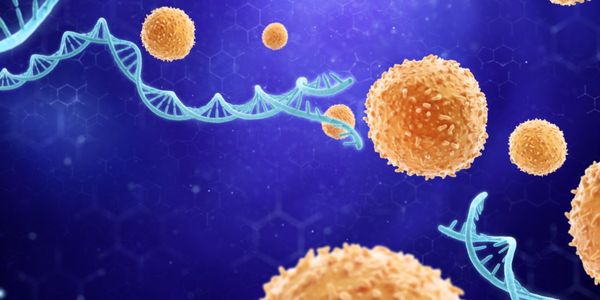
Single Cell Transcriptomics: the process of examining the gene expression level of individual cells in a given population by simultaneously measuring the messenger RNA concentration of genes.
The basic units of biological structure and function are cells, which exhibit wide variation in regard to both type and state. We assess such variation by simultaneously profiling the transc...
While many technologies focus on either exploring the spatial context of a handful of targets, or expression patterns of hundreds or thousands of targets in bulk samples or dissociated singl...
Date: April 29, 2020 Time: 8:00AM PDT, 11:00AM EDT Single cell genomics and other next generation sequencing applications depend strongly on adequate upstream sample preparation. Results can...
Learning Objectives: 1. What is wrong with healthcare today 2. What kinds of omics and wearables data can be used to best predict disease risk and manage health...
Single-cell RNA sequencing has emerged as an important technology that can reveal gene expression differences between different cell types. This webinar will demonstrate how bioinformatics s...
Triple-negative breast cancer (TNBC) is an aggressive disease that accounts for 10-20% of all breast cancer cases diagnosed annually in the U.S.1. Despite its prevalence, TNBC remains resist...
Since the introduction of single cell sequencing techniques to the genomics community, interest in its use has grown exponentially and the number of single cell publications has exploded. Th...
Single cell RNA sequencing (scRNA-seq) emerged to characterize gene expression differences between individual cells, allowing a higher resolution look at mRNA abundance than bulk RNA- seq. H...
DATE: October 30, 2019TIME: 7:00am PDTJoin us for a webinar to learn how to apply single cell methods to study cancer. Dr. William Greenleaf, Associate Professor from Stanford Universit...
Spatial transcriptomics methods permit gene expression from focal areas within a tissue to be profiled while maintaining the morphologic context of the tissue microenvironment. This presentat...
DATE: August 7, 2019TIME: 7:00am PDTCore facilities have to find their way between company promises, reality, their needs and economical constraints. Platforms have to fulfil the require...
The development of automated DNA sequencers utilizing Sanger sequencing and capillary electrophoresis made it possible to develop the first draft sequences of the human genome. The cost of do...
DATE: November 28, 2018TIME: 7:00AM PSTSingle-cell genomics enables a deep dive into the mechanisms responsible for health and disease, in areas from cancer biology to neurob...
Advances in DNA sequencing, based upon massively parallel sequencing, has resulted in dramatic advances in DNA sequence output in the past few years. It is now possible to generate terrabases...
DATE: April 26, 2018TIME: 8:00am PST, 11:00am EST Engineered T cells expressing a tumor antigen-specific receptor have revolutionized the field of cancer therap...
DATE: March 21, 2018TIME: 8:00AM PST, 11:00AM ESTMass cytometry, or cytometry by time-of-flight (the basis of the CyTOF® system), enables quantification of the abundance and fu...
DATE: November 15, 2017TIME: 09:00am PST, 12:00pm ESTMicroRNAs (miRNA) are a class of small non-coding RNAs (approximately 21 nt long) that bind complementary sequences in target mRNAs...
Cardiomyocytes (CMs) derived from human induced pluripotent stem cells (iPSCs) as well as engineered heart muscles offer great potential for regenerative applications by CM transplantation, f...
Therapeutic application of pluripotent stem (PS) cell-derived products represents the ultimate goal of stem cell research. In order to apply this technology to patients, it is fundamental to ...
Unfortunately due to technical issues this webinar has been delayed until June 26th. If you are unable to make the new time, it will be available on demand for you to view.DATE: June 26,...
When studying the transcriptome, most of our inferences revolve around changes in average expression. However, more recent examples have demonstrated that analysis of the variability of gene...
Recent advances in DNA sequencing have now made it possible to characterize genomes, transcriptomes and even methylomes which is transforming both basic research and clinical practice. Whole...
The basic units of biological structure and function are cells, which exhibit wide variation in regard to both type and state. We assess such variation by simultaneously profiling the transc...
While many technologies focus on either exploring the spatial context of a handful of targets, or expression patterns of hundreds or thousands of targets in bulk samples or dissociated singl...
Date: April 29, 2020 Time: 8:00AM PDT, 11:00AM EDT Single cell genomics and other next generation sequencing applications depend strongly on adequate upstream sample preparation. Results can...
Learning Objectives: 1. What is wrong with healthcare today 2. What kinds of omics and wearables data can be used to best predict disease risk and manage health...
Single-cell RNA sequencing has emerged as an important technology that can reveal gene expression differences between different cell types. This webinar will demonstrate how bioinformatics s...
Triple-negative breast cancer (TNBC) is an aggressive disease that accounts for 10-20% of all breast cancer cases diagnosed annually in the U.S.1. Despite its prevalence, TNBC remains resist...
Since the introduction of single cell sequencing techniques to the genomics community, interest in its use has grown exponentially and the number of single cell publications has exploded. Th...
Single cell RNA sequencing (scRNA-seq) emerged to characterize gene expression differences between individual cells, allowing a higher resolution look at mRNA abundance than bulk RNA- seq. H...
DATE: October 30, 2019TIME: 7:00am PDTJoin us for a webinar to learn how to apply single cell methods to study cancer. Dr. William Greenleaf, Associate Professor from Stanford Universit...
Spatial transcriptomics methods permit gene expression from focal areas within a tissue to be profiled while maintaining the morphologic context of the tissue microenvironment. This presentat...
DATE: August 7, 2019TIME: 7:00am PDTCore facilities have to find their way between company promises, reality, their needs and economical constraints. Platforms have to fulfil the require...
The development of automated DNA sequencers utilizing Sanger sequencing and capillary electrophoresis made it possible to develop the first draft sequences of the human genome. The cost of do...
DATE: November 28, 2018TIME: 7:00AM PSTSingle-cell genomics enables a deep dive into the mechanisms responsible for health and disease, in areas from cancer biology to neurob...
Advances in DNA sequencing, based upon massively parallel sequencing, has resulted in dramatic advances in DNA sequence output in the past few years. It is now possible to generate terrabases...
DATE: April 26, 2018TIME: 8:00am PST, 11:00am EST Engineered T cells expressing a tumor antigen-specific receptor have revolutionized the field of cancer therap...
DATE: March 21, 2018TIME: 8:00AM PST, 11:00AM ESTMass cytometry, or cytometry by time-of-flight (the basis of the CyTOF® system), enables quantification of the abundance and fu...
DATE: November 15, 2017TIME: 09:00am PST, 12:00pm ESTMicroRNAs (miRNA) are a class of small non-coding RNAs (approximately 21 nt long) that bind complementary sequences in target mRNAs...
Cardiomyocytes (CMs) derived from human induced pluripotent stem cells (iPSCs) as well as engineered heart muscles offer great potential for regenerative applications by CM transplantation, f...
Therapeutic application of pluripotent stem (PS) cell-derived products represents the ultimate goal of stem cell research. In order to apply this technology to patients, it is fundamental to ...
Unfortunately due to technical issues this webinar has been delayed until June 26th. If you are unable to make the new time, it will be available on demand for you to view.DATE: June 26,...
When studying the transcriptome, most of our inferences revolve around changes in average expression. However, more recent examples have demonstrated that analysis of the variability of gene...
Recent advances in DNA sequencing have now made it possible to characterize genomes, transcriptomes and even methylomes which is transforming both basic research and clinical practice. Whole...
 Follow