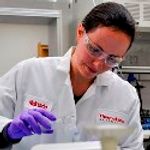
Systems Biology: Systems biology is the computational and mathematical modeling of complex biological systems. It is a biology-based interdisciplinary field of study that focuses on complex interactions within biological systems, using a holistic approach to biological research.
DATE: September 20, 2016
TIME: 8:00am PST, 11:00 EST
Studies of cell-substrate interactions are important for an array of biotechnology applications. The nature of specific, recepto...
DATE: September 20th, 2016TIME: 7:00AM PST, 10:00AM ETThere is a growing trend towards developing in vitro cell models that recapitulate the in vivo environment in basic research,...
The Infectious Diseases Pathology Branch of the Centers for Disease Control and Prevention (CDC) routinely receives autopsy and biopsy tissues for diagnostic evaluation. These tissues are typ...
It is well accepted that microorganisms can exist as self-organized communities attached to surfaces and one another (i.e., biofilm), often surrounded by extracellular polymeric substances (E...
The human body is populated with trillions of microorganisms, collectively termed the human microbiome, that play vital roles in health including nutrition and metabolism, immune development,...
The human race, like all macrobiological life, evolved in a sea of microbes. There was no way to keep the bacterial and archaeal hoards at bay, so instead life evolved mechanisms to live with...
The reprogramming of somatic cells into induced Pluripotent Stem Cells (iPSC) has great potential of applications, not only in basic research, but also in drug screening and cell therapy. Wit...
Access this training to learn more about different techniques that can be used for successful colony selection and passage of induced pluripotent stem cells....
Access this training to learn more about the evolution of pluripotent stem cell culture systems and which solution is best for your PSC culture goals....
Neurons derived from human pluripotent stem cells (hPSCs), including embryonic stem cells (ESCs) and induced pluripotent stem cells (iPSCs), are excellent resources for disease modeling and d...
Stem cells, specifically induced pluripotent stem cells (iPSCs), offer exciting potential for the future of cell therapy and regenerative medicine. More recently, genetic engineering of stem ...
The human enteric nervous system (ENS) is derived from the neural crest and represents a complex network of ~500 million neurons with dozens of distinct neurotransmitter and hormone subtypes ...
Over the last 15 years, human pluripotent stem cell (hPSC) technologies have progressed from academic curiosities into tools with the promise to underpin commerce, leading to real progress in...
DATE: August 24th 2016TIME: 8:00AM PST, 11:00AM ESTPreclinical micro-computed tomography (microCT) imaging systems are utilized across a wide range of applications requiring imagi...
Enzyme engineering is a powerful technology now widely used in laboratories around the world. The goal is to obtain improved proteins that will serve as better biocatalysts, biosensors or as ...
DATE: July 20thTIME: 8AM PT, 11AM ET, 5PM CESTTherapies like ipilimumab and nivolumab have shown the potential for approaches that direct the patient’s own immune system aga...
Hepatocellular Carcinoma (HCC), the third leading cause of global cancer mortality, continues to be a substantial burden to health systems, society and individuals at risk. Although prognosis...
DATE: June 30, 2016
TIME: 8:00am Pacific time, 11:00am Eastern time
Focusing solely on malignant cancer cells and the genes that they express is modestly just a glimpse of the...
Precision medicine requires success in two intertwined aspects: precision therapy and personalized medicine. Precision therapy is being able to effectively treat the right disease; to have th...
Implementation of Capillary Electrophoresis (CE) technology in the biopharmaceutical industry is helping to characterize purity, heterogeneity, and identity of therapeutic...
Antibodies are tremendously useful and versatile tools and they have found use in many areas of life science research. However, antibodies can be difficult to make and are used in inherently...
For many years, the Laemmli system has been the standard and most popular method used to perform polyacrylamide gel electrophoresis. Laemmli type gels are useful for a broad range of protein...
DATE: June 23, 2016
TIME: 11:00am Pacific time, 2:00pm Eastern time
T cells as part of the adaptive immune system play a central role in cell-mediated immunity. Their link to ...
DATE: June 23, 2016
TIME: 8am Pacific time, 11am Eastern time
In this webinar you will learn:
Key factors in successful arrayed crRNA screening
Benefits of the dual CR...
DATE: September 20, 2016
TIME: 8:00am PST, 11:00 EST
Studies of cell-substrate interactions are important for an array of biotechnology applications. The nature of specific, recepto...
DATE: September 20th, 2016TIME: 7:00AM PST, 10:00AM ETThere is a growing trend towards developing in vitro cell models that recapitulate the in vivo environment in basic research,...
The Infectious Diseases Pathology Branch of the Centers for Disease Control and Prevention (CDC) routinely receives autopsy and biopsy tissues for diagnostic evaluation. These tissues are typ...
It is well accepted that microorganisms can exist as self-organized communities attached to surfaces and one another (i.e., biofilm), often surrounded by extracellular polymeric substances (E...
The human body is populated with trillions of microorganisms, collectively termed the human microbiome, that play vital roles in health including nutrition and metabolism, immune development,...
The human race, like all macrobiological life, evolved in a sea of microbes. There was no way to keep the bacterial and archaeal hoards at bay, so instead life evolved mechanisms to live with...
The reprogramming of somatic cells into induced Pluripotent Stem Cells (iPSC) has great potential of applications, not only in basic research, but also in drug screening and cell therapy. Wit...
Access this training to learn more about different techniques that can be used for successful colony selection and passage of induced pluripotent stem cells....
Access this training to learn more about the evolution of pluripotent stem cell culture systems and which solution is best for your PSC culture goals....
Neurons derived from human pluripotent stem cells (hPSCs), including embryonic stem cells (ESCs) and induced pluripotent stem cells (iPSCs), are excellent resources for disease modeling and d...
Stem cells, specifically induced pluripotent stem cells (iPSCs), offer exciting potential for the future of cell therapy and regenerative medicine. More recently, genetic engineering of stem ...
The human enteric nervous system (ENS) is derived from the neural crest and represents a complex network of ~500 million neurons with dozens of distinct neurotransmitter and hormone subtypes ...
Over the last 15 years, human pluripotent stem cell (hPSC) technologies have progressed from academic curiosities into tools with the promise to underpin commerce, leading to real progress in...
DATE: August 24th 2016TIME: 8:00AM PST, 11:00AM ESTPreclinical micro-computed tomography (microCT) imaging systems are utilized across a wide range of applications requiring imagi...
Enzyme engineering is a powerful technology now widely used in laboratories around the world. The goal is to obtain improved proteins that will serve as better biocatalysts, biosensors or as ...
DATE: July 20thTIME: 8AM PT, 11AM ET, 5PM CESTTherapies like ipilimumab and nivolumab have shown the potential for approaches that direct the patient’s own immune system aga...
Hepatocellular Carcinoma (HCC), the third leading cause of global cancer mortality, continues to be a substantial burden to health systems, society and individuals at risk. Although prognosis...
DATE: June 30, 2016
TIME: 8:00am Pacific time, 11:00am Eastern time
Focusing solely on malignant cancer cells and the genes that they express is modestly just a glimpse of the...
Precision medicine requires success in two intertwined aspects: precision therapy and personalized medicine. Precision therapy is being able to effectively treat the right disease; to have th...
Implementation of Capillary Electrophoresis (CE) technology in the biopharmaceutical industry is helping to characterize purity, heterogeneity, and identity of therapeutic...
Antibodies are tremendously useful and versatile tools and they have found use in many areas of life science research. However, antibodies can be difficult to make and are used in inherently...
For many years, the Laemmli system has been the standard and most popular method used to perform polyacrylamide gel electrophoresis. Laemmli type gels are useful for a broad range of protein...
DATE: June 23, 2016
TIME: 11:00am Pacific time, 2:00pm Eastern time
T cells as part of the adaptive immune system play a central role in cell-mediated immunity. Their link to ...
DATE: June 23, 2016
TIME: 8am Pacific time, 11am Eastern time
In this webinar you will learn:
Key factors in successful arrayed crRNA screening
Benefits of the dual CR...
 Follow