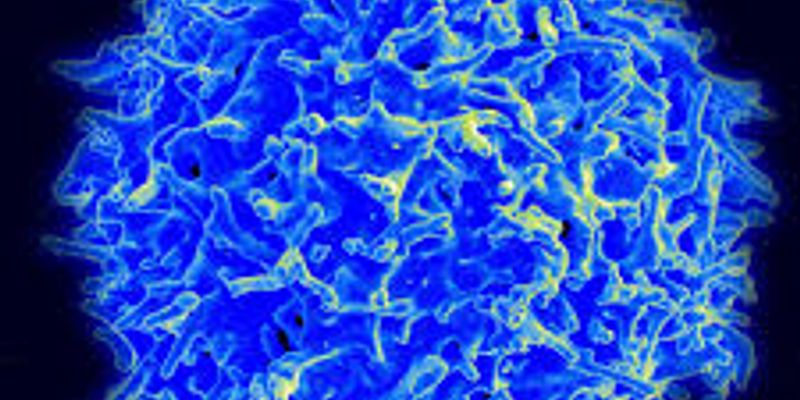
T-Cells: A type of white blood cell that plays an important role in the immune system. They are produced by the thymus gland and help the body fight off viruses, bacteria, and parasites.
Strong performance for a Facility of the Future for the Life Sciences industry requires more than optimal manufacturing process development and facility design. The sector encompasses a dive...
The NIST Biomanufacturing Program develops measurement science, standards, reference data and tools to support the development, manufacturing, and regulatory approval of biologic medicines....
Digital PCR has become the emerging technique for the sequence-specific detection and quantification of nucleic acids for various applications. During the recent years, numerous articles of...
Bioreactor modeling can inform understanding of cellular metabolism—including aspects of growth kinetics, productivity, media consumption, and metabolite secretion—and can be use...
There has been an increasing number of successful gene therapy clinical trials, leading to regulatory approvals of numerous gene therapy products, in particular ones based on the adeno-assoc...
DATE: April 2, 2020 TIME: 8:00am PT, 11:00am ET Cyclins A2 and E1 regulate the cell cycle by promoting S phase entry and progression. We recently identified a hepatocellular carcinoma (HCC)...
DATE: March 26, 2020 TIME: 9:00am PST, 12:00pm EST Growing demand for precision therapy and the recent successes with CAR-T cells for cancer treatment...
The accumulation of neurotoxic amyloid beta peptides and/or neurofibrillary tangle formation are key pathological hallmarks of neurodegenerative diseases including but not limited to Alzheim...
The locomotion of humans and other animals requires a seamless flow of information from sensory modalities all the way to the motor periphery. As such, locomotion is an excellent system for...
Whether you are performing killing assays, characterizing the tumor microenvironment, or investigating immunogenicity, primary cells are essential for the discovery of new therapeutics. Conc...
Digital spatial profiling (DSP) on the NanoString GeoMx platform enables high plex molecular profiling of clinical tissue samples. This new profiling strategy enables deep insights into the...
QIAGEN CLC Genomics Workbench is a powerful solution to analyze and visualize next generation sequencing (NGS) data. Powered by cutting-edge technology and accelerated algorithms, it support...
CRISPR revolutionized gene editing, but multi-target screening remains a complex goal. In addition, the fast pace of CRISPR technology development has brought sophisticated options for libra...
Recent advances in DNA sequencing and omics-based capabilities are revealing incredible therapeutic opportunities and quickly transforming drug discovery. Molecularly targeted drugs aim to e...
DATE: 25 Febrero 2020 TIME: 13:00 COT, 10:00 PST Los desarrollos tecnológicos en analizadores automatizados de Hematología continúan transformando el laboratorio de Hema...
Microphysiological systems (MPS), also known as organ-on-chips, are small scale in vitro cell cultures which mimic facets of tissue or organ level function. MPS frequently utilise primary hu...
The aim of the lecture is to give an insight into the use of 3D liver micro tissues (3D liMTs) in drug discovery and translational safety. In translational toxicology, 3D LiMTs have a high i...
The OrganoPlate is a microtiterplate based Organ-on-a-Chip platform for high throughput drug safety and efficacy screening. It contains up to 96 cell culture chambers that allow co-culture o...
The use of primary cells in vitro is compromised by the limited quantity of cells that can be isolated from one donor, a lack of or very restricted proliferation capacity (e.g. hepatocytes)...
Accurate DNA replication is essential to transmit the genetic information from one generation to another. However, replication is frequently challenged by barriers that originate from exogen...
Non-alcoholic fatty liver disease (NAFLD) is the most common form of chronic liver disease in developed countries, and it affects over 25% of the population worldwide. Within the next five y...
Biomarkers are critical tools for all stages of cancer research, from drug development through clinical applications. Cancer is fundamentally a disease of unregulated cell growth and circumv...
Strong performance for a Facility of the Future for the Life Sciences industry requires more than optimal manufacturing process development and facility design. The sector encompasses a dive...
The NIST Biomanufacturing Program develops measurement science, standards, reference data and tools to support the development, manufacturing, and regulatory approval of biologic medicines....
Digital PCR has become the emerging technique for the sequence-specific detection and quantification of nucleic acids for various applications. During the recent years, numerous articles of...
Bioreactor modeling can inform understanding of cellular metabolism—including aspects of growth kinetics, productivity, media consumption, and metabolite secretion—and can be use...
There has been an increasing number of successful gene therapy clinical trials, leading to regulatory approvals of numerous gene therapy products, in particular ones based on the adeno-assoc...
DATE: April 2, 2020 TIME: 8:00am PT, 11:00am ET Cyclins A2 and E1 regulate the cell cycle by promoting S phase entry and progression. We recently identified a hepatocellular carcinoma (HCC)...
DATE: March 26, 2020 TIME: 9:00am PST, 12:00pm EST Growing demand for precision therapy and the recent successes with CAR-T cells for cancer treatment...
The accumulation of neurotoxic amyloid beta peptides and/or neurofibrillary tangle formation are key pathological hallmarks of neurodegenerative diseases including but not limited to Alzheim...
The locomotion of humans and other animals requires a seamless flow of information from sensory modalities all the way to the motor periphery. As such, locomotion is an excellent system for...
Whether you are performing killing assays, characterizing the tumor microenvironment, or investigating immunogenicity, primary cells are essential for the discovery of new therapeutics. Conc...
Digital spatial profiling (DSP) on the NanoString GeoMx platform enables high plex molecular profiling of clinical tissue samples. This new profiling strategy enables deep insights into the...
QIAGEN CLC Genomics Workbench is a powerful solution to analyze and visualize next generation sequencing (NGS) data. Powered by cutting-edge technology and accelerated algorithms, it support...
CRISPR revolutionized gene editing, but multi-target screening remains a complex goal. In addition, the fast pace of CRISPR technology development has brought sophisticated options for libra...
Recent advances in DNA sequencing and omics-based capabilities are revealing incredible therapeutic opportunities and quickly transforming drug discovery. Molecularly targeted drugs aim to e...
DATE: 25 Febrero 2020 TIME: 13:00 COT, 10:00 PST Los desarrollos tecnológicos en analizadores automatizados de Hematología continúan transformando el laboratorio de Hema...
Microphysiological systems (MPS), also known as organ-on-chips, are small scale in vitro cell cultures which mimic facets of tissue or organ level function. MPS frequently utilise primary hu...
The aim of the lecture is to give an insight into the use of 3D liver micro tissues (3D liMTs) in drug discovery and translational safety. In translational toxicology, 3D LiMTs have a high i...
The OrganoPlate is a microtiterplate based Organ-on-a-Chip platform for high throughput drug safety and efficacy screening. It contains up to 96 cell culture chambers that allow co-culture o...
The use of primary cells in vitro is compromised by the limited quantity of cells that can be isolated from one donor, a lack of or very restricted proliferation capacity (e.g. hepatocytes)...
Accurate DNA replication is essential to transmit the genetic information from one generation to another. However, replication is frequently challenged by barriers that originate from exogen...
Non-alcoholic fatty liver disease (NAFLD) is the most common form of chronic liver disease in developed countries, and it affects over 25% of the population worldwide. Within the next five y...
Biomarkers are critical tools for all stages of cancer research, from drug development through clinical applications. Cancer is fundamentally a disease of unregulated cell growth and circumv...
 Follow