Case study is a process of examining a person's or business's specific challenge or goal, and how they solved for it. It is a method to gain a better understanding of a subject or process.
Early detection is critical for improved survival in melanoma. Melanocytic nevi are extremely common benign tumors that mimic melanoma and are therefore commonly biopsied. Currently, the dete...
DATE: September 25, 2019TIME: 8:00am PT, 11:00am ET This talk will focus on strategies for optimizing expression levels of membrane proteins using the Gibco™ Expi293™ and ExpiCHO™ Expres...
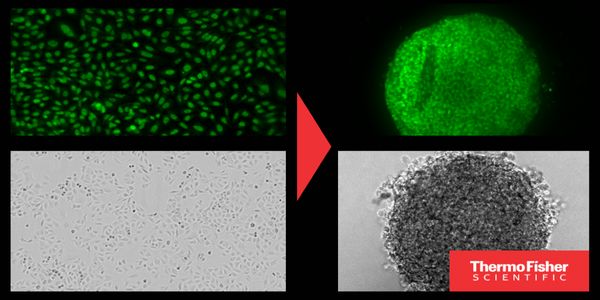
DATE: September 24, 2019TIME: 7:00am PDTHigh throughput screening (HTS) is an effective method for identifying putative active compounds for therapeutics. Assays that evaluate changes i...
Background: The vast majority of all genes are contained within the genomes of the prokaryotes, including the eubacteria and the archaea. These largely single-cellular domains of life thus...
In contrast to other countries in Latin America, Peru had been notoriously spared by the global dissemination of carbapenem-resistant Klebsiella pneumoniae (CR-Kp) until recently. Isolated ca...
Traditional pathogen detection methods rely on the identification of pathogens known to be associated with a particular syndrome. In many cases, it involves complex methodology, lengthy proce...
Standards setting is an important process for improving forensic science. Guidelines, minimum practice and best standards all have their place in forensic toxicology. This lecture will focus...
Contemporary law enforcement has greatly expanded its ability to solve crimes by the adoption of advanced forensic techniques, electronic monitoring and new approaches in crime scene procedur...
The long term goal of our collaborative effort is to bring precision medicine to the practice of veterinary oncology, using the wealth of genomic data gathered in human cancers as a roadmap....
Tissues in the body are wonderfully organized, with specific arrangements of cells, extracellular matrix, secreted molecules, and fluid flow that synergize that create emergent functions. How...
In 2014, the Undiagnosed Diseases Network (UDN), which is funded by the NIH, was established as a network of seven clinical sites, two sequencing cores, and a coordinating center. Later, a ce...
Recent improvements in sequencing chemistry and instrument performance combine to create a new PacBio data type of highly accurate (HiFi), long insert reads. Increased read length and improve...
The last two decades have seen an explosion in the volume of oncology data generated using next-generation sequencing (NGS) and multi-omics techniques. As a result, there is a growing need fo...
DATE: April 30, 2019TIME: 8:00am PDTIumour-derived extracellular vesicles (EVs) are of increasing interest as a resource of diagnostic biomarkers. However, most EV assays require large...
Tuberculosis has killed more than one billion people in the last 200 years. It is the oldest and the deadliest human pathogen, recently surpassing HIV. Its adaptation to host and drug pressur...
Cannabis prohibition has been prevalent since the 1930’s and has had a dramatic negative impact on patients, veterans and small business owners. As a small business owner serving patien...
Cannabis continues to be legalized state by state in the USA and in countries around the world. Many people are seeking solutions to either their current medication regimen that is not adequa...
Whole food plant-based diets and medical cannabis have shared and continues to share similar levels of scrutiny, doubt, and stigma by the traditional medical community. One reason for the med...
Quantitative methods for residual pesticides and mycotoxins analysis in cannabis should provide reliable coverage and robust methodology for the entire list of analytes to fulfill the state m...
What motivates patients to participate in clinical trials? Discussions most often revolve around potential study participants’ perception of therapeutic benefit. Misconceptions about th...
Neurological disorders present a worldwide multi-factorial burden. They affect as many as one billion people globally - and that number is predicted to increase in the next decades. The wide-...
Too frequently the investigator will provide “scientific” reasons to justify precluding analgesics from experimental procedures that may involve more than momentary pain, often wi...
The last two decades have seen an explosion in the volume of oncology data generated using next-generation sequencing (NGS) and multi-omics techniques. As a result, there is a growing need fo...
Early detection is critical for improved survival in melanoma. Melanocytic nevi are extremely common benign tumors that mimic melanoma and are therefore commonly biopsied. Currently, the dete...
DATE: September 25, 2019TIME: 8:00am PT, 11:00am ET This talk will focus on strategies for optimizing expression levels of membrane proteins using the Gibco™ Expi293™ and ExpiCHO™ Expres...
DATE: September 24, 2019TIME: 7:00am PDTHigh throughput screening (HTS) is an effective method for identifying putative active compounds for therapeutics. Assays that evaluate changes i...
Background: The vast majority of all genes are contained within the genomes of the prokaryotes, including the eubacteria and the archaea. These largely single-cellular domains of life thus...
In contrast to other countries in Latin America, Peru had been notoriously spared by the global dissemination of carbapenem-resistant Klebsiella pneumoniae (CR-Kp) until recently. Isolated ca...
Traditional pathogen detection methods rely on the identification of pathogens known to be associated with a particular syndrome. In many cases, it involves complex methodology, lengthy proce...
Standards setting is an important process for improving forensic science. Guidelines, minimum practice and best standards all have their place in forensic toxicology. This lecture will focus...
Contemporary law enforcement has greatly expanded its ability to solve crimes by the adoption of advanced forensic techniques, electronic monitoring and new approaches in crime scene procedur...
The long term goal of our collaborative effort is to bring precision medicine to the practice of veterinary oncology, using the wealth of genomic data gathered in human cancers as a roadmap....
Tissues in the body are wonderfully organized, with specific arrangements of cells, extracellular matrix, secreted molecules, and fluid flow that synergize that create emergent functions. How...
In 2014, the Undiagnosed Diseases Network (UDN), which is funded by the NIH, was established as a network of seven clinical sites, two sequencing cores, and a coordinating center. Later, a ce...
Recent improvements in sequencing chemistry and instrument performance combine to create a new PacBio data type of highly accurate (HiFi), long insert reads. Increased read length and improve...
The last two decades have seen an explosion in the volume of oncology data generated using next-generation sequencing (NGS) and multi-omics techniques. As a result, there is a growing need fo...
DATE: April 30, 2019TIME: 8:00am PDTIumour-derived extracellular vesicles (EVs) are of increasing interest as a resource of diagnostic biomarkers. However, most EV assays require large...
Tuberculosis has killed more than one billion people in the last 200 years. It is the oldest and the deadliest human pathogen, recently surpassing HIV. Its adaptation to host and drug pressur...
Cannabis prohibition has been prevalent since the 1930’s and has had a dramatic negative impact on patients, veterans and small business owners. As a small business owner serving patien...
Cannabis continues to be legalized state by state in the USA and in countries around the world. Many people are seeking solutions to either their current medication regimen that is not adequa...
Whole food plant-based diets and medical cannabis have shared and continues to share similar levels of scrutiny, doubt, and stigma by the traditional medical community. One reason for the med...
Quantitative methods for residual pesticides and mycotoxins analysis in cannabis should provide reliable coverage and robust methodology for the entire list of analytes to fulfill the state m...
What motivates patients to participate in clinical trials? Discussions most often revolve around potential study participants’ perception of therapeutic benefit. Misconceptions about th...
Neurological disorders present a worldwide multi-factorial burden. They affect as many as one billion people globally - and that number is predicted to increase in the next decades. The wide-...
Too frequently the investigator will provide “scientific” reasons to justify precluding analgesics from experimental procedures that may involve more than momentary pain, often wi...
The last two decades have seen an explosion in the volume of oncology data generated using next-generation sequencing (NGS) and multi-omics techniques. As a result, there is a growing need fo...

 Follow