Biomedical Research: the broad area of science that looks for ways to prevent and treat diseases that cause illness and death in people and in animals. This general field of research includes many areas of both the life and physical sciences. Utilizing biotechnology techniques, biomedical researchers study biological processes and diseases with the ultimate goal of developing effective treatments and cures. Biomedical research is an evolutionary process requiring careful experimentation by many scientists, including biologists and chemists.
Triple-negative breast cancer (TNBC) has poor prognosis with frequent relapses and deaths using current standard of care treatments. Metabolic reprograming is now recognized as a fundam...
Complex disease phenotypes - obesity, type II diabetes, and cancer challenge simple models in both evolution and biology. Examination of molecular networks and their dynamic behavior o...
The arrangement of chromatin inside the nucleus has long been recognized as a key element in genomic stability and an active participant in transcriptional control. With the development and d...
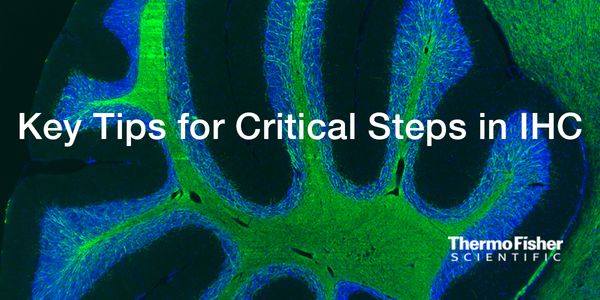
Immunohistochemistry protocols, which utilize antibodies to visualize proteins in tissue sections, have many steps that need optimized to prevent non-specific background effects, artifacts, o...
Ion mobility/mass spectrometry has tremendous potential for metabolomics, lipidomics, and clinical analysis. Ion mobility can resolve compounds unresolved by LC/MS/MS, provide additional stru...
DATE: April 17, 2018TIME: 8:00AM PST, 11:00AM ESTRecently, much research has focused on obtaining 3D brain organoids in an attempt to better recapitulate brain development and function...
Target enrichment offers several advantages over more comprehensive genomic profiling for a variety of scientific applications. The ability to selectively isolate specific genomic regions ena...
This presentation illustrates the features of QIAGEN sample to insight approach, and how it combines a powerful chemistry based on unique molecular indexes (UMIs) and a UMI-aware bioinformati...
Determining the copy number of SMN1 and SMN2 genes is notoriously difficult due to the high level of homology between the two genes. These genes, that are associated with spinal muscular atro...
Some of the most significant hurdles faced by neuroscientists in the field of neurodegenerative disease research when seeking to acquire genetic information include sample accessibility, repr...
Biomedical research depends on the use of model systems to explore basic biology, probe disease mechanisms, and conduct drug discovery and development. However, results from such systems are...
There is an acute shortage of organs due to disease, trauma, congenital defects, and most importantly, age related maladies. The synthetic materials used in tissue engineering applications to...
G-protein coupled receptors (GPCRs) represent the single largest class of druggable targets in the human genome. Of the 390 or so druggable and non-olfactory human GPCRs there exist many whic...
The distinction between "complementary" and "companion" diagnostics tests confuse many physicians and healthcare professionals. Panelists Professor Thomas Webster (Northea...
This lecture introduces the evolving paradigm of Molecular Pathological Epidemiology (MPE) as simply as possible. Any given human disease represents fundamentally heterogeneous process,...
We recently reported that HDAC6 is involved in the regulation of a number of immunosuppressive checkpoint proteins, including the Program Death Receptor Ligand 1 (PD-L1). This protein is one...
DATE: February 15, 2018TIME: 10:00 AM PST, 1:00 PM ESTModern biomedical instrumentation for research or diagnostic applications often rely on cameras as detectors. Cameras in instrument...
Preclinical translational imaging, and specifically molecular imaging methods such as positron emission tomography (PET) or single photon emission computed tomography (SPECT) as well as magne...
The translation gap in biomedical research can be attributed in part to differences in how outcomes are assessed in preclinical research and in the clinic. Reasons for these mismatches includ...
There is a growing debate about the usefulness of animal studies in biomedical research and drug development. Some of the challenges in translation from animals to human patients may be from...
Nonterminal blood collection from mice is frequently performed in biomedical research. Multiple phlebotomy sites and restraint techniques are available to investigators. Methods that minimize...
The ability to rapidly and accurately identify pain in mice is critical for providing them optimal care and welfare. To meet this need, we developed and validated the Grooming Transfer Test (...
DATE: November 16, 2017TIME: 10:00am PST, 1:00pm EST, Neuronal networks play a fundamental role in the brain, with many diseases linked to disruptions in network activity. Cell-ba...
Triple-negative breast cancer (TNBC) has poor prognosis with frequent relapses and deaths using current standard of care treatments. Metabolic reprograming is now recognized as a fundam...
Complex disease phenotypes - obesity, type II diabetes, and cancer challenge simple models in both evolution and biology. Examination of molecular networks and their dynamic behavior o...
The arrangement of chromatin inside the nucleus has long been recognized as a key element in genomic stability and an active participant in transcriptional control. With the development and d...
Immunohistochemistry protocols, which utilize antibodies to visualize proteins in tissue sections, have many steps that need optimized to prevent non-specific background effects, artifacts, o...
Ion mobility/mass spectrometry has tremendous potential for metabolomics, lipidomics, and clinical analysis. Ion mobility can resolve compounds unresolved by LC/MS/MS, provide additional stru...
DATE: April 17, 2018TIME: 8:00AM PST, 11:00AM ESTRecently, much research has focused on obtaining 3D brain organoids in an attempt to better recapitulate brain development and function...
Target enrichment offers several advantages over more comprehensive genomic profiling for a variety of scientific applications. The ability to selectively isolate specific genomic regions ena...
This presentation illustrates the features of QIAGEN sample to insight approach, and how it combines a powerful chemistry based on unique molecular indexes (UMIs) and a UMI-aware bioinformati...
Determining the copy number of SMN1 and SMN2 genes is notoriously difficult due to the high level of homology between the two genes. These genes, that are associated with spinal muscular atro...
Some of the most significant hurdles faced by neuroscientists in the field of neurodegenerative disease research when seeking to acquire genetic information include sample accessibility, repr...
Biomedical research depends on the use of model systems to explore basic biology, probe disease mechanisms, and conduct drug discovery and development. However, results from such systems are...
There is an acute shortage of organs due to disease, trauma, congenital defects, and most importantly, age related maladies. The synthetic materials used in tissue engineering applications to...
G-protein coupled receptors (GPCRs) represent the single largest class of druggable targets in the human genome. Of the 390 or so druggable and non-olfactory human GPCRs there exist many whic...
The distinction between "complementary" and "companion" diagnostics tests confuse many physicians and healthcare professionals. Panelists Professor Thomas Webster (Northea...
This lecture introduces the evolving paradigm of Molecular Pathological Epidemiology (MPE) as simply as possible. Any given human disease represents fundamentally heterogeneous process,...
We recently reported that HDAC6 is involved in the regulation of a number of immunosuppressive checkpoint proteins, including the Program Death Receptor Ligand 1 (PD-L1). This protein is one...
DATE: February 15, 2018TIME: 10:00 AM PST, 1:00 PM ESTModern biomedical instrumentation for research or diagnostic applications often rely on cameras as detectors. Cameras in instrument...
Preclinical translational imaging, and specifically molecular imaging methods such as positron emission tomography (PET) or single photon emission computed tomography (SPECT) as well as magne...
The translation gap in biomedical research can be attributed in part to differences in how outcomes are assessed in preclinical research and in the clinic. Reasons for these mismatches includ...
There is a growing debate about the usefulness of animal studies in biomedical research and drug development. Some of the challenges in translation from animals to human patients may be from...
Nonterminal blood collection from mice is frequently performed in biomedical research. Multiple phlebotomy sites and restraint techniques are available to investigators. Methods that minimize...
The ability to rapidly and accurately identify pain in mice is critical for providing them optimal care and welfare. To meet this need, we developed and validated the Grooming Transfer Test (...
DATE: November 16, 2017TIME: 10:00am PST, 1:00pm EST, Neuronal networks play a fundamental role in the brain, with many diseases linked to disruptions in network activity. Cell-ba...
 Follow