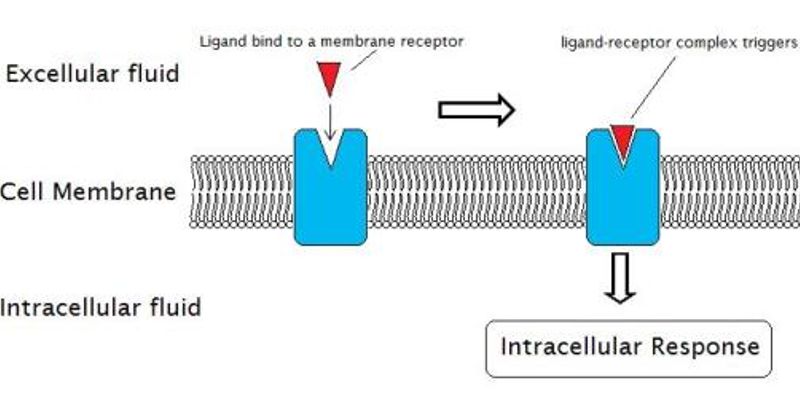
Cell Signaling: the process of cells communicating with other cells within the body, or with the external environment. As a process, cell signaling refers to a vast network of communication between, and within, each cell of our body.
DATE: November 18, 2020 TIME: 7:00am PST, 10:00am PST, 4:00pm CEST The assessment of cell health and cellular responses after experimental manipulation continue to be a very important......
Date: November 16, 2020 Time: 8:00am (PST), 11:00am (EST) CRISPR screening has become the prime discovery tool in modern biomedical research and drug discovery. At the same time, most screen...
DATE: Date needed, 2020 TIME: Time needed Exosomes are a population of naturally occurring mobile, membrane-limited, 30 – 100 nm in diameter, extracellular vesicles containing a large...
Date: October 28, 2020 Time: 7:00am (PDT), 10:00am (EDT) Although chemotherapy remains the mainstay of systemic therapy, a large number of cancer patients fail to respond to it. About half o...
During the presentation, Dr. Hernandez-Losa will describe the experience in the Department of Pathology using NGS with S5-xl in different translational projects in solid tumors. Additionally...
During the presentation, Dr. Hernandez-Losa will describe the experience in the Department of Pathology using NGS with S5-xl in different translational projects in solid tumors. Additionally...
Individuals of under-represented minority ancestry are at disproportional risk for higher incidence and mortality rates for particular cancers. The unequal burden of cancer in certain racial...
DATE: October 8, 2020 TIME: 7:00am PDT, 10:00am EDT, 4:00pm CEST How often do you pipette in your cell culture lab every day? Usually, we do it so often that we tend stop thinking about ho...
Every patient is different and so is every tumor! The term “personalized oncology” today is largely associated with sequencing approaches. Current publications proof more and mor...
Changes in transcriptional regulation are thought to be one of the key drivers of carcinogenesis. Although next-generation sequencer revolutionized transcriptome analysis, there are limitati...
Tumor phenotypes are dictated not only by the neoplastic cell component, but also by the tumor microenvironment (TME), which is inherently immuno-suppressive, is equipped to hamper effector...
Activating mutations in PIK3CA are frequent in human breast cancer, and phosphoinositide 3-kinase alpha (PI3Kα) inhibitors have been approved for therapy. To characterize determinants...
CRISPR experiments are a powerful tool which are easy to carry out, however it is more difficult to determine the outcome of these experiments, and to ensure that only the desired targets we...
Combinatorial inhibition of effector and feedback pathways is a promising treatment strategy for KRAS mutant cancers. However, the particular pathways that should be targeted to optimize the...
There are many methods of nucleic acid isolation. Each technology offers different approaches of purification of the template. However, it is important to control carry over of “proces...
For more than a century, breakthroughs in biological sciences have relied on the ability to study cells outside of respective organisms. While majority of cell culturing is still performed u...
Extracellular vesicles (EVs) are lipid bilayer-delimited pieces of cells that are released from the plasma membrane as "ectosomes" and from the endosomal system as "exosomes.&...
Extracellular ligands bind to receptors on the cell surface leading to receptor internalization. Once internalized into small vesicles, the vesicles fuse with an organelle known as the sorti...
Intestinal organoids are self-organizing, 3D structures derived from either pluripotent stem cells or from primary tissues with the abiltiy to recapitulate some of the spatial architecture a...
On measuring photons and ions: Impact on panel design, signal detection and data quality 10:30–11:00 am PDT Presented By: Tim Bushnell, PhD, MBA Monitoring immunotherapy with a mass cy...
Extracellular vesicles (EVs) are nanosized vesicles containing active proteins, lipids, and different types of genetic material such as non coding RNA species, related to the characteristics...
Cell culture continues to be a critical tool for most life science research and applications. From HeLa to iPSCs and 3D to organoids, culture methods have become more advanced and techniques...
MicroRNAs (miRs) are small non-coding RNAs whose expression is altered in several types of human cancers. Recent evidence supports their inter-cellular transfer through extracellular vesicle...
DATE: November 18, 2020 TIME: 7:00am PST, 10:00am PST, 4:00pm CEST The assessment of cell health and cellular responses after experimental manipulation continue to be a very important......
Date: November 16, 2020 Time: 8:00am (PST), 11:00am (EST) CRISPR screening has become the prime discovery tool in modern biomedical research and drug discovery. At the same time, most screen...
DATE: Date needed, 2020 TIME: Time needed Exosomes are a population of naturally occurring mobile, membrane-limited, 30 – 100 nm in diameter, extracellular vesicles containing a large...
Date: October 28, 2020 Time: 7:00am (PDT), 10:00am (EDT) Although chemotherapy remains the mainstay of systemic therapy, a large number of cancer patients fail to respond to it. About half o...
During the presentation, Dr. Hernandez-Losa will describe the experience in the Department of Pathology using NGS with S5-xl in different translational projects in solid tumors. Additionally...
During the presentation, Dr. Hernandez-Losa will describe the experience in the Department of Pathology using NGS with S5-xl in different translational projects in solid tumors. Additionally...
Individuals of under-represented minority ancestry are at disproportional risk for higher incidence and mortality rates for particular cancers. The unequal burden of cancer in certain racial...
DATE: October 8, 2020 TIME: 7:00am PDT, 10:00am EDT, 4:00pm CEST How often do you pipette in your cell culture lab every day? Usually, we do it so often that we tend stop thinking about ho...
Every patient is different and so is every tumor! The term “personalized oncology” today is largely associated with sequencing approaches. Current publications proof more and mor...
Changes in transcriptional regulation are thought to be one of the key drivers of carcinogenesis. Although next-generation sequencer revolutionized transcriptome analysis, there are limitati...
Tumor phenotypes are dictated not only by the neoplastic cell component, but also by the tumor microenvironment (TME), which is inherently immuno-suppressive, is equipped to hamper effector...
Activating mutations in PIK3CA are frequent in human breast cancer, and phosphoinositide 3-kinase alpha (PI3Kα) inhibitors have been approved for therapy. To characterize determinants...
CRISPR experiments are a powerful tool which are easy to carry out, however it is more difficult to determine the outcome of these experiments, and to ensure that only the desired targets we...
Combinatorial inhibition of effector and feedback pathways is a promising treatment strategy for KRAS mutant cancers. However, the particular pathways that should be targeted to optimize the...
There are many methods of nucleic acid isolation. Each technology offers different approaches of purification of the template. However, it is important to control carry over of “proces...
For more than a century, breakthroughs in biological sciences have relied on the ability to study cells outside of respective organisms. While majority of cell culturing is still performed u...
Extracellular vesicles (EVs) are lipid bilayer-delimited pieces of cells that are released from the plasma membrane as "ectosomes" and from the endosomal system as "exosomes.&...
Extracellular ligands bind to receptors on the cell surface leading to receptor internalization. Once internalized into small vesicles, the vesicles fuse with an organelle known as the sorti...
Intestinal organoids are self-organizing, 3D structures derived from either pluripotent stem cells or from primary tissues with the abiltiy to recapitulate some of the spatial architecture a...
On measuring photons and ions: Impact on panel design, signal detection and data quality 10:30–11:00 am PDT Presented By: Tim Bushnell, PhD, MBA Monitoring immunotherapy with a mass cy...
Extracellular vesicles (EVs) are nanosized vesicles containing active proteins, lipids, and different types of genetic material such as non coding RNA species, related to the characteristics...
Cell culture continues to be a critical tool for most life science research and applications. From HeLa to iPSCs and 3D to organoids, culture methods have become more advanced and techniques...
MicroRNAs (miRs) are small non-coding RNAs whose expression is altered in several types of human cancers. Recent evidence supports their inter-cellular transfer through extracellular vesicle...
 Follow