Disease: is a disorder of structure or function in a human, animal, or plant, especially one that produces specific signs or symptoms that is not simply a direct result of physical injury.
Immune therapy approaches are being used in many different solid cancers today including clear cell renal carcinoma (mccRCC) and metastatic prostate adenocarcinoma. Over the past few years i...
Activating mutations in PIK3CA are frequent in human breast cancer, and phosphoinositide 3-kinase alpha (PI3Kα) inhibitors have been approved for therapy. To characterize determinants...
DATE: October 6, 2020 TIME: 10:00am (PDT) The enumeration and analysis of blood cells with automated haematology analysers have significantly improved in recent years due to advances in cell...
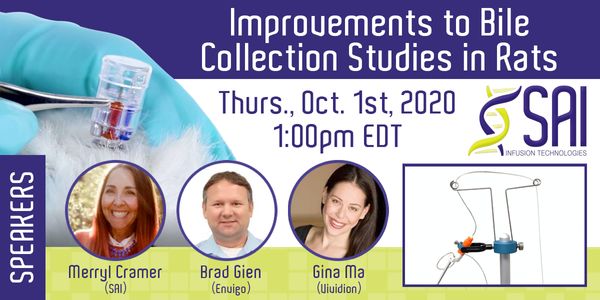
Date: October 10, 2020 Time: 10:00am (PDT), 1:00pm (EDT) Rodent bile collection studies can be challenging. Not only do they require a technically difficult surgery, but there is also a lear...
RNA plays important and diverse roles in biology, but molecular tools to manipulate and measure RNA are limited. We demonstrate that RNA-targeting CRISPR effector Cas13 can be engineered for...
CRISPR-based genome editing has accelerated biological research and holds great potential for studying and treating human diseases. The CRISPR-Cas9 system requires a Cas9 nuclease and a guid...
An extensively debated concern about CRISPR-Cas9 genome editing is that unspecific guide RNA (gRNA) binding may induce off-target mutations. However, accurate prediction of CRISPR-Cas9 off-t...
A repeat expansion in the C9orf72-SMCR8 complex subunit (C9orf72) represents the most common genetic cause of two fatal neurodegenerative diseases: frontotemporal dementia (FTD) and amyotrop...
Cas9 based therapeutics have the potential to revolutionize the treatment of genetic diseases. However, safe and effective methods for delivering Cas9 protein, gRNA and donor DNA need to be...
Date: September 28, 2020 Time: 5:00pm (PDT), 8:00am (HKT), 9:00am (JST) Although there have been dramatic advances in the field of single-cell sequencing, current methods cannot be applied t...
The regulated cannabis industry has existed in the US for nearly a decade. New medical and adult-use markets will most likely experience similar maturation and periods of volatility as state...
DATE: September 24th, 2020 TIME: 10:00am PT Abstract body Learning Objectives: Review biochemistry and kinetics of PCT in primary and secondary bacterial infection Analyze PCT as a biomarker...
Extracellular vesicles (EVs) are lipid bilayer-delimited pieces of cells that are released from the plasma membrane as "ectosomes" and from the endosomal system as "exosomes.&...
Suspension by day, imaging by night: how to efficiently manage your system and optimize utilization Presented By: Jared K. Burks, PhD Mass cytometry, be it suspension or imaging, opens the d...
Intestinal organoids are self-organizing, 3D structures derived from either pluripotent stem cells or from primary tissues with the abiltiy to recapitulate some of the spatial architecture a...
On measuring photons and ions: Impact on panel design, signal detection and data quality 10:30–11:00 am PDT Presented By: Tim Bushnell, PhD, MBA Monitoring immunotherapy with a mass cy...
Single-cell mass cytometry identifies mechanisms of resistance to immunotherapy in AML 6:30–7:00 am PDT Presented By: Shelley Herbrich, PhD Understanding CD19 negative relapse followin...
I will present our new computer vision algorithm, ST-Net, which can computationally synthesize spatially resolved transcriptomics directly from H&E histology images (He et al. Nature Bio...
Extracellular vesicles (EV) from many cell types have demonstrated therapeutic potential against many different diseases. Inhibiting progress in this area is the capability to produce EVs in...
Chronic kidney disease (CKD) is a major public health threat, affecting 11-15% of the U.S. population alone. Currently, there are no effective therapies to cure CKD. Drug therapies are not p...
Chronic kidney disease (CKD) is a global health threat, affecting over 10% of the world population, including an estimated 37 million Americans. Importantly, glomerular diseases account for...
T cells are the adaptive immune system’s first responders to any virus, circulating in the blood to detect and quickly multiply to attack the virus, and also support the development of...
The COVID-19 pandemic has resulted in demand for population scale pathogen screening. The most sensitive and reliable method for detecting SARS-CoV-2 remains reverse transcription PCR (RT-PC...
Immune therapy approaches are being used in many different solid cancers today including clear cell renal carcinoma (mccRCC) and metastatic prostate adenocarcinoma. Over the past few years i...
Activating mutations in PIK3CA are frequent in human breast cancer, and phosphoinositide 3-kinase alpha (PI3Kα) inhibitors have been approved for therapy. To characterize determinants...
DATE: October 6, 2020 TIME: 10:00am (PDT) The enumeration and analysis of blood cells with automated haematology analysers have significantly improved in recent years due to advances in cell...
Date: October 10, 2020 Time: 10:00am (PDT), 1:00pm (EDT) Rodent bile collection studies can be challenging. Not only do they require a technically difficult surgery, but there is also a lear...
RNA plays important and diverse roles in biology, but molecular tools to manipulate and measure RNA are limited. We demonstrate that RNA-targeting CRISPR effector Cas13 can be engineered for...
CRISPR-based genome editing has accelerated biological research and holds great potential for studying and treating human diseases. The CRISPR-Cas9 system requires a Cas9 nuclease and a guid...
An extensively debated concern about CRISPR-Cas9 genome editing is that unspecific guide RNA (gRNA) binding may induce off-target mutations. However, accurate prediction of CRISPR-Cas9 off-t...
A repeat expansion in the C9orf72-SMCR8 complex subunit (C9orf72) represents the most common genetic cause of two fatal neurodegenerative diseases: frontotemporal dementia (FTD) and amyotrop...
Cas9 based therapeutics have the potential to revolutionize the treatment of genetic diseases. However, safe and effective methods for delivering Cas9 protein, gRNA and donor DNA need to be...
Date: September 28, 2020 Time: 5:00pm (PDT), 8:00am (HKT), 9:00am (JST) Although there have been dramatic advances in the field of single-cell sequencing, current methods cannot be applied t...
The regulated cannabis industry has existed in the US for nearly a decade. New medical and adult-use markets will most likely experience similar maturation and periods of volatility as state...
DATE: September 24th, 2020 TIME: 10:00am PT Abstract body Learning Objectives: Review biochemistry and kinetics of PCT in primary and secondary bacterial infection Analyze PCT as a biomarker...
Extracellular vesicles (EVs) are lipid bilayer-delimited pieces of cells that are released from the plasma membrane as "ectosomes" and from the endosomal system as "exosomes.&...
Suspension by day, imaging by night: how to efficiently manage your system and optimize utilization Presented By: Jared K. Burks, PhD Mass cytometry, be it suspension or imaging, opens the d...
Intestinal organoids are self-organizing, 3D structures derived from either pluripotent stem cells or from primary tissues with the abiltiy to recapitulate some of the spatial architecture a...
On measuring photons and ions: Impact on panel design, signal detection and data quality 10:30–11:00 am PDT Presented By: Tim Bushnell, PhD, MBA Monitoring immunotherapy with a mass cy...
Single-cell mass cytometry identifies mechanisms of resistance to immunotherapy in AML 6:30–7:00 am PDT Presented By: Shelley Herbrich, PhD Understanding CD19 negative relapse followin...
I will present our new computer vision algorithm, ST-Net, which can computationally synthesize spatially resolved transcriptomics directly from H&E histology images (He et al. Nature Bio...
Extracellular vesicles (EV) from many cell types have demonstrated therapeutic potential against many different diseases. Inhibiting progress in this area is the capability to produce EVs in...
Chronic kidney disease (CKD) is a major public health threat, affecting 11-15% of the U.S. population alone. Currently, there are no effective therapies to cure CKD. Drug therapies are not p...
Chronic kidney disease (CKD) is a global health threat, affecting over 10% of the world population, including an estimated 37 million Americans. Importantly, glomerular diseases account for...
T cells are the adaptive immune system’s first responders to any virus, circulating in the blood to detect and quickly multiply to attack the virus, and also support the development of...
The COVID-19 pandemic has resulted in demand for population scale pathogen screening. The most sensitive and reliable method for detecting SARS-CoV-2 remains reverse transcription PCR (RT-PC...

 Follow