As the cannabis industry continues to grow, it places a higher demand on producers and processing facilities to meet the increasing mandate for clean, refined cannabis-based products. While t...
Providing insight into how Congress and Executive agencies have adapted and responded to states legalizing cannabis for medical use. Discussion will include proposed solutions to end the fede...
What makes cannabis potency analysis different from other testing done on cannabis? It is the only test for which there is no “pass” or “fail” outcome but rather the r...
If your lab has decided to apply for ISO/IEC 17025 accreditation as your state requires it or to demonstrate the reliability of your lab results to potential customers, you may think what nex...
It can often be a very challenging task to understand what rules and regulations you are responsible for in a cannabis business. Being out of compliance can be a costly mistake with huge fin...
In recent years, many countries have passed legislation regulating the use of cannabis for medical purposes. This has granted patients and clinicians access to both herbal material and cannab...
Imagine the need for agriculture being removed completely from the cannabis supply chain.Cellibre’s vision is to leverage biology to make products more sustainable, efficiently and...
Automating Cannabis Testing with Laboratory Information Management Systems (LIMS) Software systems automate not only key aspects of laboratory testing, but provide a comprehensive data manage...
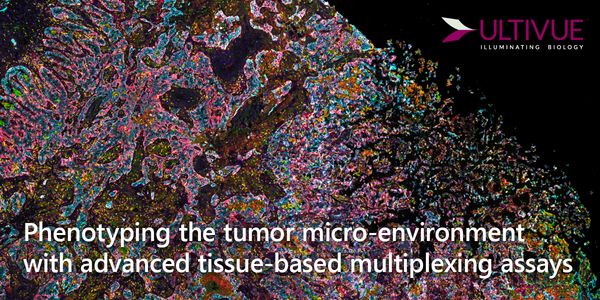
DATE: March 21, 2019TIME: 7:00am PDT, 10:00am EDT The benefits of multiplex immunohistochemistry assays for tissue analysis are numerous. High-level multipl...
This talk provides a brief overview of funding opportunities for invasive device development for translation to clinical populations supported by the NIH BRAIN Initiative....
Whether you are performing killing assays, immunophenotyping of TILs, characterizing the tumor microenvironment, or investigating immunogenicity, primary cells are essential for the discovery...
Isolated hepatocytes or their enzymes comprise the basis of most in vitro DMPK and toxicity assays used to predict human hepatic outcomes. Because hepato-specific functions are typically lost...
NanoMIPs, often called “plastic antibodies”, are made using a proprietary self-assembly process where the template molecule is incubated with monomers, each of which is free in so...
DATE: February 27, 2019TIME: 8:00am PST Pluripotent stem cells (PSCs) can form any tissue or cell in the body, and are the ideal starting material to manufacture...
The last two decades have seen an explosion in the volume of oncology data generated using next-generation sequencing (NGS) and multi-omics techniques. As a result, there is a growing need fo...
Pharmaceutical research and development efforts are often both inefficient and suffer from a high attrition rate of drug candidates within the clinical phase of development. Most drug t...
The goal of transforming one’s pipeline to a steady source of usable data is within our reach. Data that could be used for clinical insights or earlier in the drug discovery process. &n...
Experimental models that promise to replace animal tests that are currently required for drugs and chemicals are rapidly proliferating. This includes a number of novel solutions offered by bi...
In biomedical research, data should be treated as first-class corporate assets--they were expensive to create, they are expensive to maintain, and they have future business value. The petabyt...
The printing press, the automobile & the Internet are just a few technological achievements that have advanced our world. All were driven by human ingenuity: our innate creativity that in...
As the pace of biotherapeutic approvals increases, so does the pressure on makers of new biologics to complete their development processes faster and more efficiently. The success of the drug...
The biologics development process is fraught with risks from pre-clinical studies through clinical evaluation. Prominent among these risks are changes in the critical quality attributes of th...
DATE: January 15, 2018TIME: 4:00pm SGTPThere is a clear call to automate manufacturing for cell and gene therapy products, but when should you automate? In this session, we...
As the cannabis industry continues to grow, it places a higher demand on producers and processing facilities to meet the increasing mandate for clean, refined cannabis-based products. While t...
Providing insight into how Congress and Executive agencies have adapted and responded to states legalizing cannabis for medical use. Discussion will include proposed solutions to end the fede...
What makes cannabis potency analysis different from other testing done on cannabis? It is the only test for which there is no “pass” or “fail” outcome but rather the r...
If your lab has decided to apply for ISO/IEC 17025 accreditation as your state requires it or to demonstrate the reliability of your lab results to potential customers, you may think what nex...
It can often be a very challenging task to understand what rules and regulations you are responsible for in a cannabis business. Being out of compliance can be a costly mistake with huge fin...
In recent years, many countries have passed legislation regulating the use of cannabis for medical purposes. This has granted patients and clinicians access to both herbal material and cannab...
Imagine the need for agriculture being removed completely from the cannabis supply chain.Cellibre’s vision is to leverage biology to make products more sustainable, efficiently and...
Automating Cannabis Testing with Laboratory Information Management Systems (LIMS) Software systems automate not only key aspects of laboratory testing, but provide a comprehensive data manage...
DATE: March 21, 2019TIME: 7:00am PDT, 10:00am EDT The benefits of multiplex immunohistochemistry assays for tissue analysis are numerous. High-level multipl...
This talk provides a brief overview of funding opportunities for invasive device development for translation to clinical populations supported by the NIH BRAIN Initiative....
Whether you are performing killing assays, immunophenotyping of TILs, characterizing the tumor microenvironment, or investigating immunogenicity, primary cells are essential for the discovery...
Isolated hepatocytes or their enzymes comprise the basis of most in vitro DMPK and toxicity assays used to predict human hepatic outcomes. Because hepato-specific functions are typically lost...
NanoMIPs, often called “plastic antibodies”, are made using a proprietary self-assembly process where the template molecule is incubated with monomers, each of which is free in so...
DATE: February 27, 2019TIME: 8:00am PST Pluripotent stem cells (PSCs) can form any tissue or cell in the body, and are the ideal starting material to manufacture...
The last two decades have seen an explosion in the volume of oncology data generated using next-generation sequencing (NGS) and multi-omics techniques. As a result, there is a growing need fo...
Pharmaceutical research and development efforts are often both inefficient and suffer from a high attrition rate of drug candidates within the clinical phase of development. Most drug t...
The goal of transforming one’s pipeline to a steady source of usable data is within our reach. Data that could be used for clinical insights or earlier in the drug discovery process. &n...
Experimental models that promise to replace animal tests that are currently required for drugs and chemicals are rapidly proliferating. This includes a number of novel solutions offered by bi...
In biomedical research, data should be treated as first-class corporate assets--they were expensive to create, they are expensive to maintain, and they have future business value. The petabyt...
The printing press, the automobile & the Internet are just a few technological achievements that have advanced our world. All were driven by human ingenuity: our innate creativity that in...
As the pace of biotherapeutic approvals increases, so does the pressure on makers of new biologics to complete their development processes faster and more efficiently. The success of the drug...
The biologics development process is fraught with risks from pre-clinical studies through clinical evaluation. Prominent among these risks are changes in the critical quality attributes of th...
DATE: January 15, 2018TIME: 4:00pm SGTPThere is a clear call to automate manufacturing for cell and gene therapy products, but when should you automate? In this session, we...

 Follow